Six Sri Lankan Dishes That Feed a Crowd
From syrupy sweets to crab curry, these Sri Lankan dishes are built for generous tables and make enough for six or more.

Sri Lankan food often arrives in large dishes meant to be passed around, with rice, tea, or other sweets shared from the same table. These recipes all make enough for six or more, though the cooking time and effort vary widely.
Some are festival sweets, others are rich curries, and one is a crisp snack. Together they show how Sri Lankan cooking handles a crowd: with spice, coconut, jaggery, and careful work done in batches.
A rich curry for the centre of the table
Jaffna Crab CurrySri LankanOpen the recipe →Jaffna crab curry is a deep, peppery seafood curry with heat, sourness, and the sweetness of crab meat all working together. The sauce usually runs red-brown and fragrant, often with roasted spices and coconut. It is worth cooking when you want a dish that feels generous without being heavy. Serve it with rice or flatbread, and expect hands-on eating. One thing to know before starting: crab needs proper cleaning and cracking, and the curry tastes better when the shells have time to give up their flavour.
Dense coconut cake with spice
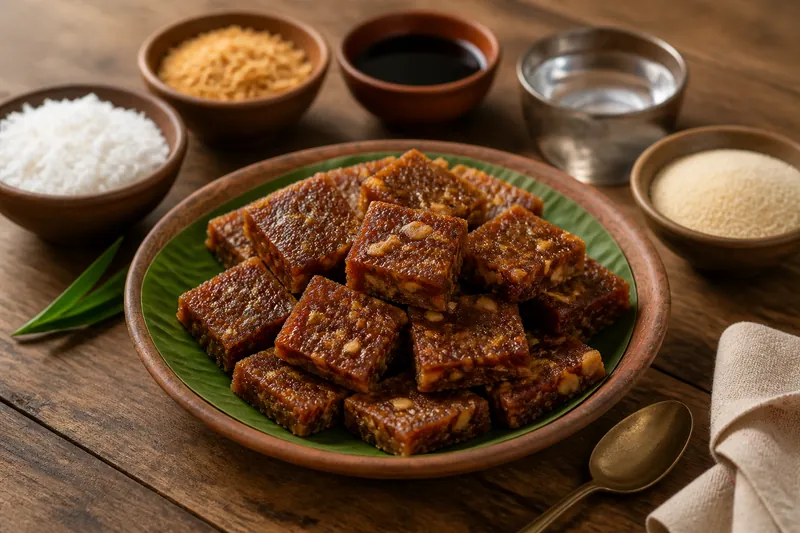 BibikkanSri LankanOpen the recipe →
Bibikkan is a dark, rich Sri Lankan cake made with coconut, jaggery, and warm spices. It eats like a cross between a fruit cake and a coconut sweet, with a moist crumb and a toasty, caramel note from the sugar. It is worth making for a crowd because it slices neatly and keeps well, so it can be baked ahead. The main thing to know is that the mixture should be mixed thoroughly but not beaten hard; the texture should stay dense and slightly sticky rather than light.
Fried sweets with a long, patient mix
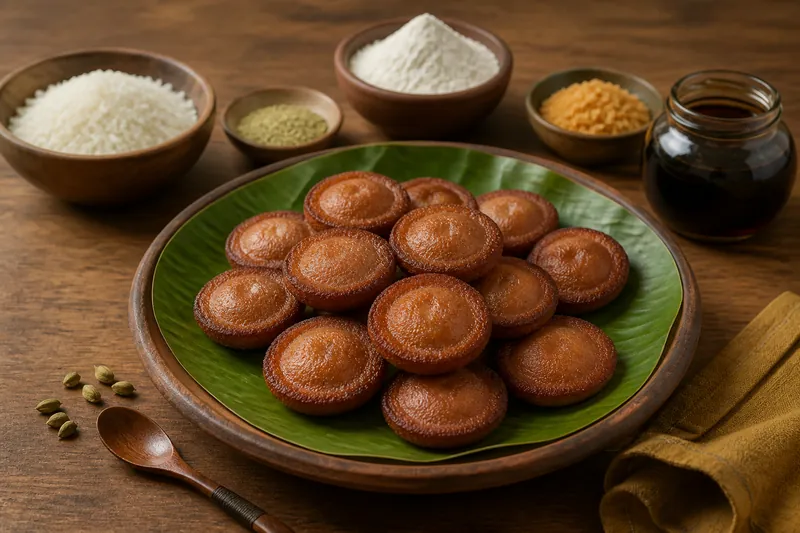 KavumSri LankanOpen the recipe →
Kavum are small, deep-fried sweets made from a batter of rice flour and jaggery, often flavoured with cardamom or sesame. They are crisp outside, soft in the middle, and taste warmly of caramel. They are worth the effort for a large gathering because they are traditional festival food and keep their shape well once fried. A cook should know that the batter usually needs time before frying, and the oil temperature matters; too hot and they darken before cooking through, too cool and they turn greasy.
Chewy slab sweet for cutting into pieces
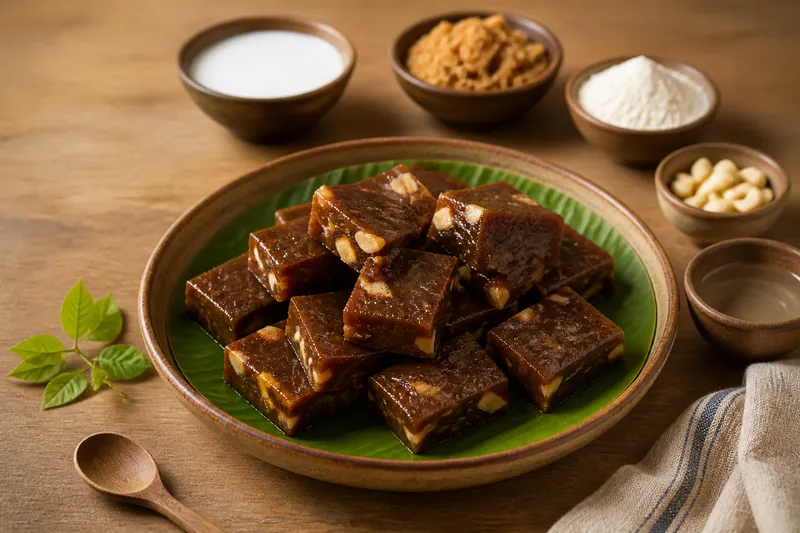 DodolSri LankanOpen the recipe →
Dodol is a glossy, chewy sweet made by cooking coconut milk, jaggery, and rice flour until thick and dark. It has a gentle molasses flavour, a soft pull, and a finish that is neither quite fudge nor quite toffee. It is worth making for six or more because it cuts into small portions and travels well. The important thing to know is that dodol needs steady stirring as it cooks; the mixture thickens slowly, then suddenly becomes heavy, and that stage should not be rushed.
Crisp fried pieces for snacking and sharing
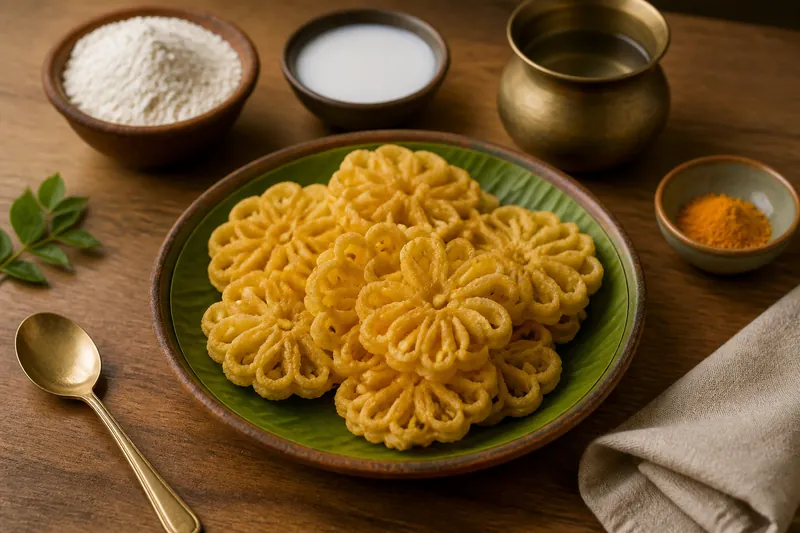 KokisSri LankanOpen the recipe →
Kokis are crisp, lacy fried crackers made from rice flour and coconut milk, pressed into a flower-like shape. They are light, savoury, and slightly rich, with a clean snap that makes them easy to eat by the handful. They are worth cooking for a crowd because they are meant to be shared with tea or set out as part of a larger spread. One thing to know before starting is that the shaping tool or mould needs a little practice; once the batter hits the oil, the rhythm has to be quick and steady.
Simple sweet squares with a firm bite
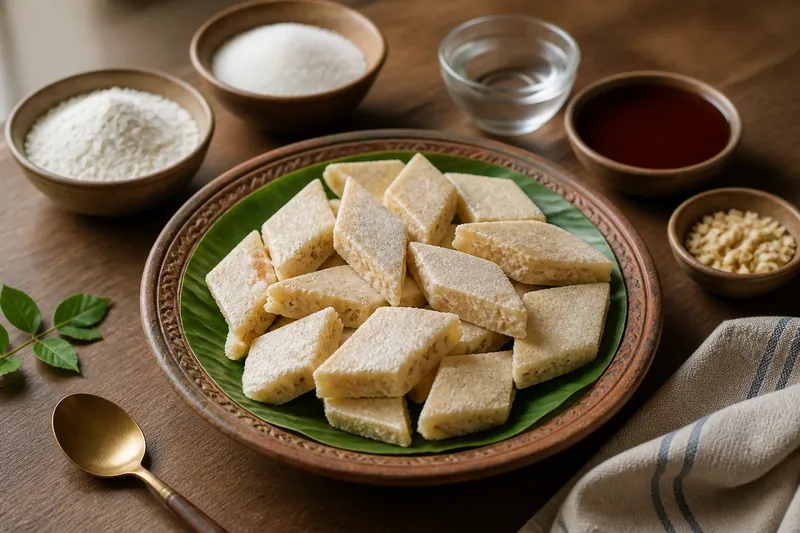 AluwaSri LankanOpen the recipe →
Aluwa is a firm Sri Lankan sweet made from flour and jaggery, sometimes finished with nuts or cardamom. It has a clean, toasted sweetness and a sandy, compact texture that breaks neatly into squares or diamonds. It is worth making when you need a sweet that serves many people and does not require delicate handling. The main thing to know is that the flour must be cooked properly before the syrup goes in, or the final sweet can taste raw. Once set, it slices best when fully cooled.
These six dishes cover the spread of Sri Lankan cooking for a larger table, from a crab curry to sweets made for festivals. Some ask for time and patience, others for little more than careful stirring and hot oil, but all are best when shared.