7 Spanish Dishes That Feed Six or More
From chilled summer soups to roast lamb and almond cake, these seven Spanish dishes are built for a table of six or more.
Spanish cooking has a practical side. Many of its best-known dishes are meant to be shared, served in bowls, platters, and slices that suit a crowd rather than a single plate.
This selection runs from no-cook soups to slow braises and celebratory sweets. Some are best made ahead; others ask for patience while they roast, rest, or proof, but each feeds six or more with ease.
Cold tomato soup for a large bowl
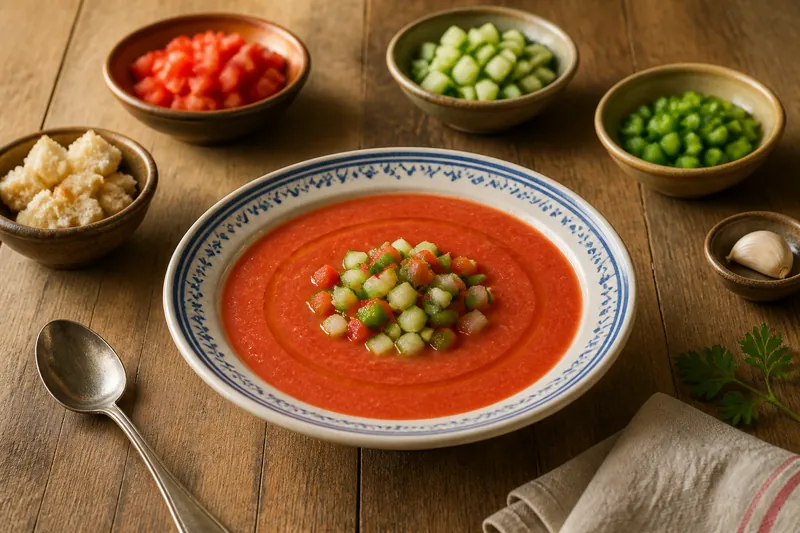
GazpachoSpanishOpen the recipe →Gazpacho is the Andalusian classic of ripe tomatoes, cucumber, pepper, garlic, bread, olive oil, and vinegar blended until smooth. It is sharp, fresh, and lightly thickened, with enough body to serve as a first course for a group. What makes it worth cooking is its usefulness in hot weather: no stove, no long wait, and a flavour that gets better after chilling. Serve it very cold. One thing to know before starting: the vegetables need to be ripe, because there is nowhere for weak tomatoes to hide.
Thicker, richer, and built for bread
 SalmorejoSpanishOpen the recipe →
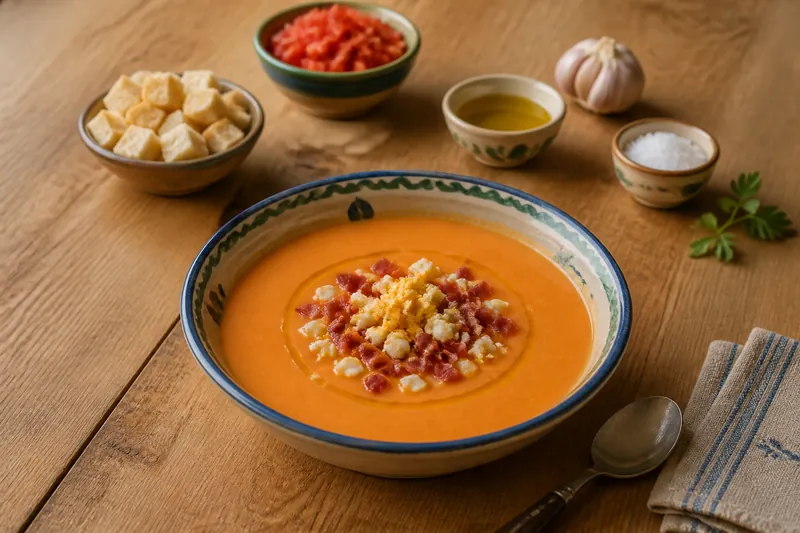
Salmorejo comes from Córdoba and sits closer to a chilled purée than a soup. Tomatoes, bread, garlic, and olive oil are blended into a dense, silky bowl with a clean tomato taste and a soft garlic edge. It is worth cooking because it feeds a crowd cheaply and can be made ahead without losing its shape. Toppings of chopped egg and cured ham add contrast. One thing to know before starting: use enough bread to thicken it properly, or it will taste like gazpacho with less purpose.
Roasted lamb for a proper table
 Lechazo asadoSpanishOpen the recipe →
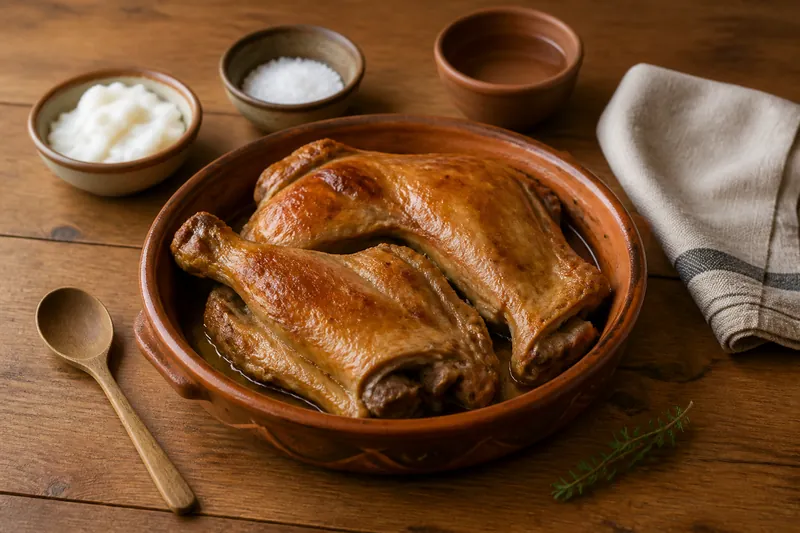
Lechazo asado is young lamb, usually shoulder or leg, roasted simply with water and salt until the meat is tender and the skin turns golden. The flavour is clean, milky, and concentrated rather than heavily seasoned, which is why the dish depends on the quality of the lamb. It makes sense for a group because it is both ceremonial and easy to portion at the table. One thing to know before starting: do not overcomplicate it with marinades or herbs; the oven and the meat are the point.
Slow oxtail for deep, dark sauce
 Rabo de ToroSpanishOpen the recipe →
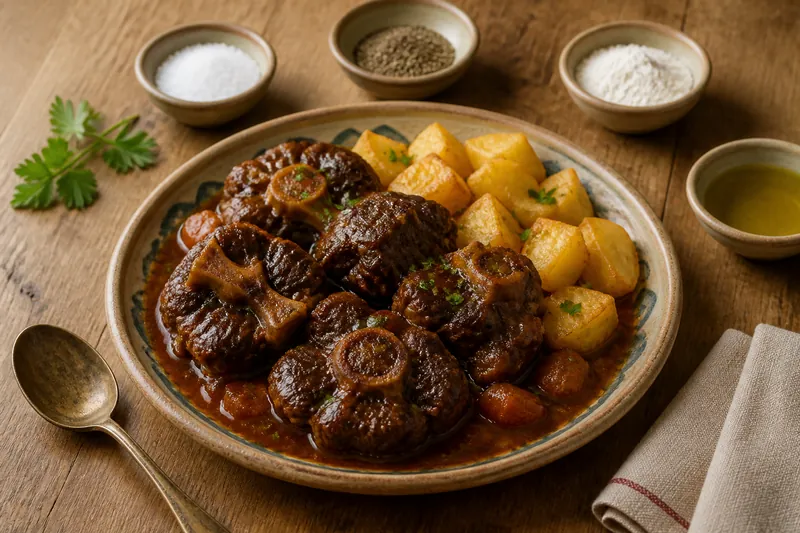
Rabo de Toro is a long-cooked oxtail stew with wine, stock, vegetables, and enough time to turn the meat unctuous and the sauce almost glossy. The taste is rich, beefy, and quietly spiced, with gelatin from the tail giving the sauce its body. It is a strong choice for six or more because the meat is filling and the stew only improves as it sits. One thing to know before starting: allow the full cooking time and expect to skim, reduce, and wait; the tenderness comes late.
Coiled pastry for breakfast or dessert
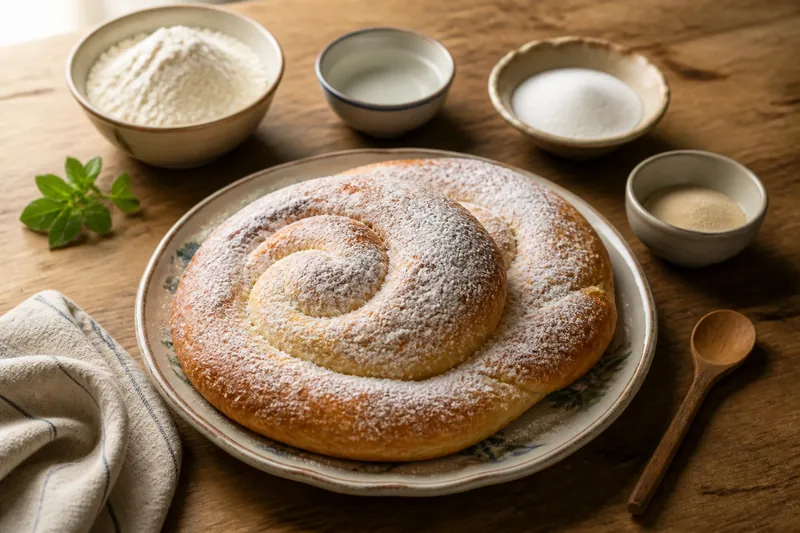 EnsaimadaSpanishOpen the recipe →
Ensaimada is the spiral pastry from Mallorca, made with a rich dough rolled thin, spread with fat, coiled, and baked until pale and airy. It tastes lightly sweet, buttery without being heavy, and best eaten torn into pieces. For a crowd, it is useful because one large pastry can be served simply on a board and stretched across a table. One thing to know before starting: the long proof is not optional. The dough needs time to relax and rise, or the texture will be dense and misshapen.
Almond cake that slices cleanly
 Tarta de SantiagoSpanishOpen the recipe →
Tarta de Santiago is Galicia’s almond cake, usually made with ground almonds, eggs, sugar, and lemon zest, then baked until just set. It tastes moist, nutty, and bright with citrus, with a fine crumb that holds together well for serving. It suits a group because it keeps neatly, travels well, and needs no frosting to feel complete. One thing to know before starting: do not overbake it. Almond cakes dry out fast, and this one is best when the centre stays soft and fragrant.
Set custard with a brittle top
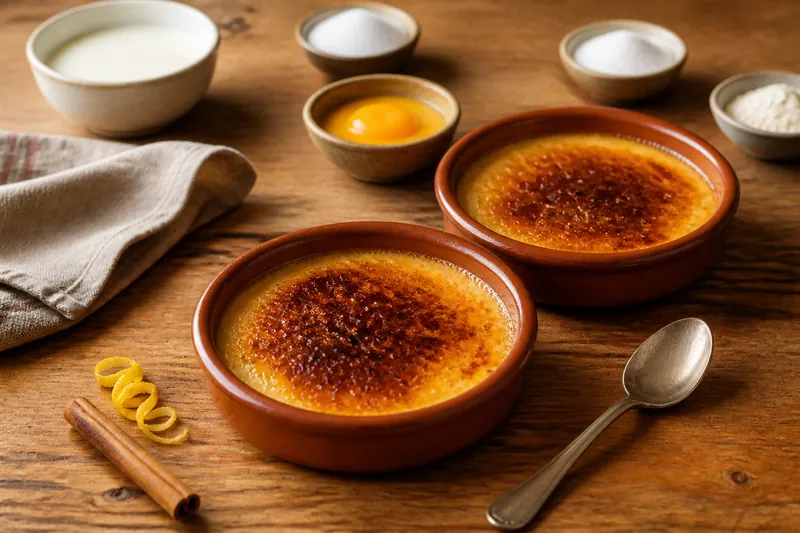 Crema catalanaSpanishOpen the recipe →
Crema catalana is Spain’s custard dessert with milk, egg yolks, citrus, and cinnamon, thickened on the stove and finished with a burnt sugar crust. The flavour is gentle but distinct: warm spice, lemon peel, and the crack of caramel on top. It feeds six or more well because it is portioned in individual dishes and can be made ahead, then sugared just before serving. One thing to know before starting: the custard must be cooked carefully and not boiled hard, or it can turn grainy.
These dishes show how Spanish cooking handles a crowd: some are cold and immediate, some depend on time, and a few turn simple ingredients into something generous. For six or more, that balance of ease and patience is the point.