7 Portuguese Dishes That Feed Six or More
From roast pork to custard tarts, these Portuguese dishes are sized for a table and worth making when you want plenty to share.

Portuguese cooking has a useful habit of stretching well: a roast, a tray of pastries, a pan of custards, or a loaf meant to be torn at the table. These are dishes that suit family meals and gatherings because they are built to serve more than a few.
The recipes below are all Portuguese, and each one feeds six or more. Some are savoury centrepieces, others are sweets for a crowd, but all of them reward calm, careful work and a little planning.
Crisp roast suckling pig
Leitão da BairradaPortugueseOpen the recipe →Leitão da Bairrada is a roast suckling pig with crackling skin, firm flesh, and a sharp, garlicky seasoning. It is one of the great celebratory dishes of central Portugal, and it feeds a crowd because it is meant to come to the table as a full roast, not as neat portions. The flavour is direct: pork, salt, pepper, garlic, and a little heat. What makes it worth cooking is the contrast between the crisp skin and the rich meat underneath. Before starting, make sure the skin is as dry as possible; that is what gives it its crackle.
Corn bread for tearing and sharing
 Broa de MilhoPortugueseOpen the recipe →
Broa de Milho is a dense Portuguese corn bread with a rustic crust and a slightly sweet, earthy crumb. It is the sort of bread that belongs beside soup, salt cod, roast meat, or cheese, and it feeds six or more because one loaf is meant to be torn apart at the table. The cornmeal gives it a deep yellow colour and a grainy texture that stays satisfying even when sliced thick. A cook should know that the dough can feel heavy and sticky; patience with proofing and shaping matters more than speed.
Tray-baked custard tarts
 Pastel de nataPortugueseOpen the recipe →
Pastel de nata are small custard tarts with crisp, flaky pastry and a set, lightly blistered custard top. They are often thought of as single portions, but a batch easily serves six or more and disappears quickly. The filling is sweet without being cloying, with a gentle vanilla note and a hint of caramel from the oven. They are worth making for the pastry alone, which should shatter when bitten. Before you begin, keep the pastry cold and the oven hot; both are essential if you want the layers to stay crisp and the custard to brown properly.
Silky egg yolk sweets
 Ovos moles de AveiroPortugueseOpen the recipe →
Ovos moles de Aveiro are a soft, glossy confection made from egg yolks and sugar, usually enclosed in delicate wafers shaped like shells or fish. They are intensely sweet, but their texture is what makes them memorable: smooth, rich, and almost custard-like. A small amount goes a long way, which is why they work well for a table of six or more. They are worth making when you want a dessert with a clear regional character and very little clutter. The main thing to know is that the syrup must be cooked carefully; too much heat and the mixture can seize or turn grainy.
Light sponge for a crowd
 Pão de lóPortugueseOpen the recipe →
Pão de ló is a Portuguese sponge cake with an airy crumb and a pale, tender centre. It is often baked in a way that leaves the middle soft, almost spoonable, which is part of its appeal. For a group, it is one of the easiest Portuguese cakes to serve because it cuts cleanly and needs little more than coffee or fruit. The flavour is mild, with eggs and sugar taking the lead. What a cook should know is that the batter depends on well-beaten eggs for volume; if that stage is rushed, the cake will lose its lift and feel flat.
Small cheese tarts with a strong tradition
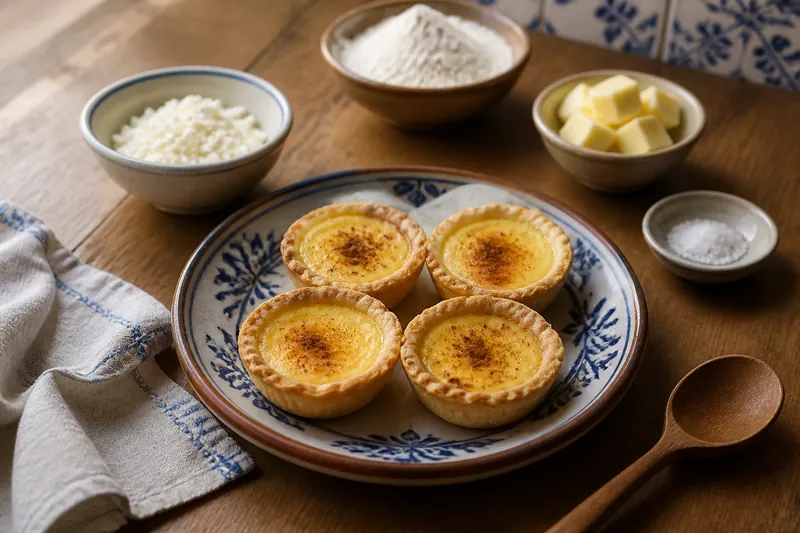 Queijadas de SintraPortugueseOpen the recipe →
Queijadas de Sintra are small baked tarts with a tender case and a filling made from cheese, egg, sugar, and spice. Despite their size, they feed six or more easily when served as part of a dessert spread. The flavour is gently tangy, sweet, and warmly spiced, with a texture that is soft but not runny. They are worth cooking because they keep well and taste good at room temperature, which makes them practical for a gathering. One thing to know before starting is that the filling should be smooth and well mixed; any unevenness shows up at once in the finished tart.
Puff pastry pillows with almond cream
 Travesseiros de SintraPortugueseOpen the recipe →
Travesseiros de Sintra are puff pastry pastries filled with almond cream, baked until the pastry is golden and the filling is set and fragrant. They are rich, sweet, and dry enough on the outside to hold in the soft centre. A tray of them serves a crowd because they are made for sharing, especially with coffee. The almond filling gives them a clear nutty depth that keeps them from tasting merely sugary. Before you start, handle the pastry gently and keep it cold; if the butter softens too much, the layers will not rise as they should.
These dishes show how Portuguese food serves a table well, whether it is a roast for a feast or sweets for an afternoon crowd. They ask for care, but they repay it with generosity, clean flavour, and enough to go around.