Six Persian Dishes That Feed Six or More
From rice pudding to stuffed pastries, these Persian dishes make generous portions and suit a table meant for sharing.
Persian cooking often begins with a large pot, a patient flame, and a dish meant to be passed around. The recipes below all feed six or more, and they range from brothy soup to sweets served at the end of a meal.
Some are set for a crowd because of tradition, others because the work is worth doing in a bigger batch. In every case, the scale changes the cooking in a useful way: more depth in the pot, more texture on the tray, more room for people to gather.
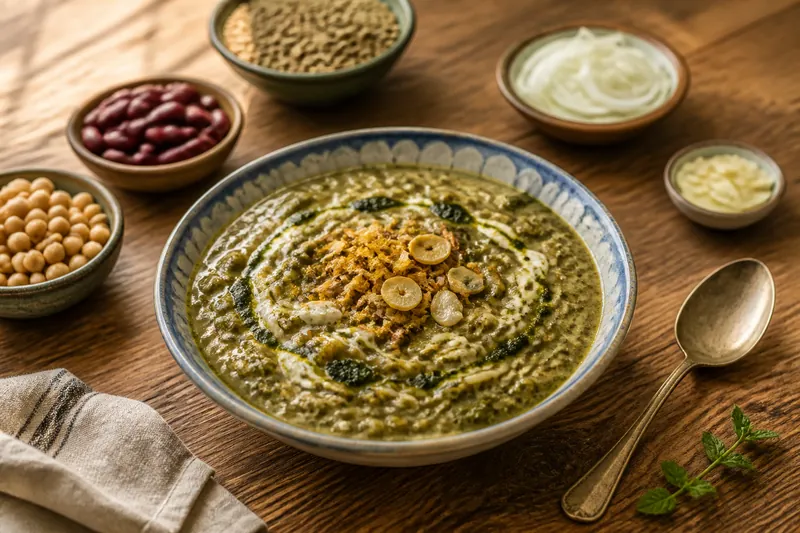
A thick herb and bean soup
Ash ReshtehPersianOpen the recipe →Ash reshteh is a hearty Persian soup built on beans, lentils, herbs, and noodles, finished with tangy whey or yogurt and fried onions. It tastes earthy, bright, and substantial, with the herbs keeping the bowl from feeling heavy. It is one of the most filling dishes on this list, and it stretches naturally to feed a crowd. The thing to know is that the soaking and simmering matter: start the beans the night before, and do not rush the pot once the noodles go in, or the texture turns muddy.
Slow-cooked breakfast for many
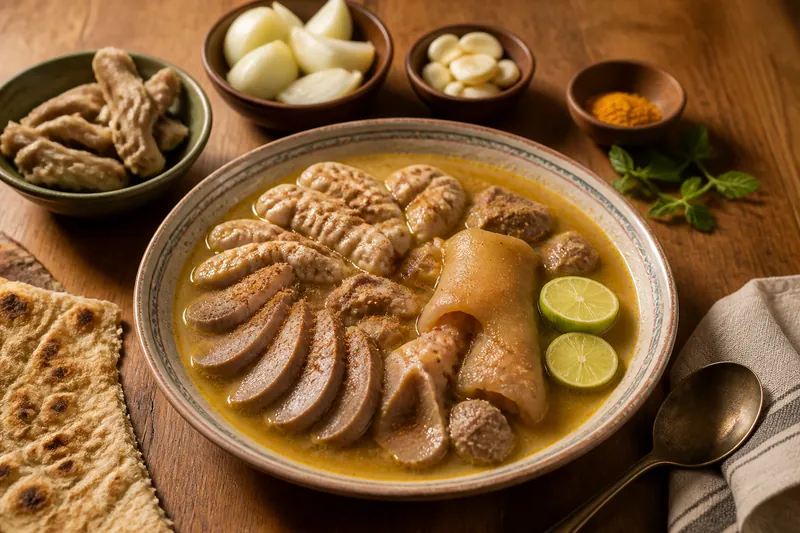 Kaleh PachehPersianOpen the recipe →
Kaleh pacheh is a long-cooked dish of sheep's head and trotters, served rich with broth, bread, lemon, and sometimes cinnamon. The flavor is deep and mineral, with the long simmer drawing out body and gelatin that make the broth luxurious. It is not a quick recipe, but it is an old one, made for patience and for sharing. Before starting, be ready for careful cleaning and skimming, and give the pot time. If the cooking is hurried, the broth stays thin and the meat does not loosen properly.
Date and walnut dessert with spice
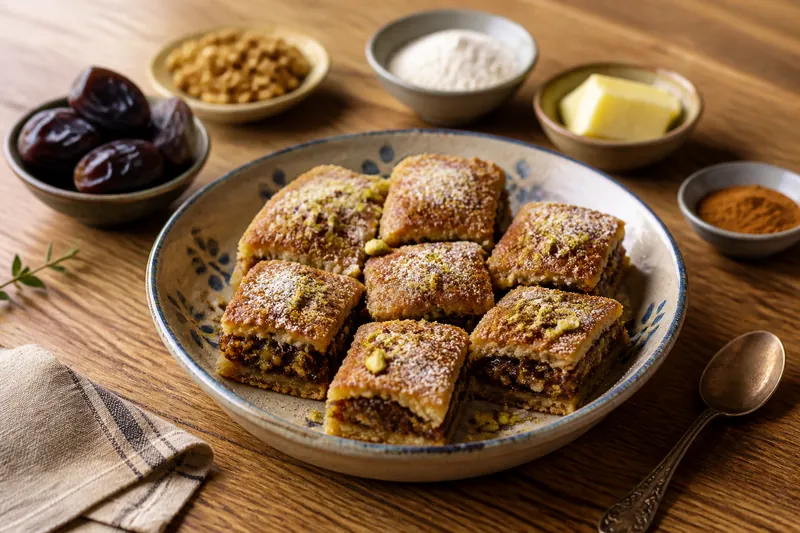 RanginakPersianOpen the recipe →
Ranginak is a simple Persian dessert of soft dates topped with toasted flour, butter, cinnamon, and walnuts. It tastes rich without being cloying, with the dates giving caramel depth and the spice keeping it warm and clean. It feeds a group easily because it is dense and cut into neat pieces. The main thing to know is that the flour topping needs attention; it should cook to a sandy brown, not a pale paste. Stir constantly, and spread the mixture while it is still warm so it sets evenly.
Crisp pastries for a crowd
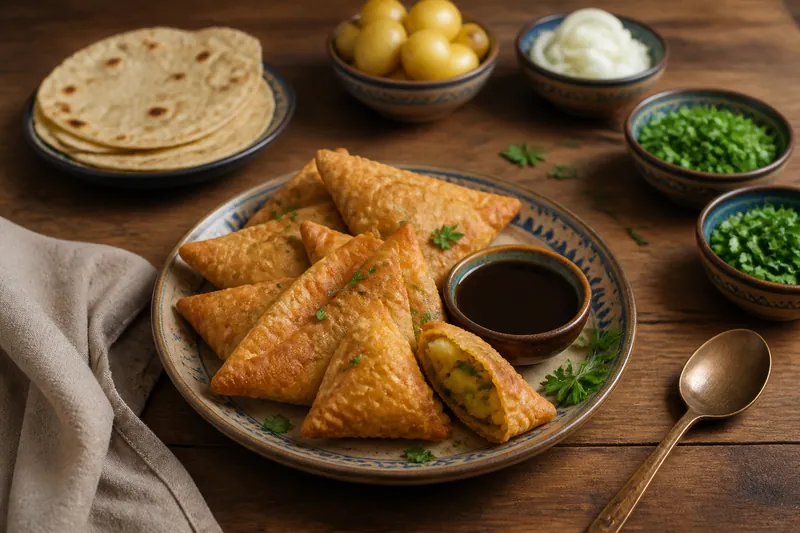 SamboosehPersianOpen the recipe →
Sambooseh are folded pastries, usually filled with herbs, meat, or potatoes, and fried or baked until crisp. They are savory, portable, and good for serving at a large table because they can be made in batches and eaten by hand. The appeal is in the contrast: shattering pastry outside, soft seasoned filling inside. The cook should know that the seal matters. If the edges are not pressed well, they open in the oil or oven. Keep the filling dry enough to pack neatly, or the pastry softens before serving.
Saffron rice pudding for company
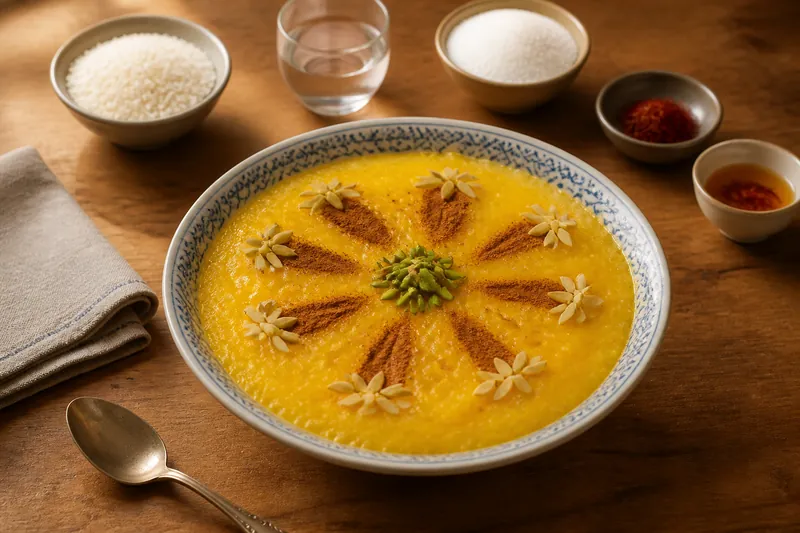 Sholeh ZardPersianOpen the recipe →
Sholeh zard is a golden rice pudding scented with saffron, rosewater, and cinnamon, often decorated with nuts in patterns across the top. It tastes delicate and fragrant, with enough sugar to make it a proper dessert but not so much that it loses its rice base. It is made in a big pot and served in portions, which makes it well suited to guests. The one thing to know is that the rice must be cooked down fully before the sugar goes in, or the pudding can tighten and take on a chalky texture.
Sticky sweets made for sharing
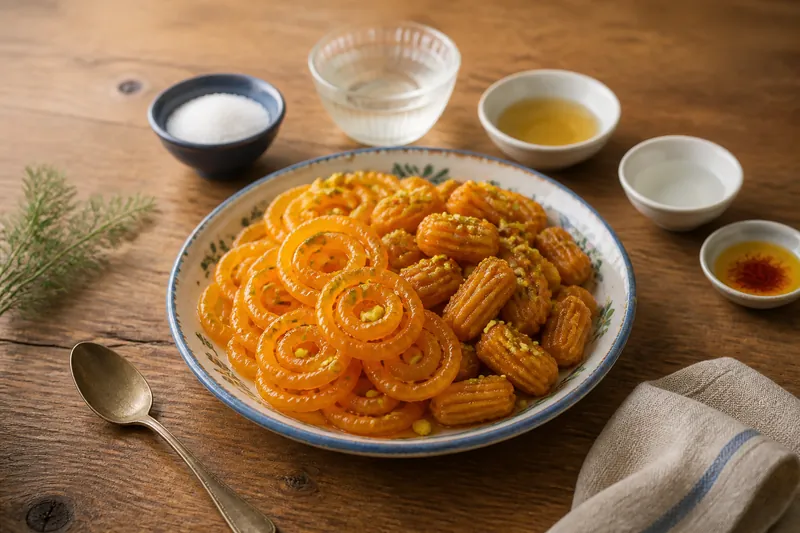 Zoolbia BamiehPersianOpen the recipe →
Zoolbia bamieh pairs honeyed, syrup-soaked spirals and ridges, made from a batter fried into crisp shapes and soaked until glossy. The result is sweet, floral, and crisp at first bite, then softer as the syrup settles in. It is a common festive sweet because it makes a large tray and keeps its shape well enough for guests to take pieces by the handful. The important thing is the syrup and oil temperature. If the syrup is too cool or the oil too hot, the sweets either soak badly or color too fast before cooking through.
These dishes show how Persian cooking serves a table: soups that thicken as they simmer, pastries that come in trays, sweets that are cut and shared. For six or more, the best choice is often the one that improves as it grows larger and gives everyone something to pass around.