Seven Persian Dinners Under 500 Calories Each
Simple Persian dishes can still feel complete at dinner, with herbs, eggs, vegetables, and careful portions keeping each plate light.
Persian cooking has an easy way of making a modest meal feel considered. Herbs, eggs, eggplant, yogurt, and potatoes can carry a dinner without needing much meat or fat.
The dishes here stay practical as well as light. Some are better as mains, some as smaller evening plates, and a few work as a final sweet course when you want to finish without weighing down the meal.
An onion-and-eggs supper
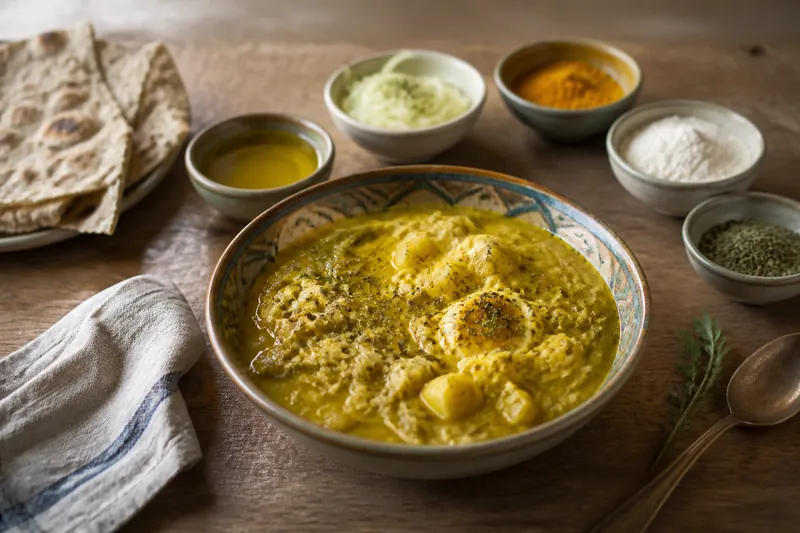
EshkenehPersianOpen the recipe →Eshkeneh is a soft, soothing Persian soup built from onions, turmeric, and eggs, often finished with dried mint and sometimes walnuts. It tastes gentle but layered: sweet from the onions, earthy from the spices, and rich enough from the egg to work as dinner. It is worth cooking when you want something fast, inexpensive, and filling without being heavy. The main thing to know is that the eggs should be added carefully so they set in delicate ribbons or soft curds, not hard lumps. Serve it with bread if you want a more complete meal.
Herb-packed and good hot or cold
 Kuku SabziPersianOpen the recipe →
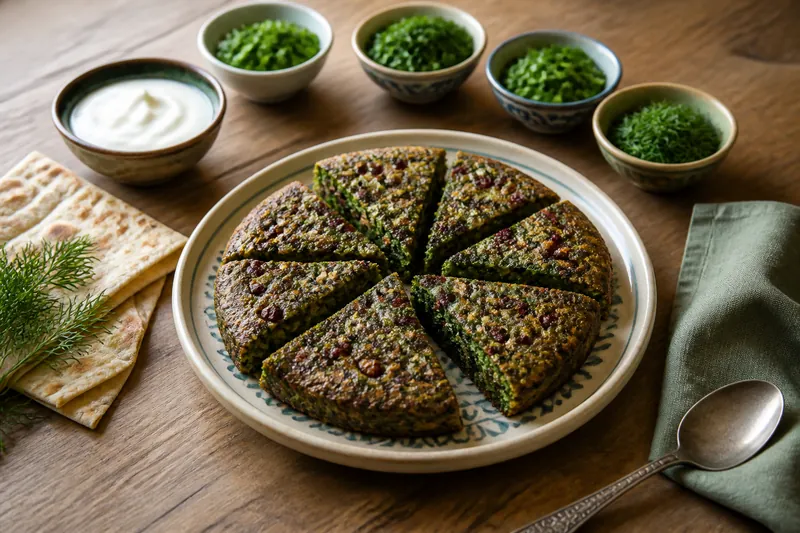
Kuku Sabzi is a Persian herb frittata, dense with parsley, cilantro, dill, and often scallions, with enough egg to hold everything together. It tastes fresh, green, and aromatic, with a light crust on the outside and a tender center. It is a good dinner because it is filling without relying on meat, and it keeps well for leftovers. What matters most is that the herbs need to be finely chopped and well dried; too much moisture makes the kuku soggy. A small slice goes a long way, especially with yogurt and salad.
Smoky eggplant with eggs
 Mirza GhasemiPersianOpen the recipe →
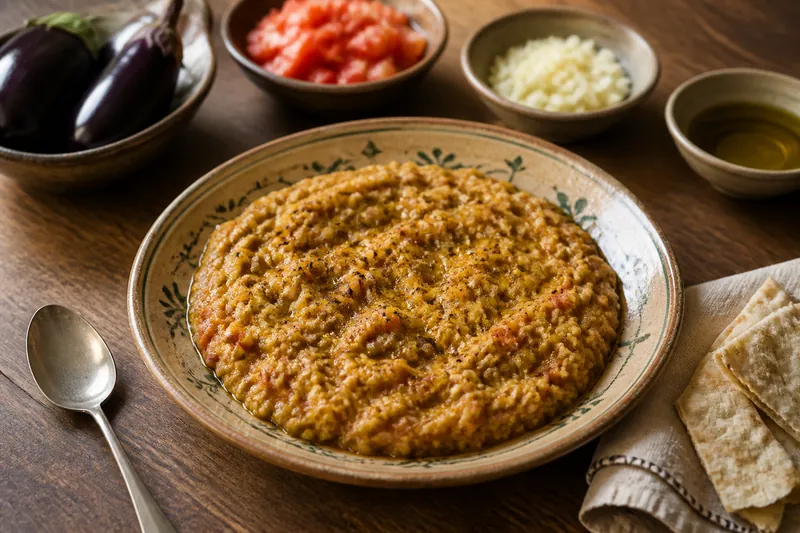
Mirza Ghasemi is a northern Persian eggplant dish made with charred eggplant, tomatoes, garlic, and eggs. The flavor is smoky, savory, and a little sweet from the cooked tomatoes, with the eggs folded in at the end to make it more substantial. It earns its place at dinner because it feels hearty without needing much oil or starch. The key step is giving the eggplant a real char, since that smoke is the point of the dish. If you rush that part, the result tastes flat. Bread or a few herbs beside it is usually enough.
Spinach and eggs, simply done
 NargesiPersianOpen the recipe →
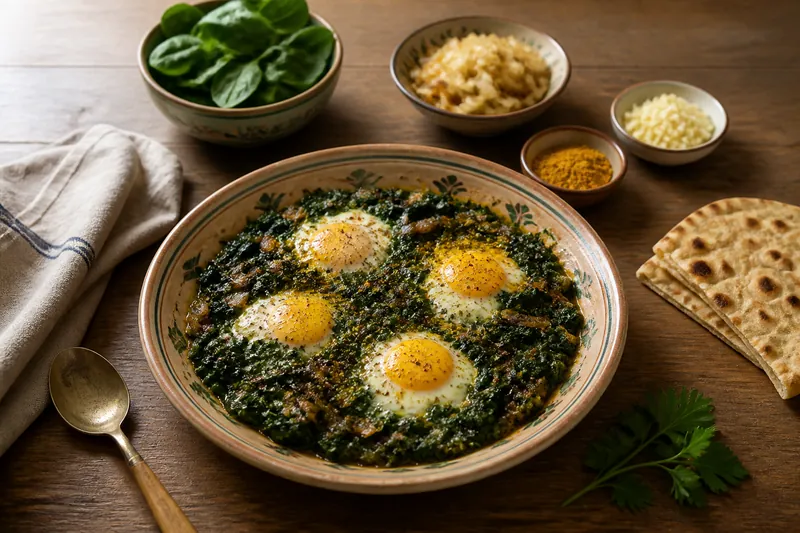
Nargesi is a simple Persian dish of spinach cooked down with onions and topped or folded with eggs. It tastes clean, mild, and comforting, with the spinach becoming silky and the eggs adding just enough richness to make it dinner. It is worth cooking when you want something very light that still feels warm and finished. The main thing to watch is the spinach: cook off as much water as possible before adding the eggs, or the dish can turn wet. It is best made at the last minute and eaten while the eggs are still soft.
Potato kuku with a crisp edge
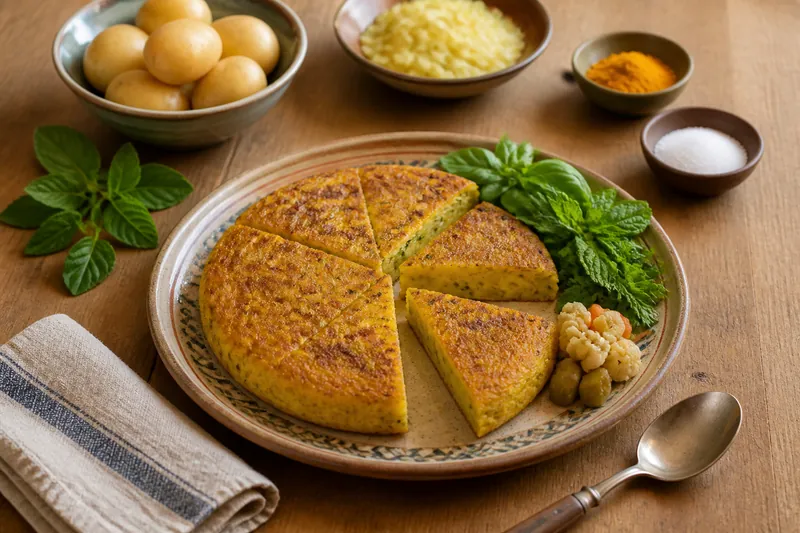 Kuku SibzaminiPersianOpen the recipe →
Kuku Sibzamini is a Persian potato dish that sits between a fritter and a frittata. It is usually made from mashed or grated potato mixed with eggs, onion, and seasoning, then cooked until the outside is crisp and the inside is soft. The taste is familiar and plain in the best sense: warm potato, browned edges, and enough egg to hold the shape. It works for dinner because a modest portion is satisfying. One thing to know is that the mixture should not be too loose; if the potatoes are wet, the kuku will break apart before it browns properly.
A small, cold finish
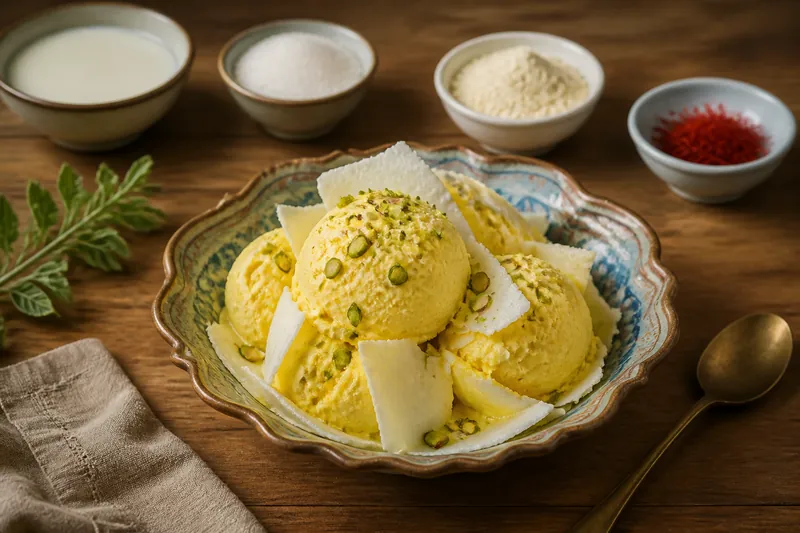 Bastani SonnatiPersianOpen the recipe →
Bastani Sonnati is traditional Persian ice cream, scented with saffron and often rosewater, with a texture that is richer and denser than most ice creams. It tastes floral, creamy, and warmly spiced, and a small serving can finish a light dinner without pushing the meal overboard. It is worth making when you want a dessert that feels distinctly Persian but not elaborate on the plate. The one thing to know is that the custard base needs time to chill and freeze properly; this is not a last-minute dessert, and the texture depends on patience.
Frozen noodles in sharp, sweet syrup
 Faloodeh ShiraziPersianOpen the recipe →
Faloodeh Shirazi is a classic Persian frozen dessert made with thin noodles set in a chilled syrup, usually brightened with lime or lemon. The texture is the point: icy, slushy, and slightly chewy, with a sharp sweetness that cleans the palate after a savory meal. It is worth making if you want something lighter than a rich dessert but still distinctly special. The key thing to know is that the noodles and syrup need enough freezing time to take on that granular, half-frozen texture, so plan ahead rather than trying to rush it.
Taken together, these dishes show how Persian cooking can keep dinner light without becoming dull. Use herbs, eggs, vegetables, and small portions of dessert, and you can stay comfortably under 500 calories with room for flavor.