8 Nigerian Dishes That Feed Six or More People
From soups rich with leaves and palm fruit to batches of snack food, these Nigerian dishes are built for a full table.
Cooking for six or more calls for dishes that can stretch without feeling thin. Nigerian soups, stews, and fried snacks do that well: they are generous, direct, and often better the next day.
This list stays with eight specific dishes that feed a crowd. Some work as the main event with swallow or rice, others as breakfast, party food, or a side that disappears fast.
Leafy, thick, and made for a full pot
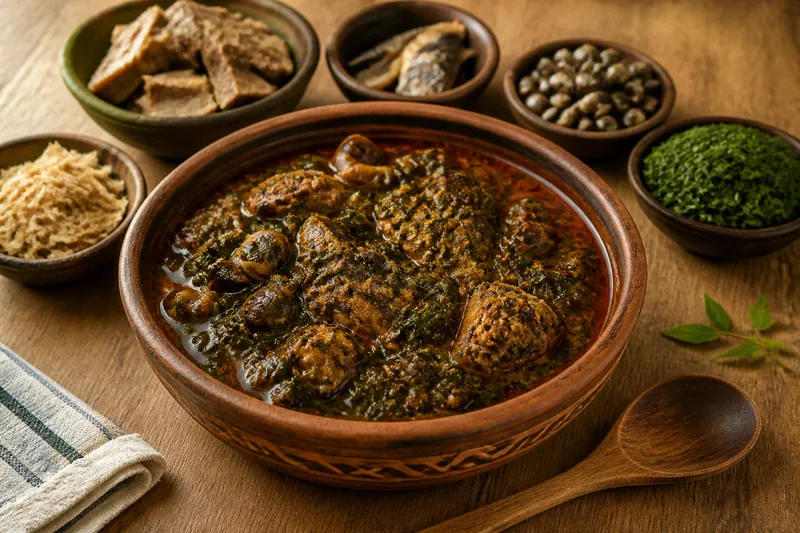
Afang SoupNigerianOpen the recipe →Afang Soup is a dense, green soup built on afang leaves and waterleaf, usually with meat, stockfish, and palm oil. It tastes earthy, savory, and slightly briny, with a texture that sits between broth and stew. It feeds a group well because the greens bulk out the pot without making it heavy. Serve it with fufu or pounded yam. One thing to know before starting: the leaves need proper prep and the waterleaf should cook down before the afang goes in, or the soup can turn watery.
Bean fritters that vanish quickly
 AkaraNigerianOpen the recipe →
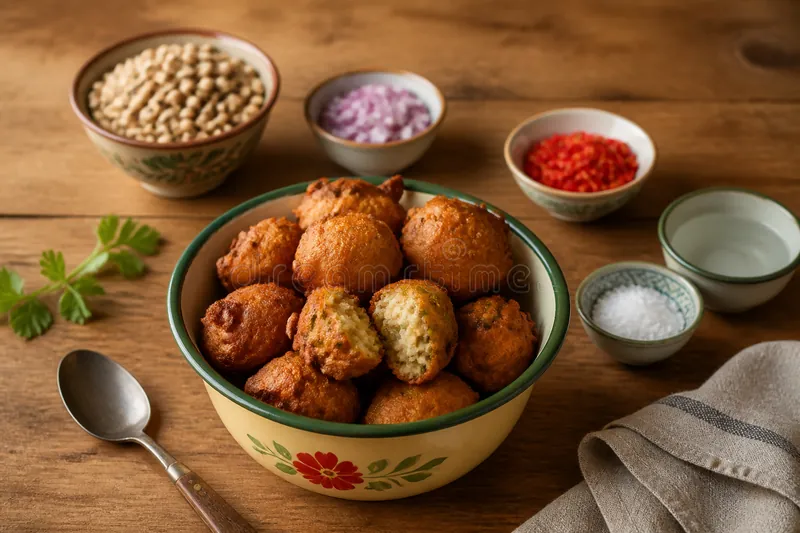
Akara are deep-fried bean cakes made from peeled black-eyed peas, onions, peppers, and salt. Crisp outside and soft inside, they taste nutty, peppery, and a little sweet from the beans. For six or more, they work well as breakfast, a snack, or part of a larger spread because the batter scales easily and fries quickly in batches. They are worth making when you want something simple that people eat hot. One thing to know before starting: the beans must be peeled well and the batter beaten enough to stay light, or the fritters can be dense.
Palm fruit soup with deep, rich flavor
 Banga SoupNigerianOpen the recipe →
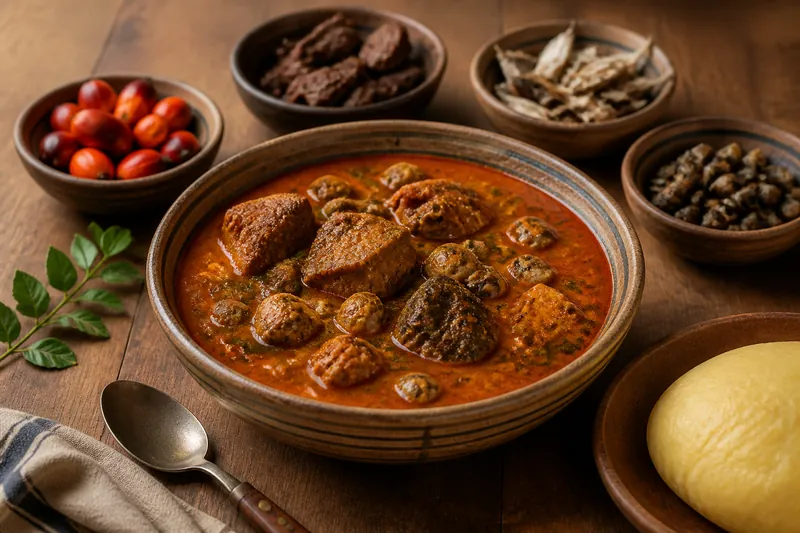
Banga Soup is made from palm nut extract, usually with meat or fish, scent leaf, and a spice mix that gives it a strong, rounded flavor. It is rich, oily, and fragrant, with a taste that is both smoky and warm. It feeds six or more because palm fruit extract makes a substantial base that holds up to plenty of meat. It is often served with starch or eba. One thing to know before starting: banga spice is part of the flavor, so the soup needs the right seasoning balance or it can taste flat.
Clear, hot, and good for a crowd
 Nigerian Pepper SoupNigerianOpen the recipe →
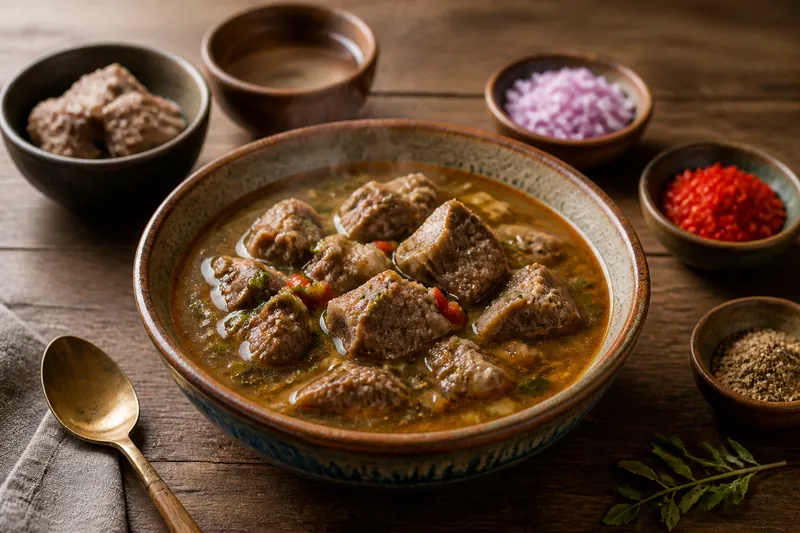
Nigerian Pepper Soup is a light broth with fish, chicken, goat, or assorted meat, scented with pepper soup spice and fresh pepper. It tastes sharp, aromatic, and clean rather than heavy, with heat that lingers. It is a useful dish for feeding six or more because the broth stretches well and the meat can be portioned generously. It suits gatherings where people want something warming without a thick sauce. One thing to know before starting: the spice blend matters, and the pepper should be strong but not so aggressive that it hides the meat.
White soup with clean, peppery depth
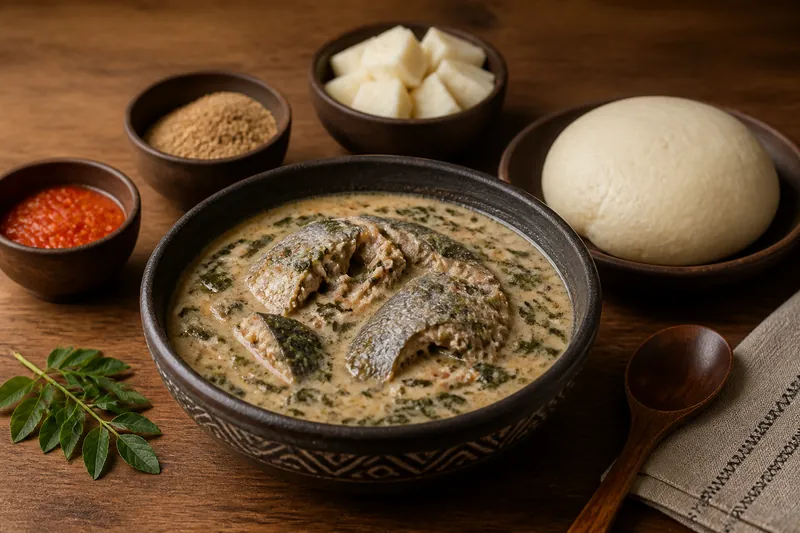 Nsala SoupNigerianOpen the recipe →
Nsala Soup, often called white soup, is made without palm oil and usually includes catfish or chicken, yam as a thickener, and uziza or other local spices. It tastes delicate at first, then peppery and deeply savory. It feeds a group well because the yam thickens the pot naturally and gives body without heaviness. It is a good choice when you want a soup that feels lighter than many other Nigerian soups. One thing to know before starting: the yam must cook until it can be mashed into the broth, or the texture will stay thin and uneven.
Slim, rich, and filling
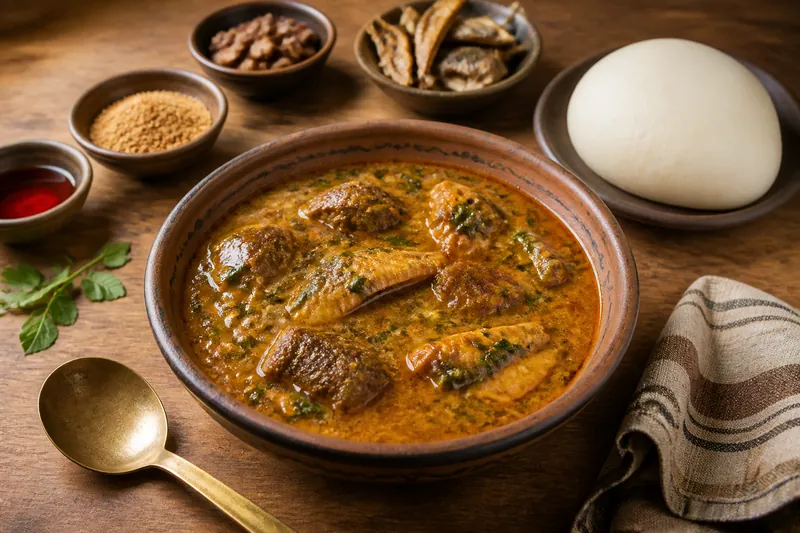 Ogbono SoupNigerianOpen the recipe →
Ogbono Soup is made from ground ogbono seeds, which give the soup its famous slippery texture. It usually includes meat, fish, palm oil, and leafy greens, and it tastes nutty, meaty, and deeply savory. It is an excellent dish for six or more because a small amount of ogbono thickens a large pot, making the soup feel ample and satisfying. It is often eaten with eba or pounded yam. One thing to know before starting: ogbono can clump if added carelessly, so it should be stirred into hot liquid gradually.
Tender leaves, rounded flavor
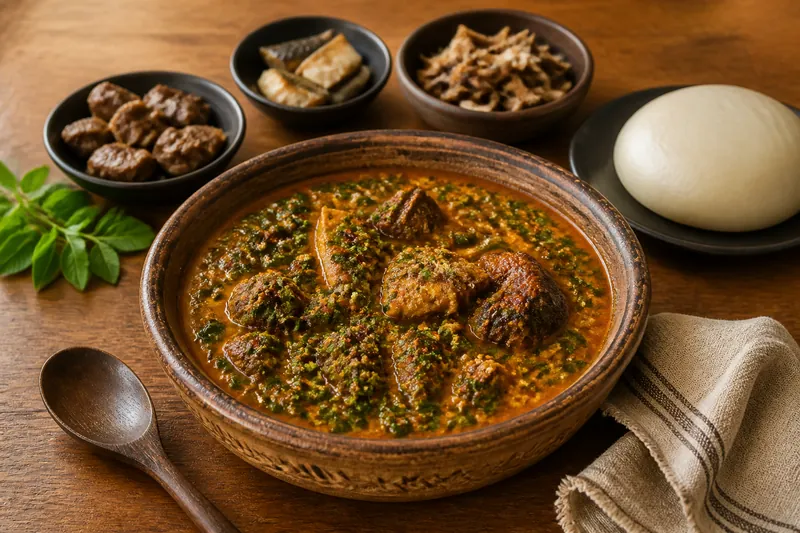 Oha SoupNigerianOpen the recipe →
Oha Soup is an Igbo soup made with oha leaves, cocoyam as a thickener, and meat or fish, often with palm oil and uziza for fragrance. It tastes soft, slightly peppery, and richly herbal, with a velvety body from the cocoyam. It feeds six or more because the thickened broth and added meat make it substantial enough for a shared meal. It is usually served with fufu. One thing to know before starting: oha leaves are best torn by hand and added near the end, so they stay tender and do not lose their flavor.
Sweet dough balls for a crowd
 Puff-puffNigerianOpen the recipe →
Puff-puff are soft fried dough balls made from a simple yeast dough, lightly sweetened and often scented with nutmeg. They taste airy, yeasty, and gently sweet, with a crust that turns golden and slightly crisp. They feed six or more easily because the dough makes a large batch and the pieces are meant to be shared from a bowl. They work for breakfast, parties, or as an afternoon snack. One thing to know before starting: the dough needs time to rise properly, and oil that is too cool will make the puff-puff greasy instead of light.
These dishes feed a table because they are built in pots and batches, not in singles. Some are best with swallow, some stand alone, and some disappear before anything else reaches the table. That is the point of cooking for six or more: enough, and then a little more.