Eight Egyptian Dishes That Feed Six or More
From tray bakes to sweets in syrup, these Egyptian dishes are sized for a table and built for sharing.

Egyptian cooking makes room for generous trays, long simmered sauces, and sweets meant to be passed around. These are the dishes that do that work well, whether the meal is a family lunch or a house full of guests.
Each one serves six or more, and each one brings a different balance of grain, meat, vegetables, and syrupy finish. Some are week-end projects; others come together quickly once the prep is done.
Rice, bread, and meat in one pan
Egyptian FattahEgyptianOpen the recipe →Egyptian Fattah is a layered dish of toasted bread, rice, and meat, usually finished with a garlicky tomato sauce or broth. It eats like a celebration: crisp at the bottom, soft in the middle, and rich on top. The flavor is savory and warm, with enough acidity to keep the dish from feeling heavy. It is worth cooking because it feeds a crowd without fuss at the table. The main thing to know is timing. Each layer needs to be ready when the others are, so have the bread crisped, the rice cooked, and the sauce hot before you assemble.
A green stew with depth
 Molokhia with ChickenEgyptianOpen the recipe →
Molokhia with Chicken is a silky stew made from chopped molokhia leaves, cooked with garlic, coriander, and chicken broth, then served with tender chicken. The texture is distinctive, more lush than soupy, and the taste is green, garlicky, and faintly earthy. It is one of the clearest examples of Egyptian home cooking that scales well for a large pot. Cook it gently and serve it soon after it is finished, because the texture is best when the broth stays smooth and the leaves do not overcook. A good stock makes a real difference here.
Eggplant baked into a meat sauce
 Egyptian Mesakaa (Eggplant Moussaka)EgyptianOpen the recipe →
Egyptian Mesakaa is a layered eggplant dish with a tomato-based sauce, often with meat, baked until soft and unified. It is not the creamy Greek version most cooks know; this one leans savory, tomato-rich, and full of browned edges from the eggplant. It is practical for feeding six or more because much of the work can be done ahead, then finished in the oven. The one thing to watch is the eggplant itself. Brown it well before baking, or it can turn bland and watery. Good browning gives the dish its character.
A bread pudding for a crowd
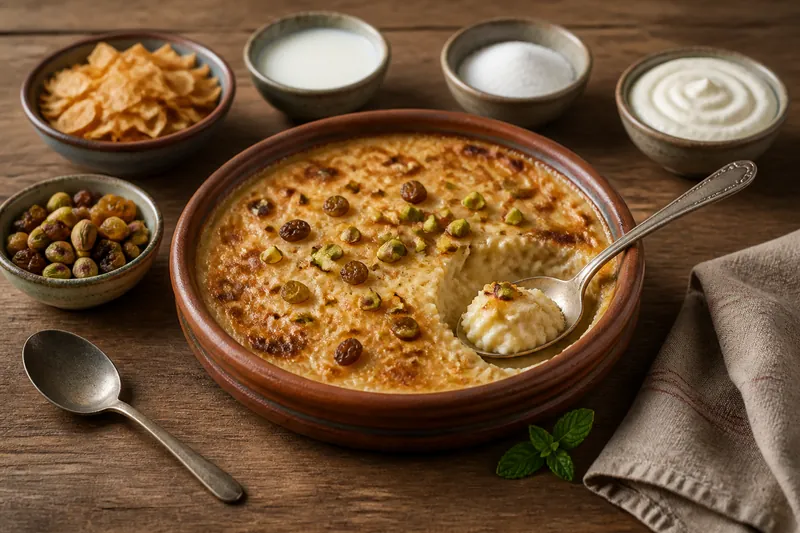 Om AliEgyptianOpen the recipe →
Om Ali is a baked milk pudding with pastry or bread, nuts, and sometimes coconut, turned soft and creamy in the oven. It tastes of warm milk, toasted nuts, and sweet spice, with a texture between bread pudding and custard. It is an easy dessert for six or more because it goes into one dish and is best served from it. The main thing to know is not to let the base sit too long before baking, or it can become soggy. You want some structure left so the top stays pale-golden and the inside stays lush.
A long, careful stuffed dish
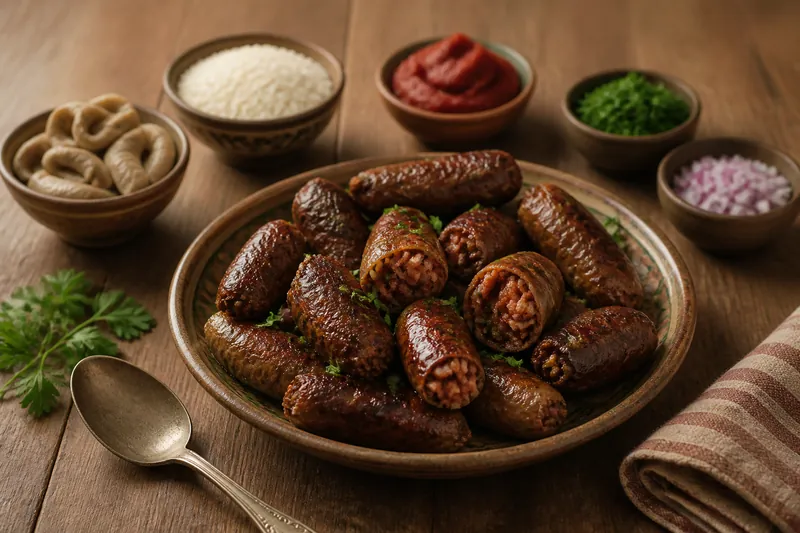 Mombar (Stuffed Sausage)EgyptianOpen the recipe →
Mombar is made from intestines stuffed with a rice mixture, then simmered or fried until the casing is tender and lightly crisped. It has a deep, seasoned flavor from the rice, herbs, and the richness of the sausage casing itself. This is the most hands-on dish on the list, but it rewards the effort with a festive plate that feeds many people. The key thing to know is cleaning and stuffing. The casings must be very well cleaned, and they should be packed loosely so the rice has room to expand during cooking.
Rice pudding, Egyptian style
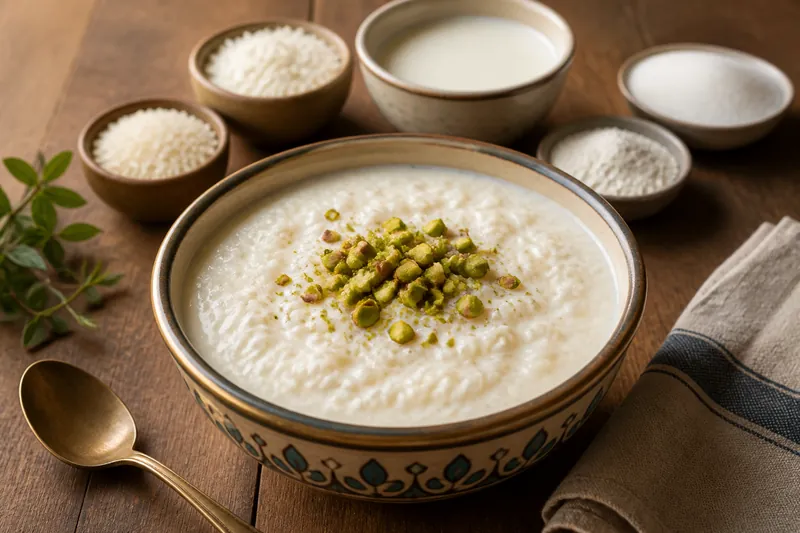 Roz Bel LabanEgyptianOpen the recipe →
Roz Bel Laban is a simple rice pudding made with milk, sugar, and rice, cooked until thick and spoonable. It is mild, creamy, and gently sweet, usually finished with cinnamon or nuts. For a large group, it is useful because it can be made in one pot and served warm or chilled. It is worth cooking when you want a dessert that is plain in the best sense: soothing, familiar, and easy to portion. The main thing to know is to stir often, especially near the end, because the milk can catch on the bottom.
Crisp fritters in syrup
 Balah el ShamEgyptianOpen the recipe →
Balah el Sham is a fried choux pastry, shaped into small ridged pieces and soaked in syrup. It is crisp outside, light inside, and sweet without being heavy if the syrup is balanced well. It makes a good dessert for six or more because the pieces are small and easy to share. The value of the dish is in contrast: hot, crisp pastry meeting cool or warm syrup. The important thing to know is to keep the oil at a steady temperature. If it is too cool, the pastries absorb too much fat; too hot, and they color before they cook through.
Semolina cake with syrup
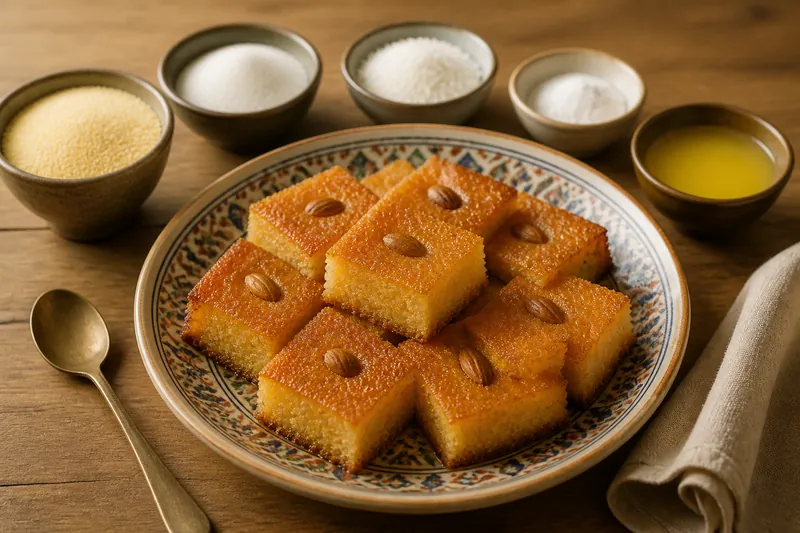 BasbousaEgyptianOpen the recipe →
Basbousa is a semolina cake soaked in syrup, often cut into diamonds and topped with almonds or coconut. It tastes of butter, grain, and sweet syrup, with a dense, sandy crumb that softens as it rests. It is a reliable dessert for feeding a group because one pan yields many neat portions. It is worth making when you want something that keeps well and improves after sitting. The thing to know is timing the syrup. Usually it should be poured over one hot and the other warm, so the cake absorbs it without turning heavy or dry.
These dishes cover the range of an Egyptian table: layered, stewed, baked, fried, and sweet. For a crowd, that range matters as much as flavor. Choose one main dish and one dessert, and you have enough food for a large group without forcing the cook to stand over the stove all night.