Eight Easy Moroccan Dishes to Cook at Home
From bean stews to skillet breads, these eight Moroccan dishes use simple methods, familiar pantry ingredients, and steady heat.
Moroccan home cooking is often built from a few practical habits: soaking beans, simmering until soft, and balancing spice with herbs, garlic, and olive oil. The dishes below are among the easiest to make without special equipment.
Some are stews, some are salads served warm or cold, and some are the sort of bread or snack that can stand in for a meal. They reward patience more than technique, which is why they suit a home kitchen so well.
A simple lentil pot
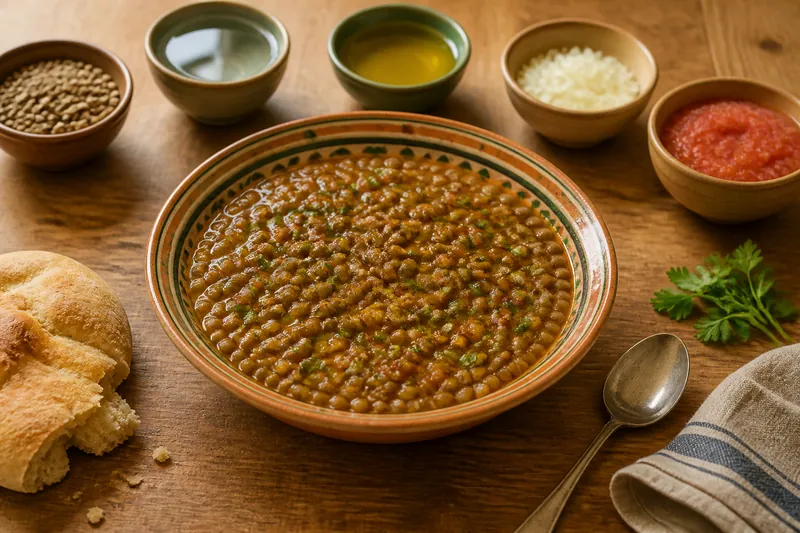
AdessMoroccanOpen the recipe →Adess is a straightforward Moroccan lentil dish, usually cooked until the lentils are soft and lightly seasoned. It has the comfort of a plain stew, but with garlic, cumin, and sometimes tomato giving it more depth than a basic pot of pulses. The texture should be thick rather than soupy, good with bread for scooping. It is worth cooking because it uses inexpensive ingredients and makes a filling meal with very little effort. One thing to know: the lentils should be watched toward the end, because they can go from just-tender to too soft quickly.
Fava beans turned silky
 BissaraMoroccanOpen the recipe →
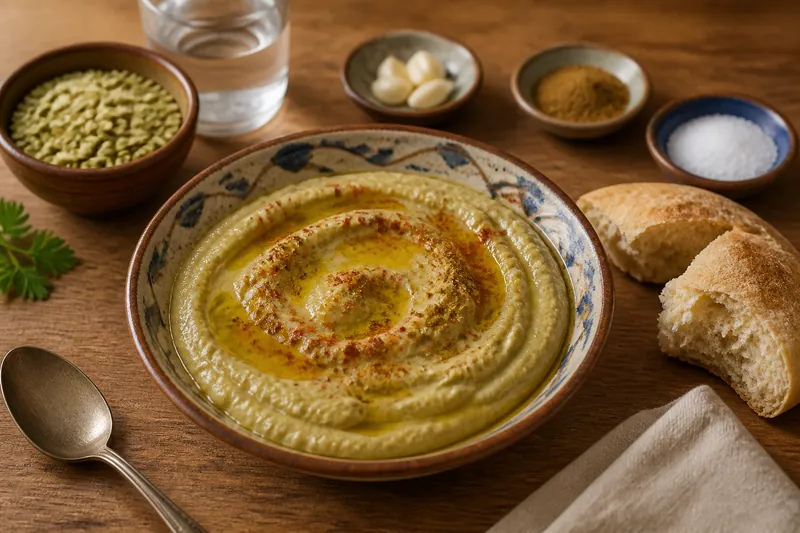
Bissara is a smooth Moroccan soup or puree made from dried fava beans, sometimes split peas, cooked down with garlic, cumin, and olive oil. The finished dish is earthy, warm, and plain in the best sense, with a texture that should be velvety and spoonable. It is often served with more olive oil and extra cumin on top. It is worth making because it turns a cheap pantry ingredient into a meal that feels complete. One thing to know: it needs enough time for the beans to break down fully, so do not rush the simmer.
A quick semolina bread
 HarchaMoroccanOpen the recipe →
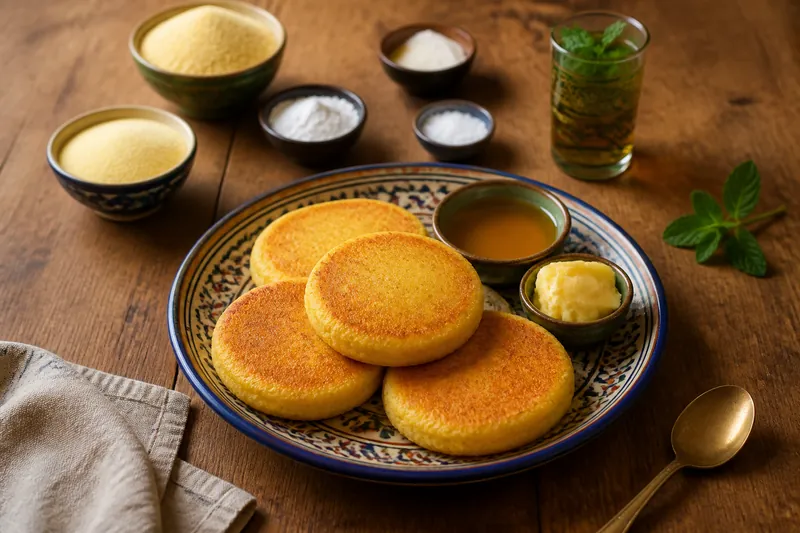
Harcha is a Moroccan skillet bread made with semolina, butter, and milk or yogurt, shaped into rounds and cooked until golden. It is firm at the edges, tender inside, and slightly crumbly, with a clean wheat flavor rather than sweetness. People eat it for breakfast, tea, or alongside savory dishes. It is worth cooking because it comes together quickly and does not need yeast or long rising. One thing to know: the dough should be handled gently and not overworked, or the bread can turn heavy instead of sandy and light.
Fast eggs with preserved meat
 Khlii with EggsMoroccanOpen the recipe →
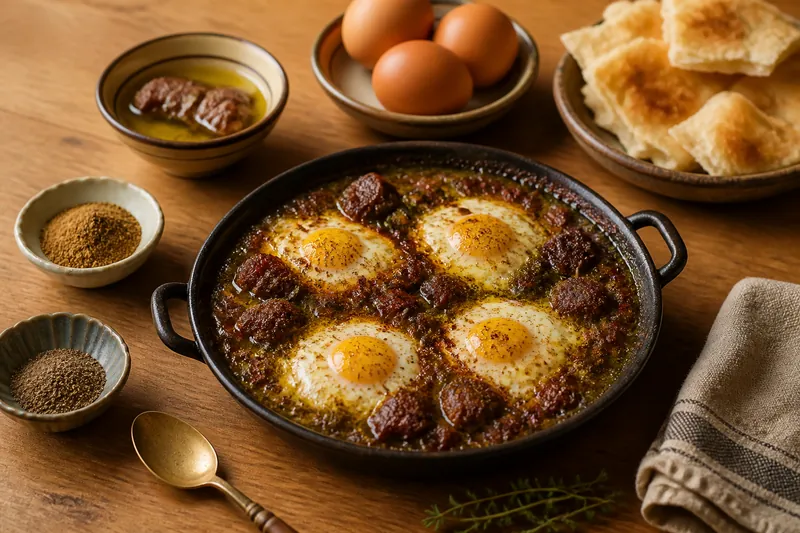
Khlii with Eggs is a brisk Moroccan pan dish that combines eggs with khlii, the preserved, spiced meat that brings salt, fat, and concentrated flavor. The result is rich and savory, with the eggs carrying the seasoning and softening the intensity of the meat. It is the sort of dish that needs little more than bread and perhaps olives on the side. It is worth cooking when you want breakfast or a quick supper with real depth. One thing to know: khlii is already seasoned and fairly salty, so taste before adding any extra salt.
White beans in a tomato stew
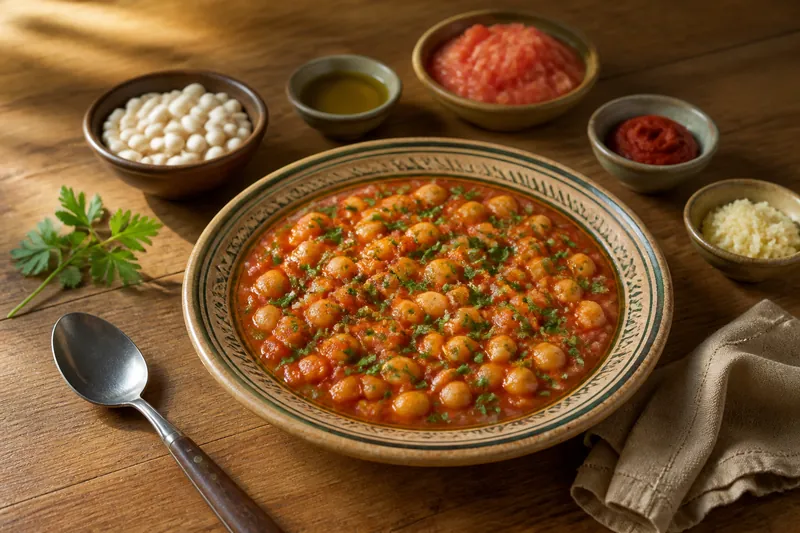 LoubiaMoroccanOpen the recipe →
Loubia is a Moroccan white bean stew, usually built with soaked beans, tomato, garlic, cumin, and paprika. It cooks into a soft, brothy pot with beans that are creamy at the center and sauce that is savory and gently spiced. It is satisfying with bread, and it often tastes even better after resting. It is worth cooking because it is forgiving, inexpensive, and easy to make in a large batch. One thing to know: the overnight soak matters, since dry beans need time to soften evenly and cook through without splitting apart.
Crisp potato fritters
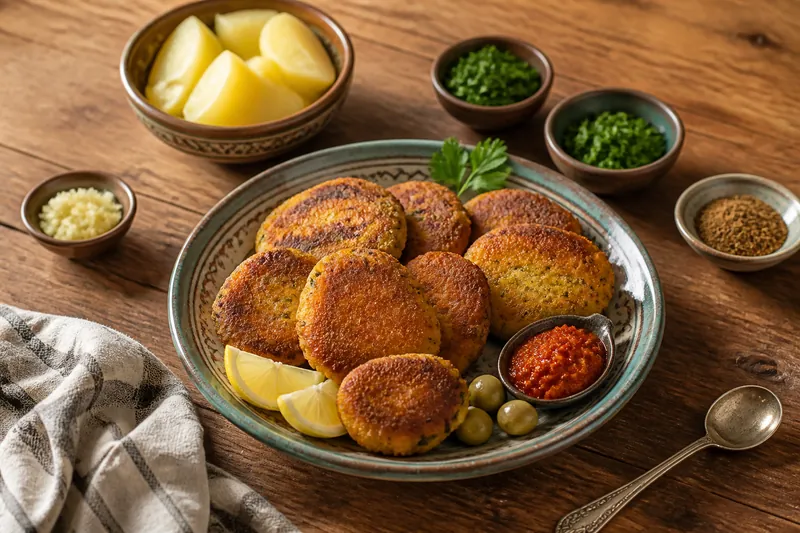 MaakoudaMoroccanOpen the recipe →
Maakouda are Moroccan potato fritters, usually mashed, seasoned, shaped into patties, and fried until crisp outside and soft inside. They are mild, comforting, and easy to vary with garlic, parsley, cumin, or a little chili. Served hot, they work as a snack, side dish, or sandwich filling. They are worth cooking because potatoes are cheap, familiar, and turn into something more interesting with almost no extra ingredients. One thing to know: the potato mixture should be dry enough to shape cleanly, or the fritters may fall apart in the pan.
Pepper and tomato salad
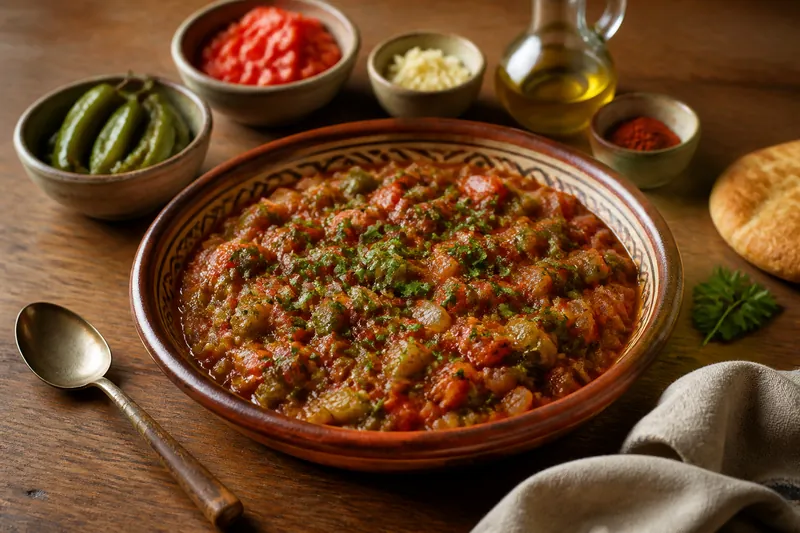 TaktoukaMoroccanOpen the recipe →
Taktouka is a cooked Moroccan salad of green peppers and tomatoes, softened together with garlic, olive oil, and usually a little paprika. It is glossy, mildly sweet, and savory, with the peppers still offering some shape while the tomatoes become a sauce. It can be eaten warm or at room temperature with bread. It is worth making because it uses simple vegetables and gives you something versatile for a mezze-style table. One thing to know: cook the vegetables until their liquid reduces, or the salad will taste thin rather than settled and concentrated.
Smoky eggplant salad
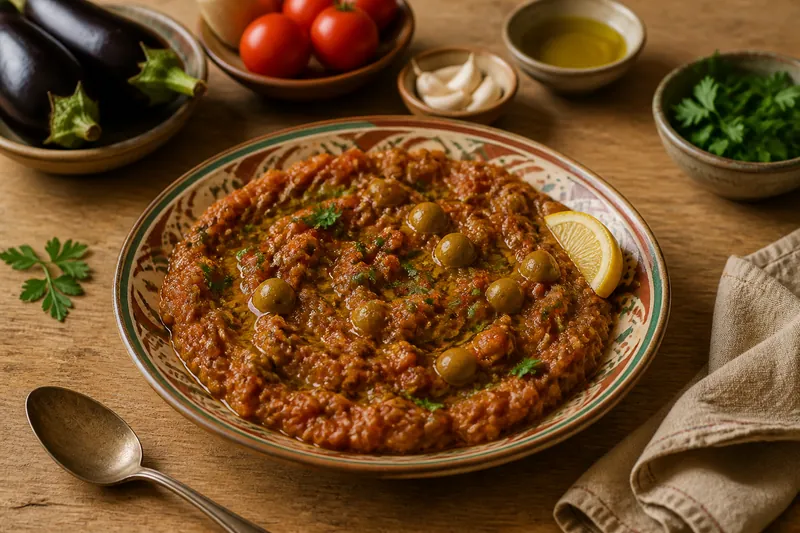 ZaaloukMoroccanOpen the recipe →
Zaalouk is a cooked Moroccan salad of eggplant and tomato, flavored with garlic, cumin, paprika, and olive oil. The eggplant softens completely, giving the dish a spreadable texture that is smoky, savory, and gently tangy. It is usually served at room temperature or chilled, with bread for scooping. It is worth cooking because it turns a small number of vegetables into a dish that feels rich and layered. One thing to know: the eggplant should be cooked until very soft and the mixture reduced well, otherwise it can taste watery and flat.
These dishes are useful starting points because they rely on steady simmering, a few aromatics, and ingredients that are easy to find. Begin with the ones that suit your pantry and your schedule, then learn the rest one by one. Moroccan food at home is often simple before it is elaborate.