10 Yemeni Dishes to Know, From Bint al-Sahn to Maraq
These are the best-known dishes in Yemeni cooking, from flatbreads and fermented batters to slow-cooked stews and bean dishes.
Yemeni cooking is built on grains, bread, beans, spice, and long, patient heat. Many of its best-known dishes are made for sharing, and several are tied to the rhythms of soaking, fermenting, and slow cooking.
The dishes below show that range clearly. Some are soft and porridge-like, others crisp or layered, and many are eaten with the hands, with bread, or from a common plate.
A staple eaten with sauce
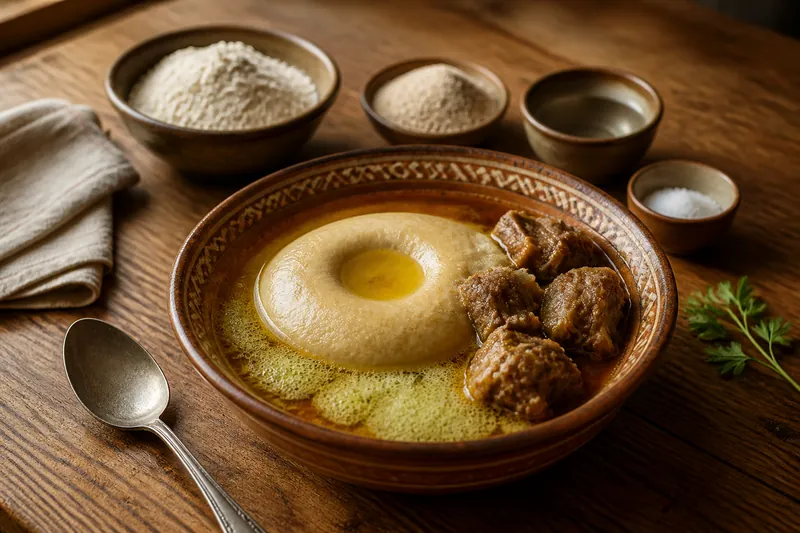
AseedYemeniOpen the recipe →Aseed is a dense Yemeni dough or porridge made from flour and cooked until smooth and elastic, then served with a seasoned sauce, often meat-based. It is mild on its own, but it takes on the flavor of whatever is spooned over it, which is part of its appeal. The texture is the point: warm, supple, and satisfying rather than airy. It is worth cooking because it turns simple pantry ingredients into a full meal. One thing to know is that it needs constant stirring and steady heat if you want it smooth rather than lumpy.
Honeyed layers of bread
 Bint al-SahnYemeniOpen the recipe →
Bint al-Sahn is a layered Yemeni bread brushed with butter or ghee and finished with honey and often nigella or sesame. It bakes into a tender, flaky mass that pulls apart in sheets, with a rich, sweet-salty flavor. It is one of the most recognized Yemeni celebratory dishes, especially at the table with tea or coffee. It is worth making because the layers give it a texture unlike a simple flatbread, and the finish is fragrant rather than heavy. A cook should know that the dough needs rest and gentle handling to stay soft enough to stretch.
A meat stew finished at the table
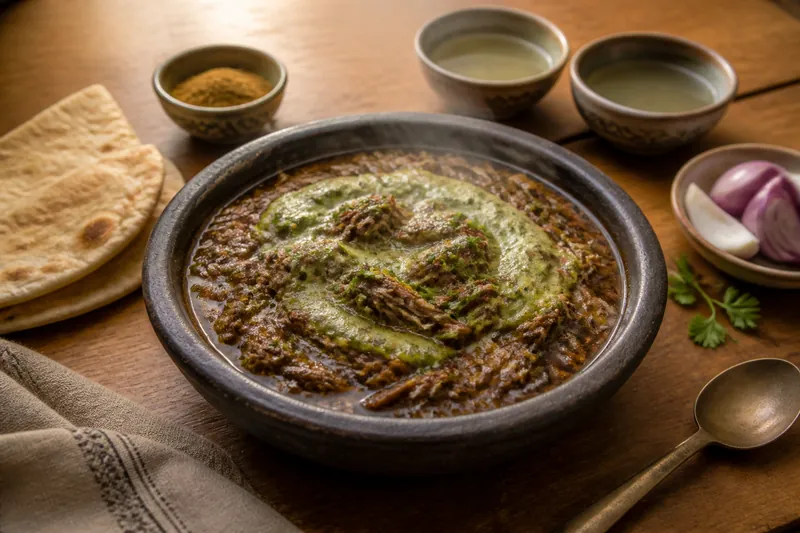 FahsaYemeniOpen the recipe →
Fahsa is a slow-cooked Yemeni meat stew, usually thickened and finished with spices so it can be served bubbling and hot, often in a stone pot. The flavor is deep and savory, with warmth from aromatics rather than sharp heat. It is commonly eaten with bread, which is used to scoop up the sauce. It is worth cooking because it has the concentrated comfort of a long-simmered stew in a form meant for sharing. One thing a cook should know is that the overnight soaking step is not optional if you want the right texture and an even cook.
Slow beans for breakfast or supper
 Foul MudammasYemeniOpen the recipe →
Foul Mudammas is a dish of cooked fava beans seasoned with oil, spices, and often tomato, onion, or herbs. In Yemeni kitchens it is a practical, filling dish with a soft, earthy taste and a comforting thickness. It can be served for breakfast, lunch, or dinner, usually with bread. It is worth cooking because it asks for little beyond time and good seasoning, yet it eats like a full meal. A cook should know that the beans need plenty of soaking and gentle cooking to become creamy rather than chalky.
Long-baked dough for the next morning
 JachnunYemeniOpen the recipe →
Jachnun is a rolled pastry made from dough spread with fat, rolled tight, and baked very slowly until it turns deep golden and tender. It is usually served with tomato sauce and a grated egg, and the flavor is rich, slightly sweet, and deeply browned. The long bake gives it its distinctive soft, almost caramelized character. It is worth making for its unusual texture and the way it turns a simple dough into something special. One thing to know is that it is a timing dish: the dough must rest properly, and the oven time is measured in hours, not minutes.
Quick bread from the pan
 Khubz TawaYemeniOpen the recipe →
Khubz Tawa is a simple Yemeni flatbread cooked on a hot griddle or pan. It is soft, lightly browned, and useful for scooping stews or wrapping fillings. The flavor is plain and wheaty, with just enough browning to make it more than a wrapper. It is worth cooking because it is one of the quickest ways into Yemeni bread culture and it goes with almost everything on the table. A cook should know that the dough should be supple, not stiff, and the pan should be hot enough to give color without drying the bread out.
A slow-baked, pull-apart loaf
 KubanehYemeniOpen the recipe →
Kubaneh is a soft, enriched bread baked slowly until the outside turns brown and the inside stays tender and layered. It is often served with tomato, eggs, or savory accompaniments, and it has a rich, buttery flavor. The long cooking time is what gives it its particular character: a crust that is dark enough for depth, but not hard. It is worth cooking because the loaf pulls apart in thick, satisfying pieces. One thing to know is that the dough and shaping matter as much as the bake; it needs patience to develop its layered crumb.
A spongy bread with holes
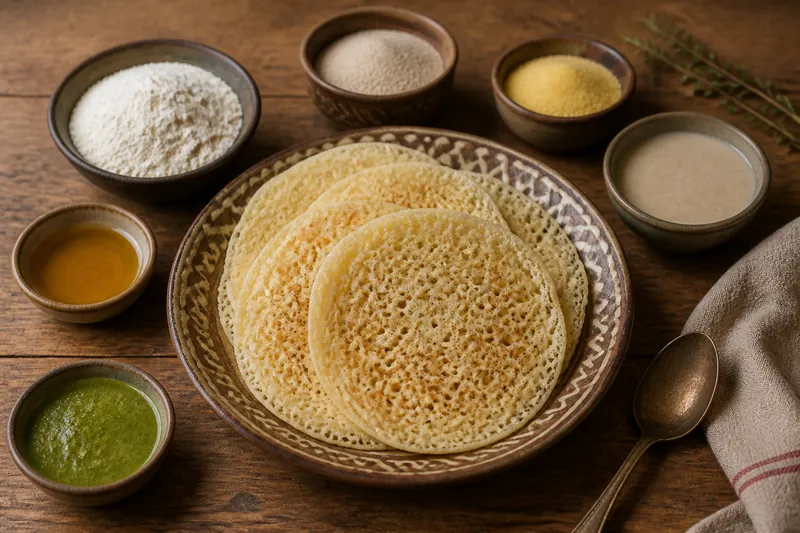 LahohYemeniOpen the recipe →
Lahoh is a fermented Yemeni pancake or bread with a porous, spongy surface and a gentle sourness. It cooks quickly once the batter has fermented, and the result is light, tender, and good for soaking up sauces or stews. Its flavor is subtle, but the fermentation gives it more character than a plain flatbread. It is worth cooking because it bridges bread and pancake, and it fits both savory and sweet uses. A cook should know that the batter needs real fermentation time; the holes and airy texture depend on it.
Folded bread with a soft crumb
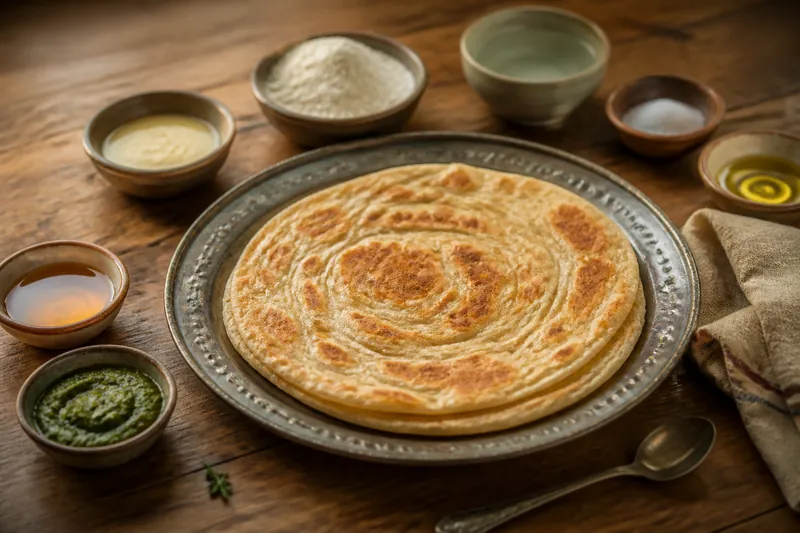 MalawahYemeniOpen the recipe →
Malawah is a pan-cooked layered bread, richer than a plain flatbread and usually soft enough to tear by hand. It has a lightly browned surface and a tender interior, with the flavor of dough, fat, and heat rather than strong seasoning. It is often eaten with savory dishes, but it can also stand alone with honey or cheese. It is worth cooking because the layers give it a more interesting texture than a simple round bread. One thing a cook should know is that the dough needs resting and shaping patience so the layers stay distinct.
Broth that carries the meal
 MaraqYemeniOpen the recipe →
Maraq is a Yemeni broth or soup, often made with meat and vegetables, and seasoned to be fragrant, warm, and deeply savory. It can be light enough to sip or substantial enough to serve with bread and rice, depending on how it is made. The flavor comes from slow-simmered bones, onions, spices, and the vegetables that enrich the pot. It is worth cooking because it is one of the most useful forms in Yemeni cooking: simple, flexible, and satisfying. A cook should know that the broth improves with steady simmering, not a hard boil.
These dishes show Yemeni cooking as practical but never plain. Bread, beans, and stews do the work, and time is often part of the ingredient list. If you cook even a few of them, the pattern becomes clear: restraint, depth, and food meant to be shared.