10 Sri Lankan Dishes Worth Learning First
From sour fish curries to sweets for festivals, these ten dishes show the range, spice, and careful balance of Sri Lankan cooking.
Sri Lankan cooking is built on contrast: sharp tamarind, coconut, black pepper, jaggery, curry leaves, and rice in many forms. Some dishes are everyday food, others are made for ceremony, but each one is direct in flavor and careful in method.
The dishes below are among the best known and most representative. Some are quick to assemble, while others ask for soaking, slow cooking, or a steady hand with syrup. Together they show how Sri Lankan food moves between savory heat and deep, rounded sweetness.
A sour fish curry with a dry finish
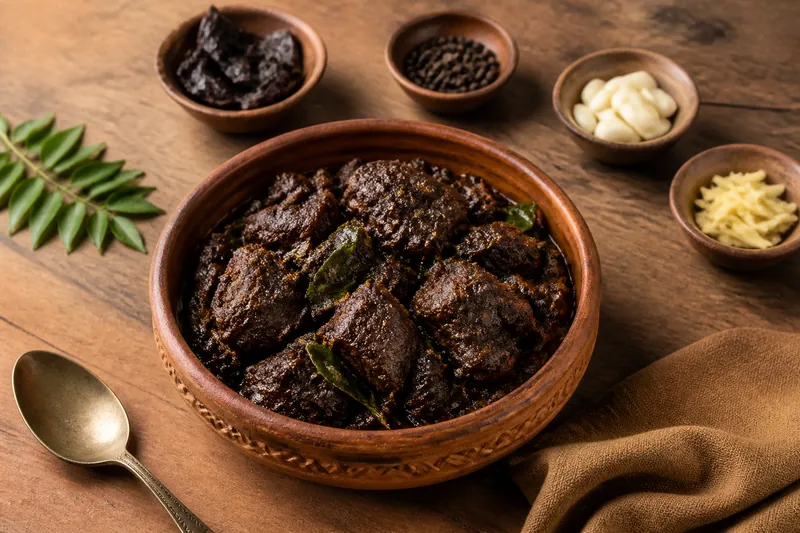
Ambul ThiyalSri LankanOpen the recipe →Ambul Thiyal is one of the clearest expressions of Sri Lankan sourness: firm fish coated in a paste of black pepper, goraka or another souring agent, and spices, then cooked down until the surface clings tightly to the fish. It tastes deeply savory, sharp, and slightly smoky, with little sauce left behind. That dry, concentrated texture is what makes it distinctive. It is worth cooking because a small amount gives strong, balanced flavor. The main thing to know is not to rush the reduction; the paste should darken and tighten without burning.
Herbal and bright, served fresh
 Gotu Kola SambolSri LankanOpen the recipe →
Gotu Kola Sambol is a raw salad of finely chopped gotu kola leaves mixed with coconut, shallot, chili, lime, and salt. It is fresh, green, and lightly peppery, with coconut softening the sharpness of the aromatics. As a side dish, it cuts through richer curries and rice with very little effort. It is worth making because it needs no cooking and relies on clean chopping and good seasoning rather than technique. The one thing to know is that the leaves should be sliced finely; otherwise the salad can feel coarse and fibrous.
Steamed rice noodles in nest form
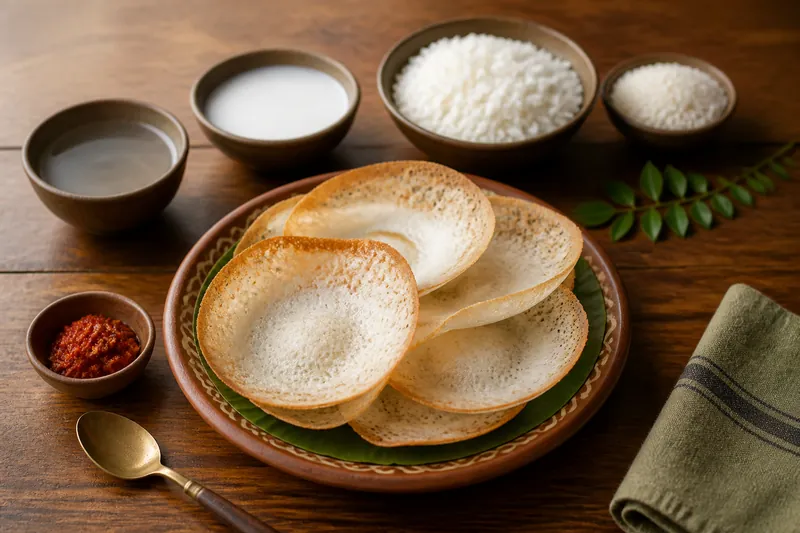 AppaSri LankanOpen the recipe →
Idiyappam are delicate noodles pressed from a rice flour dough into thin strands, then steamed into soft, lacy discs. They are mild in flavor, with a tender bite that suits curries, coconut milk, or sweet accompaniments. In Sri Lankan meals they often serve as the base rather than the main flavor. They are worth learning because they turn a simple pantry ingredient into something elegant and useful. The main thing to know is that the dough must be smooth and pliable; if it is too dry, the strands will break, and if too wet, they will clump.
A hot, aromatic crab curry
 Jaffna Crab CurrySri LankanOpen the recipe →
Jaffna Crab Curry is bold and highly spiced, drawing on the cooking of Sri Lanka’s north. Crab is simmered with chile, curry leaves, black pepper, fennel, and often tamarind or another sour note, producing a sauce that is fiery, fragrant, and well suited to bread or rice. The flavor is direct but layered, with the sweetness of crab standing up to the spice. It is worth cooking for the way it delivers both richness and heat. One thing to know is that crab needs careful handling: clean it well first, and crack the shells enough for the sauce to get inside.
Crisp lentil cakes with shrimp
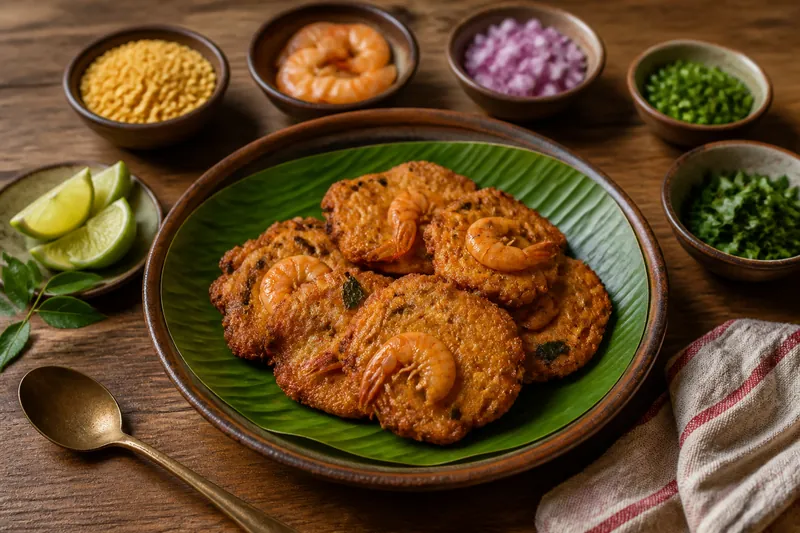 Isso VadeSri LankanOpen the recipe →
Isso Vade are deep-fried lentil cakes topped with prawns or shrimp, often sold as street food and eaten hot. The lentil base is crisp at the edges and soft inside, while the seafood on top adds salt, sweetness, and a little chew. Spices, onion, and chili usually give the cakes more depth, but the appeal is in the contrast of textures. They are worth making because they feel substantial and lively at once. The one thing to know is that the lentils need their soaking time; without it, the batter will not grind or shape properly.
Deep-fried sweets for special occasions
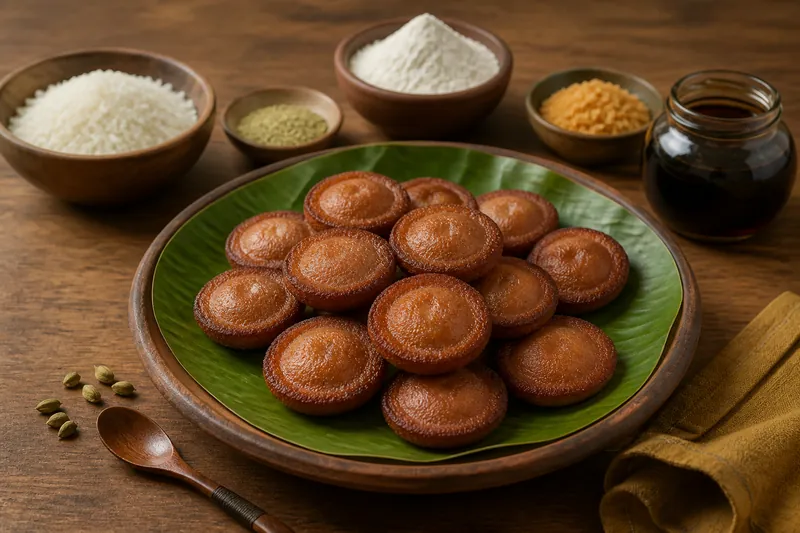 KavumSri LankanOpen the recipe →
Kavum are fried cakes made from rice flour, treacle, and sometimes spices, shaped into the rounded form that gives them their familiar look. They are sweet, dense, and fragrant, with a dark crust and a softer center. These are festival sweets, often prepared with patience and care rather than speed. They are worth knowing because they show how Sri Lankan cooking treats sweetness with the same attention as savory food. The main thing to know is that the batter needs time to rest and thicken; if it is too loose, the cakes spread instead of holding shape.
Simple sweet squares with a clean finish
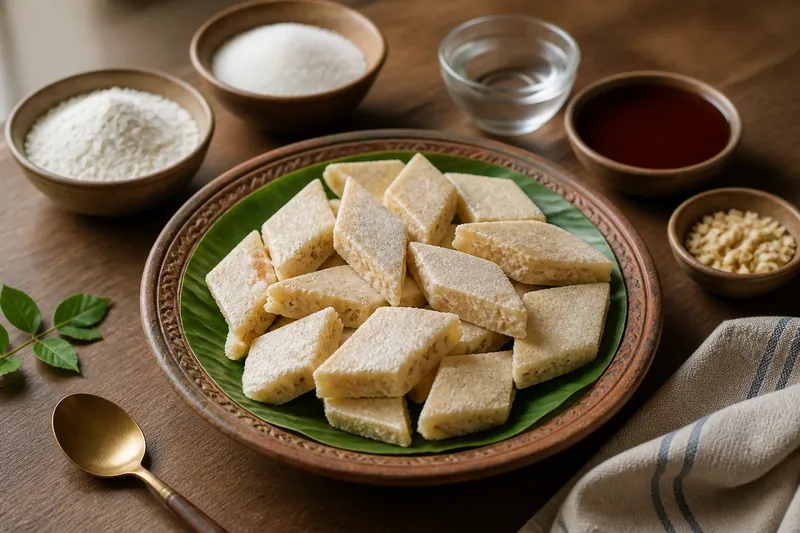 AluwaSri LankanOpen the recipe →
Aluwa is a confection made from flour, sugar or treacle, and often cashews or spices, cooked and then pressed into a tray to set before being cut into pieces. It is firm, sweet, and slightly crumbly, with a plainness that makes it easy to eat and easy to share. Because it is not heavily flavored, the quality of the syrup matters. It is worth making for its economy and clarity: a few ingredients become something that lasts well and travels easily. The one thing to know is that the mixture must be cooked enough to lose raw flour taste, but not so long that it hardens before shaping.
A dark coconut cake with fruit
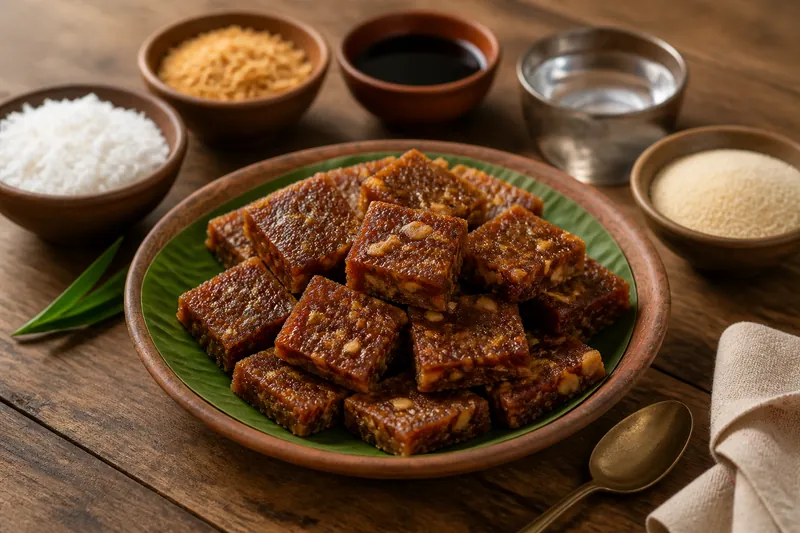 BibikkanSri LankanOpen the recipe →
Bibikkan is a rich cake made with grated coconut, jaggery, spices, and dried fruit or candied peel. It is dense, moist, and deeply flavored, with a dark sweetness that comes from the jaggery rather than frosting or cream. The texture is closer to a heavy sweet loaf than a sponge cake, and it keeps well. It is worth cooking because it shows how Sri Lankan sweets can be robust and perfumed at the same time. One thing to know is that the coconut and jaggery mixture should be well combined before baking; uneven mixing leaves pockets that bake poorly.
Sticky, glossy toffee-like sweet
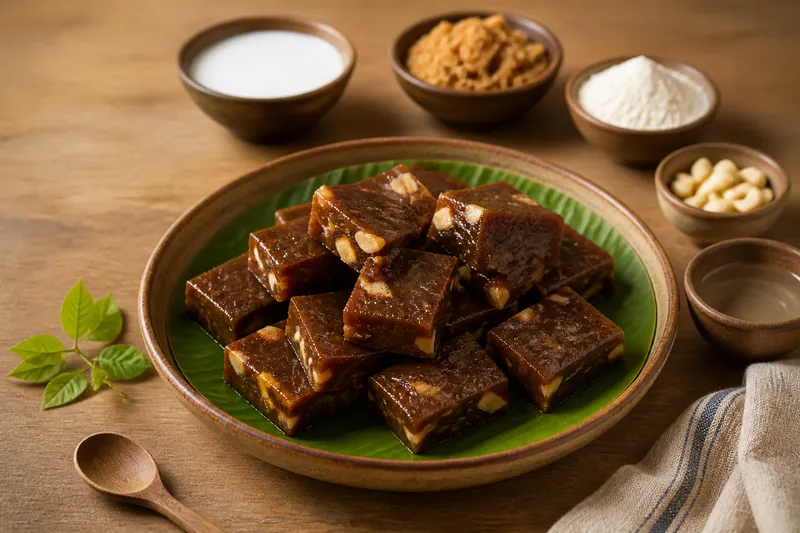 DodolSri LankanOpen the recipe →
Dodol is made by cooking coconut milk, jaggery, and rice flour or similar starch slowly until the mixture thickens into a glossy, elastic mass. Once set, it is sliced into chewy pieces with a texture that sits between fudge and toffee. The flavor is deep, caramel-like, and coconut-rich, with a little spice in some versions. It is worth making because it rewards patience more than complexity. The one thing to know is that it needs constant stirring; without that, it can catch on the pan before it reaches the right thickness.
These dishes range from sharp and savory to rich and sweet, but they share the same disciplined use of spice, coconut, and time. Taken together, they give a useful picture of Sri Lankan cooking: varied, direct, and built on careful balance rather than excess.