10 Persian Dishes to Know, From Stews to Sweets
These ten dishes show the range of Persian cooking, from brothy stews and herb soups to rice dishes, grilled meat, and chilled desserts.
Persian cooking is generous with herbs, sour fruit, rice, and long-cooked meats. It has dishes for everyday meals and dishes reserved for guests, but the grammar is the same: careful seasoning, layered flavor, and patience where it matters.
These ten recipes are among the best known because they show that range clearly. Some are modest and homey, some are formal, and some are sweet endings rather than main courses, but all are central to how Persian food is remembered and cooked.
The slow-cooked stew that becomes a meal
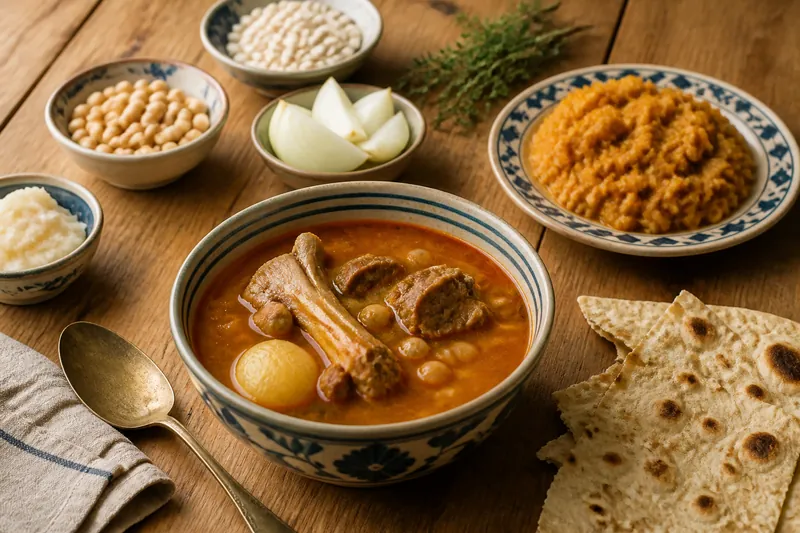
AbgooshtPersianOpen the recipe →Abgoosht is a sturdy lamb-and-chickpea stew, usually enriched with potatoes, tomatoes, and dried lime. It is both broth and mash: the liquid is sipped or soaked up with bread, while the solids are crushed together into a rough purée. The flavor is deep, tangy, and faintly smoky from the lime. It is worth cooking because it turns modest ingredients into something complete and satisfying. One thing to know before starting: the beans need soaking, and the long simmer is part of the dish’s character, not wasted time.
Rice with lentils and a gentle sweetness
 Adas PoloPersianOpen the recipe →
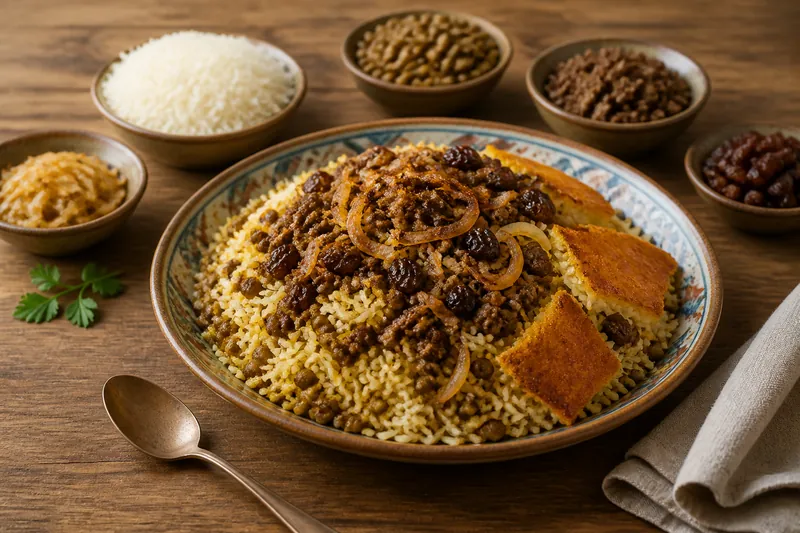
Adas Polo is a rice dish built with lentils, often finished with caramelized onions and sweet accents such as raisins or dates. It has the comfort of a pilaf, but with more body and a little sweetness against the earthy lentils. The result is filling without being heavy, and it works well as a meatless main or a side. It is worth cooking for its balance: nutty rice, soft lentils, and the dark sweetness of onions. One thing to know before starting is that the lentils should hold their shape, so they must be cooked with care.
A thick herb soup with noodles
 Ash ReshtehPersianOpen the recipe →
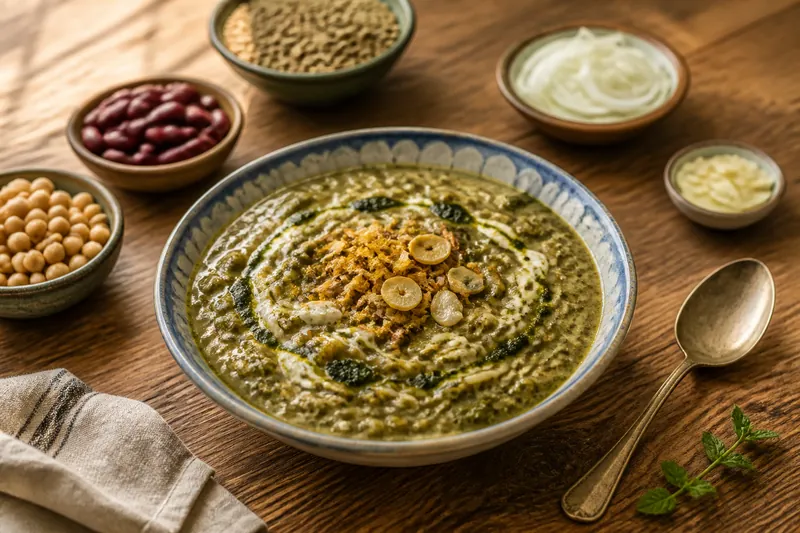
Ash Reshteh is one of the best known Persian soups, though it is thick enough to eat as a meal. It combines beans, lentils, herbs, and reshteh noodles, then is finished with yogurt, fried onions, and often mint oil. The flavor is herbal, savory, and a little sharp from the dairy and legumes. It is worth cooking because it feels both hearty and bright, a soup with real structure. One thing to know before starting is that the dried beans need soaking, and the pot needs time for the grains, beans, and noodles to settle together.
Rice with broad beans and lamb shank
 Baghali Polo ba MahichehPersianOpen the recipe →
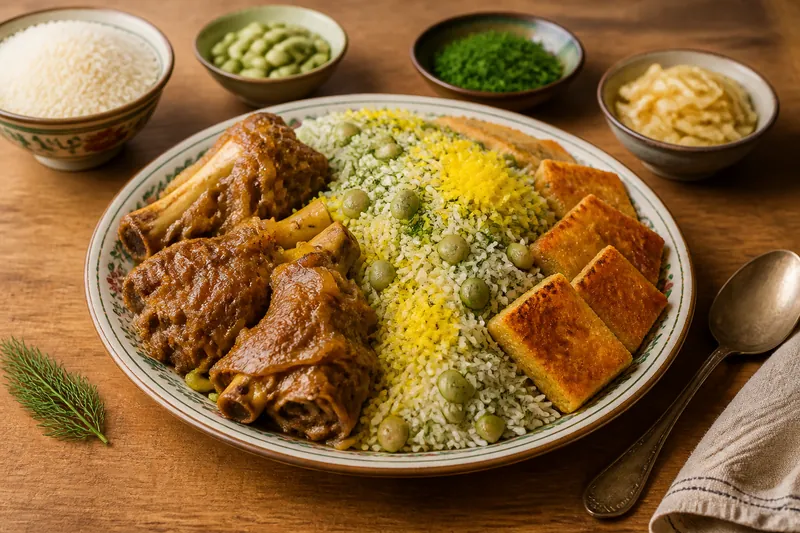
Baghali Polo ba Mahicheh pairs fragrant rice with dill and broad beans, served alongside tender lamb shank. The rice is the point: green, aromatic, and perfumed with herbs, while the meat brings richness and a gelatinous sauce. It is a celebratory dish, often served for family gatherings, because it looks formal and eats luxuriously. It is worth cooking for the contrast between the fresh, grassy rice and the slow-cooked lamb. One thing to know before starting is that both components need proper timing, so the rice and meat should be managed separately until the final assembly.
The saffron ice cream with rose and pistachio
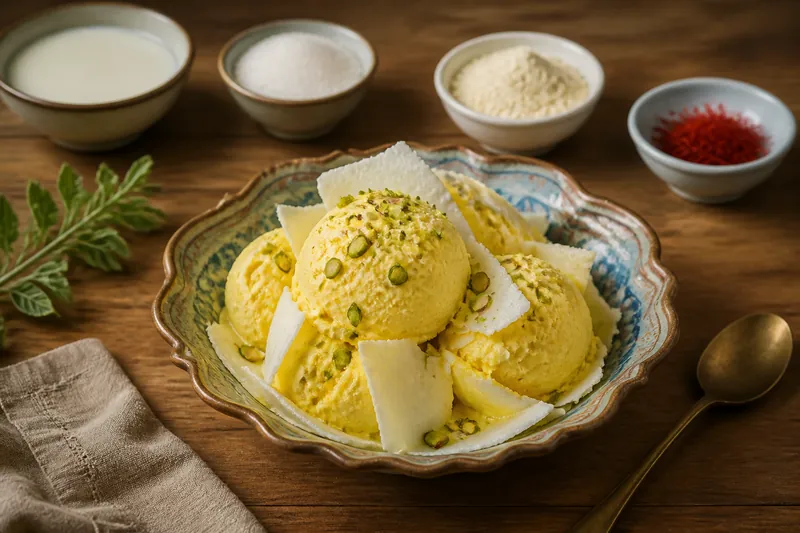 Bastani SonnatiPersianOpen the recipe →
Bastani Sonnati is Persian ice cream, usually scented with saffron, rosewater, and vanilla, then flecked with pistachios. It is rich and stretchy in texture, often because of egg yolk and sometimes stabilizing ingredients that keep it dense and smooth. The flavor is floral but not perfumed to the point of delicacy; the saffron gives it warmth and color. It is worth making because it captures classic Persian dessert flavors in a cold, creamy form. One thing to know before starting is that the mixture needs plenty of chilling and freezing time, so it cannot be rushed.
Charred kebab with saffron rice
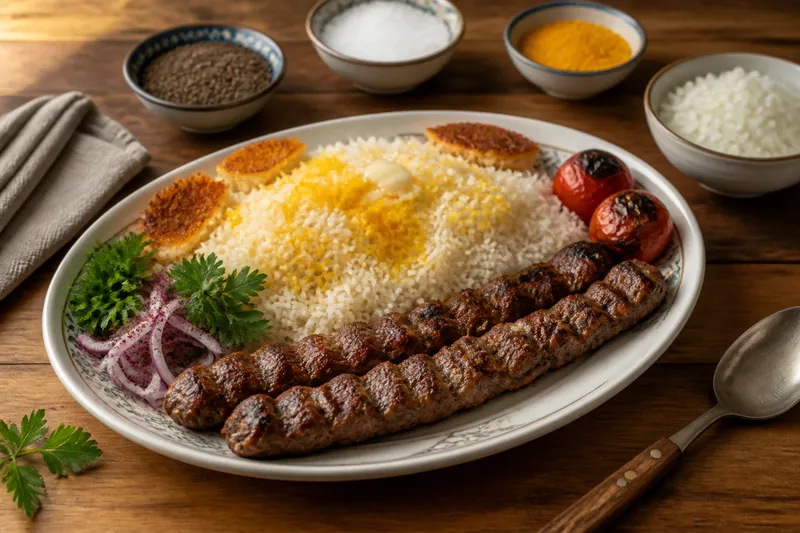 Chelo Kabab KoobidehPersianOpen the recipe →
Chelo Kabab Koobideh is perhaps the most recognized Persian main dish: minced meat kebabs grilled and served with plain rice, grilled tomato, and often sumac onions. The kebabs are juicy, savory, and lightly spiced rather than heavily seasoned. The rice is just as important, especially when it is steamed well and finished with butter or saffron. It is worth cooking because the simplicity leaves nowhere to hide, so good meat and careful handling matter. One thing to know before starting is that the mixture must be kneaded enough to hold on the skewer, or it will fall apart.
Stuffed vine leaves with a Persian balance
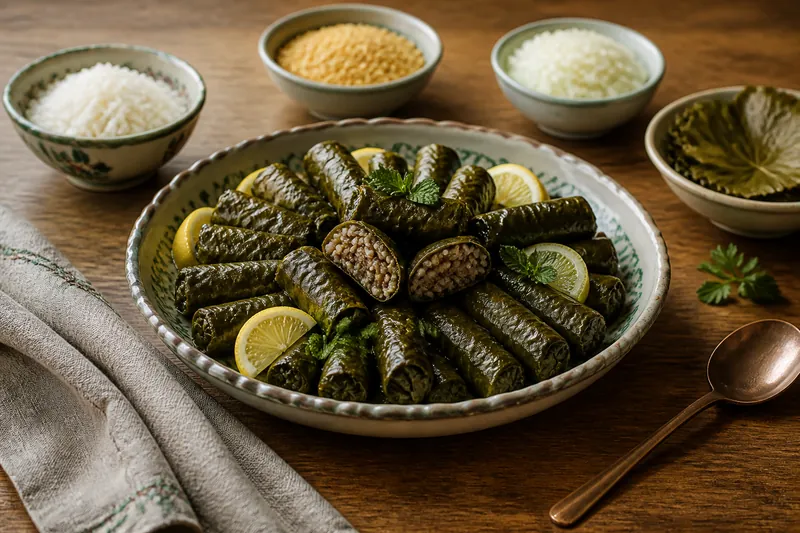 Dolmeh Barg-e MoPersianOpen the recipe →
Dolmeh Barg-e Mo is the Persian version of stuffed vine leaves, rolled around a filling that often includes rice, herbs, split pulses, and sometimes meat. The flavor is tart, savory, and green, with the grape leaf giving a pleasant acidity and slight bitterness. It is worth making because each little parcel tastes carefully built rather than merely filled. It is also a useful dish for learning balance: rice should be cooked partly before rolling, and the filling should stay seasoned after simmering. One thing to know before starting is that the leaves need to be handled gently so they stay intact.
A quick onion and egg soup
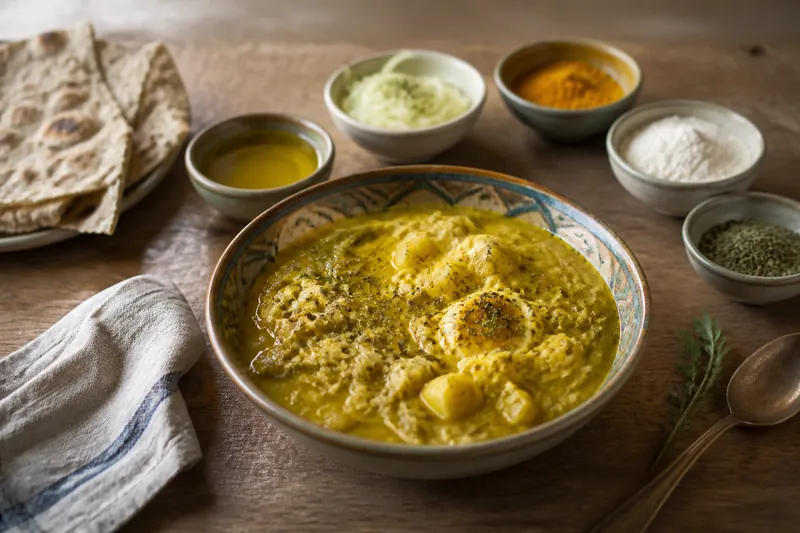 EshkenehPersianOpen the recipe →
Eshkeneh is a simple, fast Persian soup made with onions, turmeric, eggs, and often flour or potatoes, depending on the household. It is light in texture but satisfying, with a gentle sweetness from the onions and a savory finish from the eggs. Some versions include dried mint or fenugreek, which give it a greener edge. It is worth cooking because it shows how Persian food can be quick without feeling thin. One thing to know before starting is that the eggs are added near the end and should be just set, not overcooked into strands.
Frozen noodles in sweet lime syrup
 Faloodeh ShiraziPersianOpen the recipe →
Faloodeh Shirazi is a cold dessert of fine starch noodles frozen in a lightly sweet syrup, usually sharpened with lime or lemon. It is refreshing rather than creamy, with a faintly chewy texture that makes it unlike sorbet or ice cream. In Shiraz, it is often served with more citrus, and sometimes a little cherry syrup. It is worth making because it is one of the most distinctive Persian sweets, especially in hot weather. One thing to know before starting is that the freezing step matters more than the cooking, since the texture depends on the syrup setting around the noodles.
Pomegranate and walnut stew
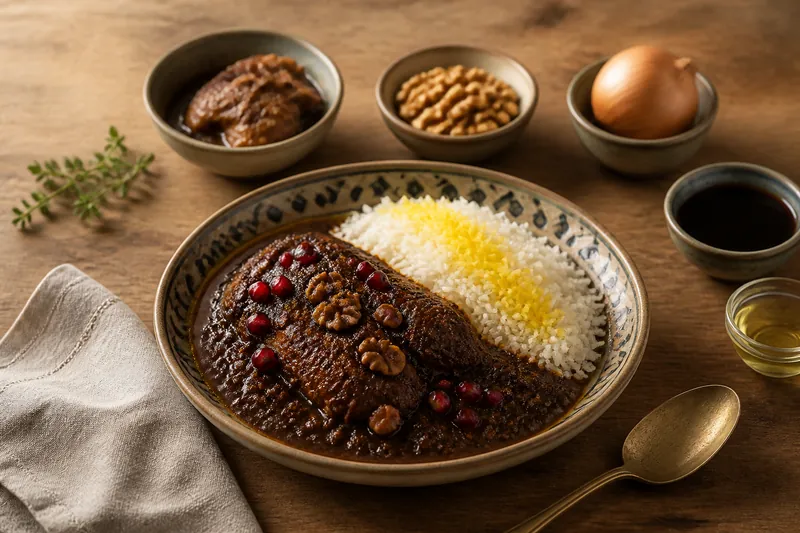 FesenjanPersianOpen the recipe →
Fesenjan is a slow, dark stew made from ground walnuts and pomegranate molasses, most often with chicken or duck. The sauce is thick, glossy, and deeply flavored: nutty, tangy, and slightly sweet, with a rich, almost velvet texture. It is one of the great Persian dishes because it has such a singular balance and a finish that clings to rice. It is worth cooking for guests or a family meal when you want something that feels ceremonial without being fussy. One thing to know before starting is that the walnuts need time to cook down properly, or the sauce will taste raw and separate.
Taken together, these dishes show why Persian cooking has such a strong reputation: it is precise without being austere, generous without being careless. Whether you begin with a soup, a rice dish, or a dessert, the pattern is the same: careful seasoning, patient cooking, and a clear sense of balance.