10 Best-Known Nigerian Dishes to Cook First
From leaf soups to bean snacks and street-food staples, these ten Nigerian dishes show the range, heat, and texture of everyday cooking.
Nigerian cooking is built on contrast: soft yam against peppery sauce, crisp fritters beside thick soups, roasted plantain with sharp seasoning. The dishes people know best are not a single style, but a set of regional habits that travel well.
Some are eaten as snacks, some as full meals, and some sit at the centre of family tables. Taken together, they show how much Nigerian food relies on bold seasoning, careful grinding, and a steady hand with heat.
Cold cassava ribbons with real bite
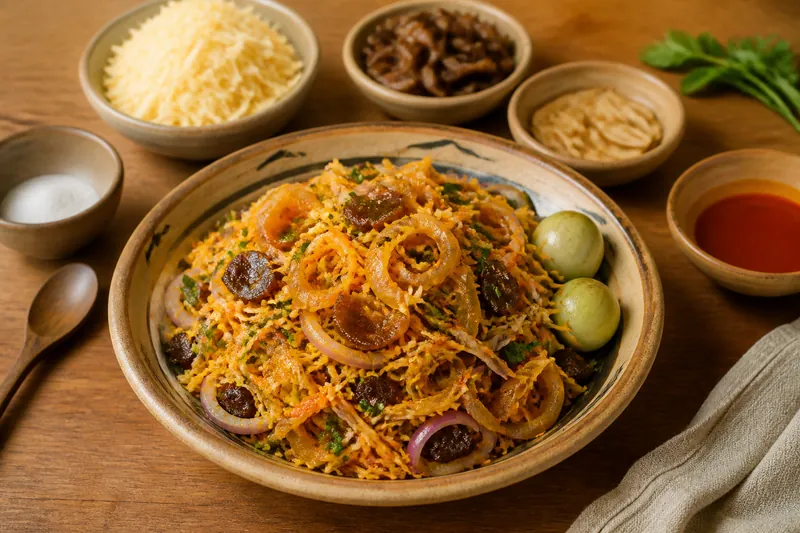
AbachaNigerianOpen the recipe →Abacha is made from dried shredded cassava that softens just enough to hold oil, pepper, onions, and seasoning. It is often finished with ugba, stockfish, crayfish, and a little palm oil, so the flavour is earthy, savoury, and lightly smoky rather than hot in one note. The texture is the point: springy strands, soft fish, and the occasional crunch of onion. It is worth cooking because it eats like a complete meal and needs little time. Soak the cassava properly before mixing; if it stays dry, the dish will taste tough and flat.
A thick leaf soup with depth
 Afang SoupNigerianOpen the recipe →
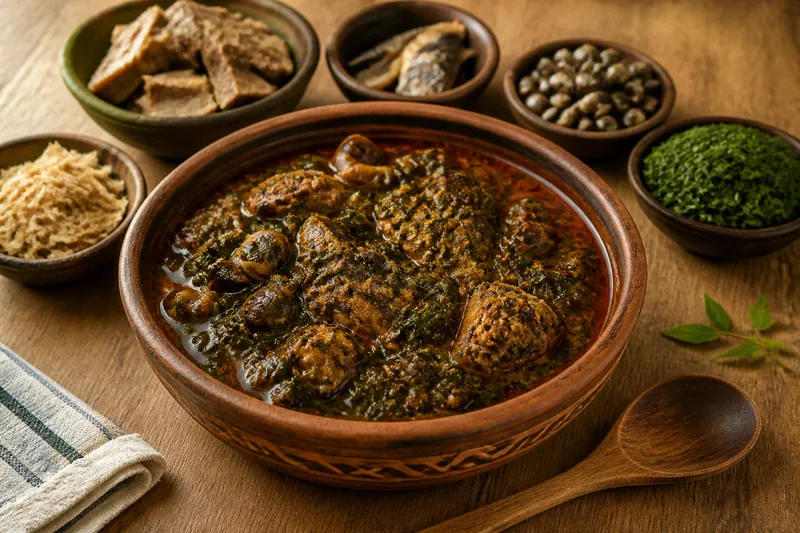
Afang Soup is a dense, green soup from the south, usually built with afang leaves and waterleaf, then enriched with meat, fish, crayfish, and palm oil. It tastes deep, savoury, and slightly bitter in the way good leaf soups should. The chopped greens break down into a body that clings to fufu or pounded yam. It is worth making for its layered flavour and the way it holds well after cooking. The main thing to know is that the leaves need handling with care: cook long enough for the waterleaf to soften, but do not mash the greens into a puree.
Crisp bean fritters for breakfast or snacks
 AkaraNigerianOpen the recipe →
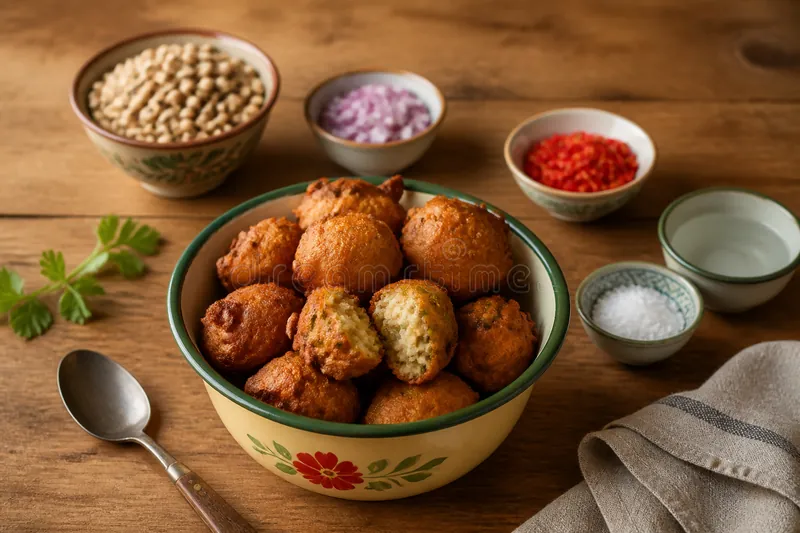
Akara are deep-fried fritters made from peeled black-eyed peas, blended to a thick batter with onion, pepper, and salt. They are crisp outside, airy inside, and carry the clean, savoury taste of beans rather than flour. Eaten with pap, bread, or simply on their own, they are one of the most recognisable Nigerian snacks. They are worth cooking because a good batch is light rather than greasy. The slow part is peeling the beans, and that matters: if the skins stay on, the batter turns coarse and the fritters lose their smooth, puffy texture.
Yam porridge with a soft finish
 AsaroNigerianOpen the recipe →
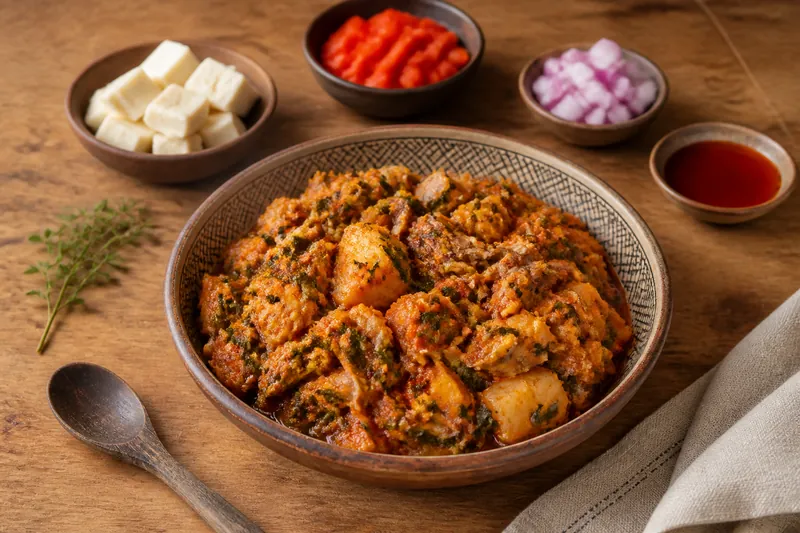
Asaro is a yam porridge cooked with pepper, tomato, onions, and usually palm oil, then finished with fish, meat, or vegetables. The yam cooks down partly, so the pot becomes thick and gently starchy, with some pieces soft and some still intact. It tastes warm, savoury, and slightly sweet from the yam itself. It is worth cooking because it is filling without being heavy, and it uses simple ingredients well. The key is the yam: choose a variety that softens properly, and stir only enough to help the pieces break down without turning the pot gluey.
Spicy goat meat with char
 AsunNigerianOpen the recipe →
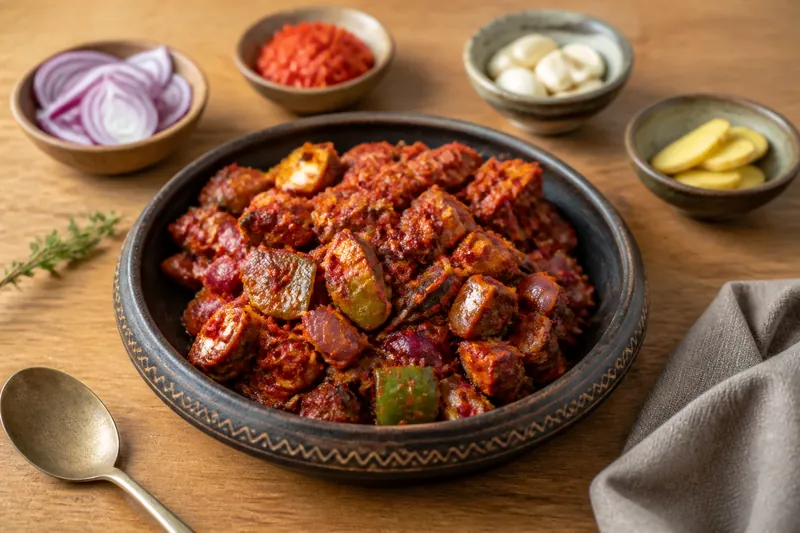
Asun is roasted or grilled goat meat tossed in a sharp pepper sauce, often with onion and a little seasoning. The meat is chewy at first, then tender enough to carry the smoke from the cooking fire and the heat of the pepper. It tastes bold, salty, and concentrated, with more char than broth. It is worth cooking because every piece carries flavour all the way through. The thing to know is that goat needs time: if it is not cooked until fully tender before the final saucing, it will feel tough no matter how well seasoned it is.
Palm-fruit soup with a rounded taste
 Banga SoupNigerianOpen the recipe →
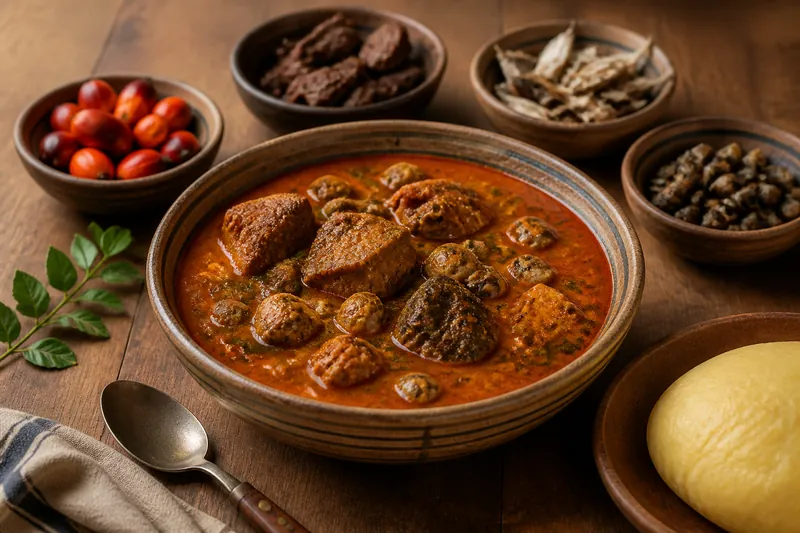
Banga Soup is made from palm fruit extract and cooked with meat or fish, seasoning, and local spice blends such as oburunbebe. It has a rich, oily body and a flavour that is mellow, earthy, and lightly smoky rather than sharply hot. Many people eat it with starch, though rice also works. It is worth cooking for the way the palm fruit gives both colour and depth. Before starting, know that the extract must be strained well and simmered enough for the oil to rise and the soup to lose any raw taste from the fruit pulp.
Roasted plantain, plain and useful
 BoliNigerianOpen the recipe →
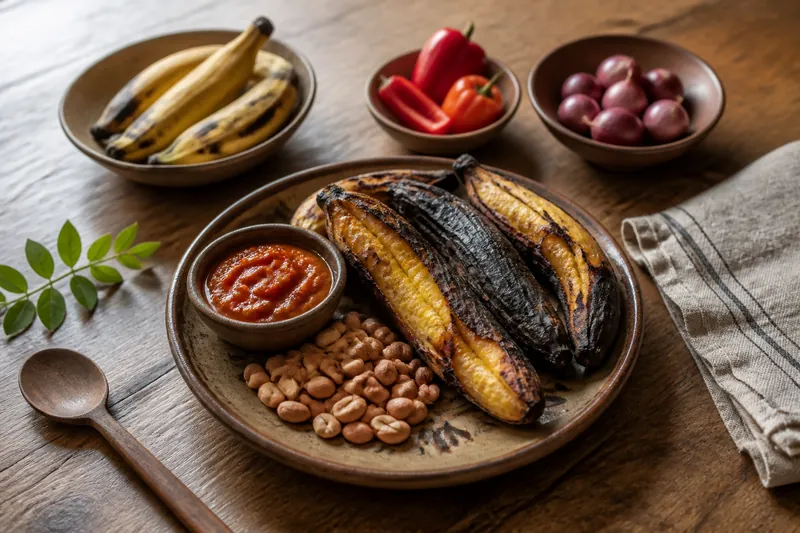
Boli is roasted plantain, usually made with ripe plantains grilled over fire or baked until the skins darken and the flesh softens. It tastes sweet, caramelised, and a little smoky, especially when served with groundnut, pepper sauce, or fish. It is one of the simplest Nigerian foods, but that simplicity is why it matters: the flavour comes from choosing the right plantain at the right stage of ripeness. The main thing to know is timing. Too green and it stays starchy; too soft and it collapses before the outside has taken on enough char.
Small fried dough pieces for nibbling
 Chin ChinNigerianOpen the recipe →
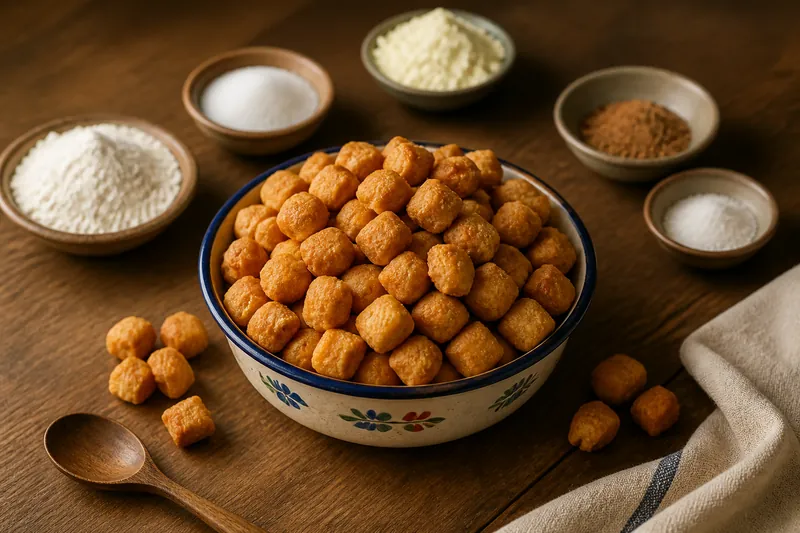
Chin Chin is a crisp, sweet snack made from flour, sugar, butter, and milk or water, cut into small pieces and fried until golden. It tastes lightly sweet, buttery, and dry enough to keep well, which is part of its appeal. The texture can range from brittle to slightly tender, depending on how the dough is mixed and fried. It is worth making because it stores well and suits tea, parties, and packed snacks. The important thing is not to overwork the dough; a tough dough gives a dense result, while a lightly handled one fries up clean and crisp.
Bean dumplings in a simple sauce
 Dan WakeNigerianOpen the recipe →
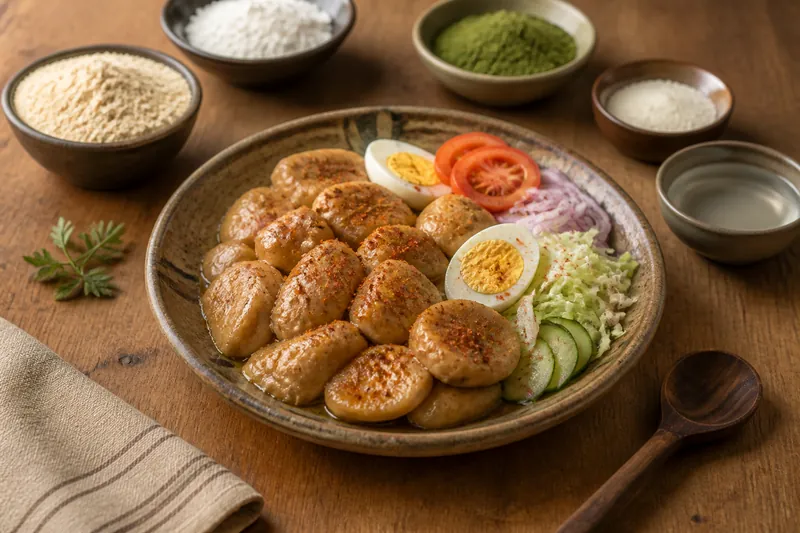
Dan Wake is a northern Nigerian dish of bean dumplings, usually made from bean flour and served with a light sauce, seasonings, and often vegetables or stew. The dumplings are soft, slightly chewy, and carry a mild bean flavour that soaks up whatever is added around them. It is a filling dish, but it does not taste heavy. It is worth cooking because it is practical, satisfying, and built from pantry ingredients. The one thing to know is consistency: the batter must be firm enough to shape, or the dumplings will fall apart during cooking.
Leaf soup rich with meat and fish
 Edikang IkongNigerianOpen the recipe →
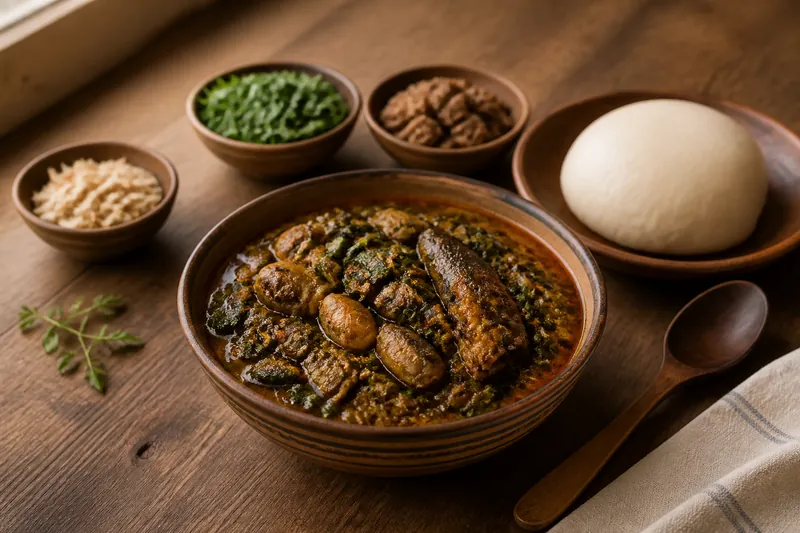
Edikang Ikong is a substantial vegetable soup made with pumpkin leaves, waterleaf, meat, fish, crayfish, and palm oil. It is thick, glossy, and deeply savoury, with the greens softened just enough to keep some presence in the spoon. The flavour is fuller than a simple vegetable soup because the meat and fish season the pot from the start. It is worth cooking for its balance of richness and freshness. The important point is to manage the greens carefully: waterleaf cooks down quickly, while pumpkin leaves need only enough heat to wilt without losing their colour and lift.
These dishes show how Nigerian cooking moves between smoke, palm oil, greens, beans, and grainy starches. Some are quick snacks, others need a long pot on the stove, but each depends on clear seasoning and careful texture. That is where their character lives.