10 Georgian Dishes Worth Cooking First
From cheese breads to walnut-stuffed vegetables, these ten Georgian dishes show the range, depth, and practicality of the cuisine.
Georgian cooking is generous with herbs, cheese, walnuts, and slow-built flavor. It moves easily between rich breads, sharp vegetable dishes, and hearty meat stews.
The dishes below are among the best known for a reason: they are distinctive, satisfying, and rooted in everyday cooking rather than ceremony.
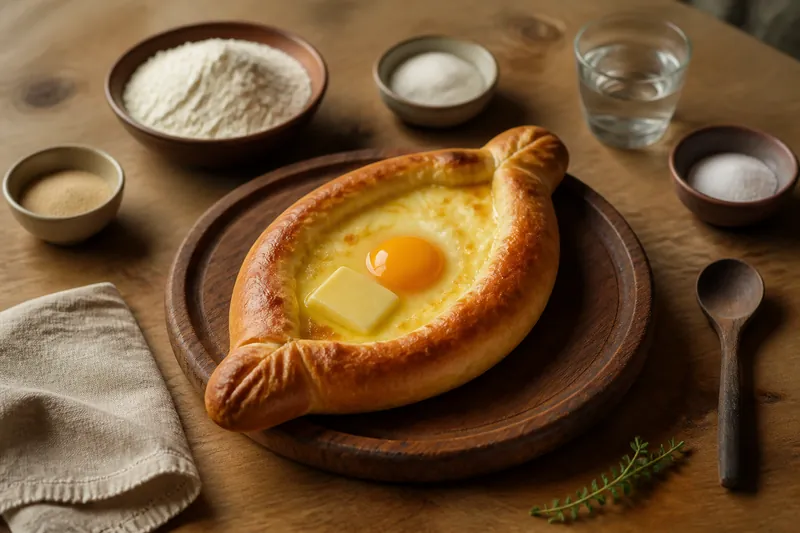
The cheese bread with an egg in the middle
Adjaruli KhachapuriGeorgianOpen the recipe →Adjaruli Khachapuri is the Georgian dish most people recognize first: a boat-shaped loaf filled with melted cheese, butter, and a raw egg stirred in at the table. The taste is rich, salty, and sharply dairy, with crisp bread at the edges and a soft center. It is worth cooking because it shows how Georgia turns simple ingredients into something memorable. The one thing to know is that timing matters; the egg should finish setting in the hot filling, not cook hard before serving.
Layered cheese pastry, dense and buttery
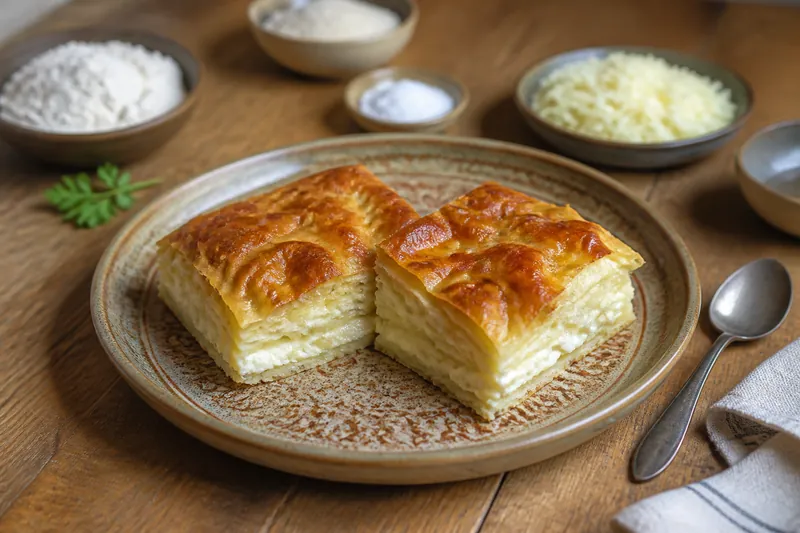 AchmaGeorgianOpen the recipe →
Achma is a baked Georgian pastry made from many layers of dough and cheese, assembled more like a lasagna than a pie. It tastes buttery, mild, and deeply savory, with a tender middle and a lightly browned top. It is worth cooking because the method creates a distinct texture: soft, rich layers that hold together when sliced. A cook should know that the dough is usually handled in stages, and the assembly can be fiddly, so it helps to work methodically and keep the layers even.
A warm vegetable dish with eggplant and herbs
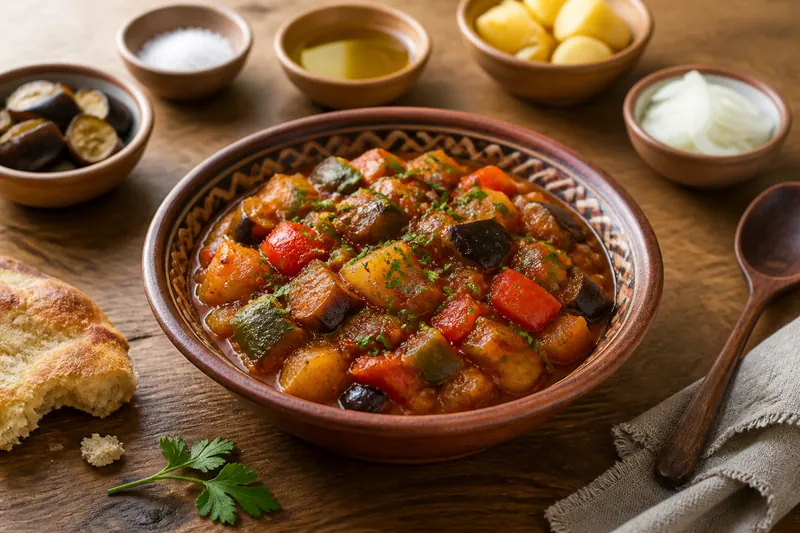 AjapsandaliGeorgianOpen the recipe →
Ajapsandali is a Georgian vegetable stew built around eggplant, tomatoes, peppers, onion, and plenty of herbs. The flavor is soft, sweet, and lightly tangy, with the vegetables cooking down into a supple, spoonable mixture. It is worth cooking because it gives real character to summer produce without much effort. One thing to know is that the eggplant should be cooked until fully tender before everything is combined; undercooked eggplant makes the finished dish feel heavy rather than silky.
Eggplant rolls with walnut filling
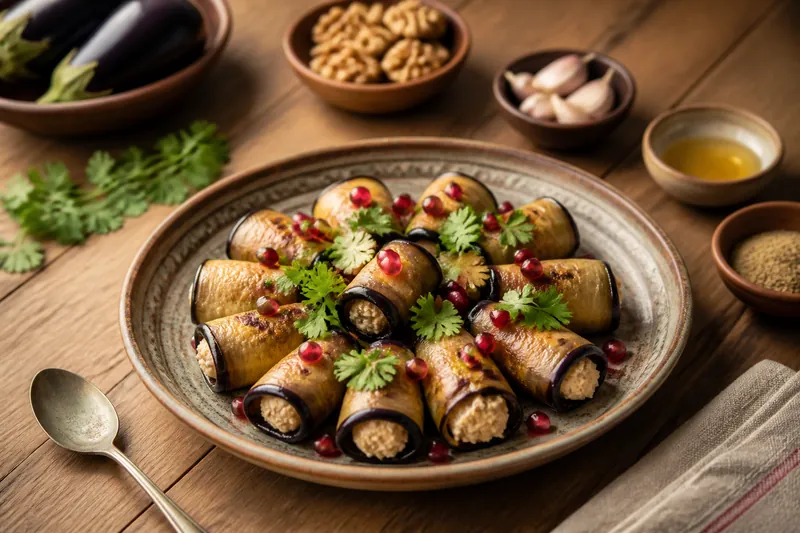 Badrijani NigvzitGeorgianOpen the recipe →
Badrijani Nigvzit is made from thin slices of fried eggplant rolled around a spiced walnut paste, usually finished with pomegranate seeds. The taste is earthy, nutty, and faintly sharp, with the eggplant adding softness against the filling. It is worth cooking because it shows Georgian walnut cookery at its best: compact, fragrant, and good at room temperature. A cook should know that the eggplant slices need to be thin and flexible; if they are too thick, they split instead of rolling neatly.
Simple melted cheese, enriched with butter
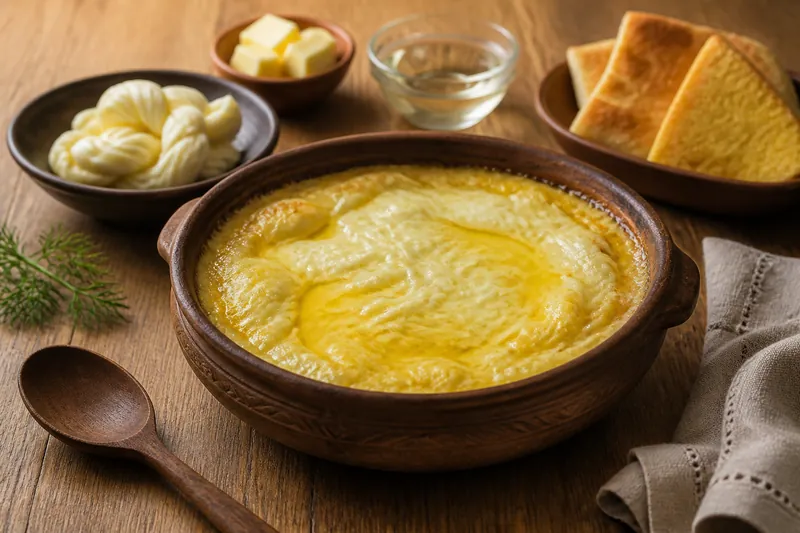 BoranoGeorgianOpen the recipe →
Borano is a plain-looking but rich Georgian dish of melted cheese cooked with butter, often until the cheese becomes stretchy and the fat is glossy on top. The flavor is direct and milky, with a salty edge and a heavy, comforting finish. It is worth cooking because it depends on technique more than complexity: the ingredients are few, but the result is full and satisfying. One thing to know is that the cheese should melt cleanly without turning grainy, so steady heat is better than haste.
A bright stew made with herbs and sour fruit
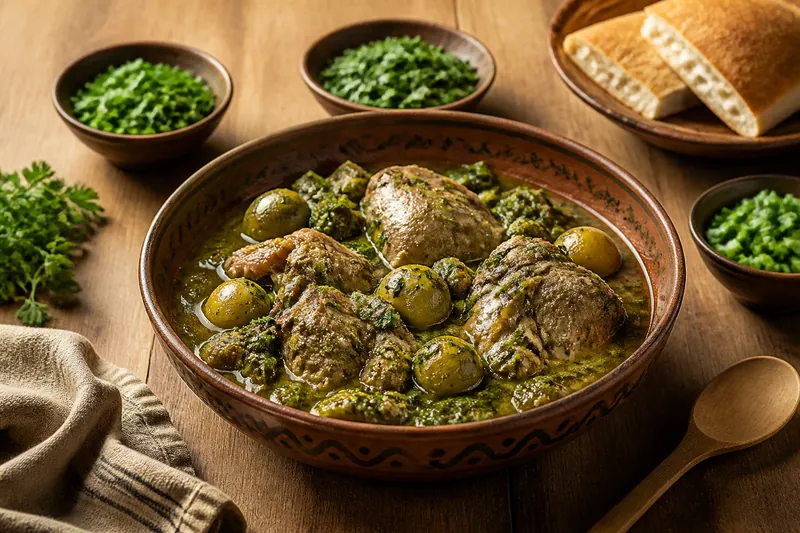 ChakapuliGeorgianOpen the recipe →
Chakapuli is a Georgian stew, often made with meat, green herbs, tarragon, and sour plum or another tart fruit. It tastes fresh and sharp rather than heavy, with herb perfume and a lively acidity that cuts through the richness. It is worth cooking because it is one of the clearest examples of Georgian balance: fat, sourness, and greenery in the same pot. A cook should know that the herbs are not a garnish here; they are central, so they need to be plentiful and added with confidence.
Chicken cooked into a tomato-based stew
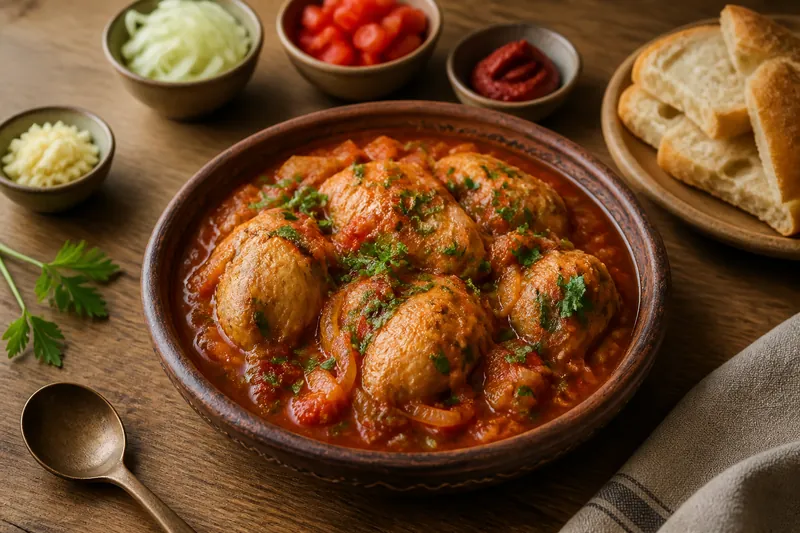 ChakhokhbiliGeorgianOpen the recipe →
Chakhokhbili is a Georgian chicken stew in which the meat is simmered with tomatoes, onion, garlic, and herbs until the sauce turns deep and savory. The taste is clean but layered, with the chicken absorbing the sweetness of the tomatoes and the sharpness of the aromatics. It is worth cooking because it is both homey and complete, the kind of dish that improves as it sits. A cook should know not to rush the browning or the simmer; the flavor depends on giving the sauce time to come together.
Beef stew with tomato and spice
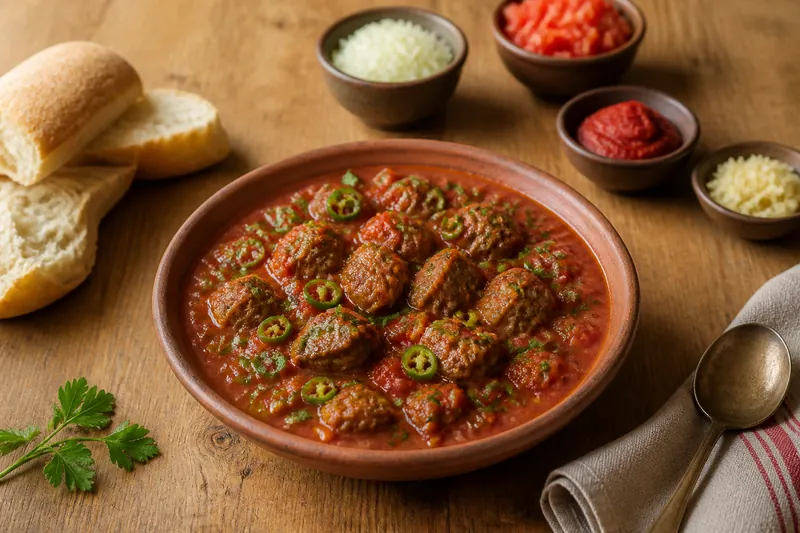 ChashushuliGeorgianOpen the recipe →
Chashushuli is a Georgian beef stew, usually cooked with tomatoes, onion, garlic, herbs, and mild spice until the meat is tender and the sauce is thick. The flavor is warm, savory, and slightly piquant, with enough acidity to keep the richness in check. It is worth cooking because it is sturdy without being dull, and it rewards slow cooking with a fuller taste. A cook should know that the beef must be cut for braising and given enough time to soften properly; lean cuts will not give the right texture.
Corn bread with cheese inside
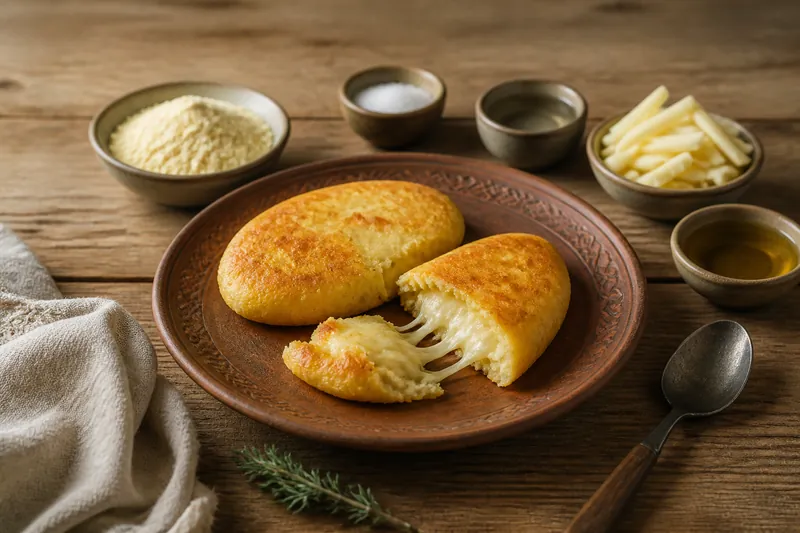 ChvishtariGeorgianOpen the recipe →
Chvishtari is a Georgian cornmeal bread enriched with cheese, usually shaped into small rounds or patties and cooked until crisp outside and soft within. The taste is savory, mildly sweet from the corn, and pleasantly salty from the cheese. It is worth cooking because it is quick, direct, and satisfying alongside stews or greens. A cook should know that the dough should be soft enough to shape without cracking; if it is too dry, the bread will be dense and less pleasant to eat.
The walnut-and-grape sweet on a string
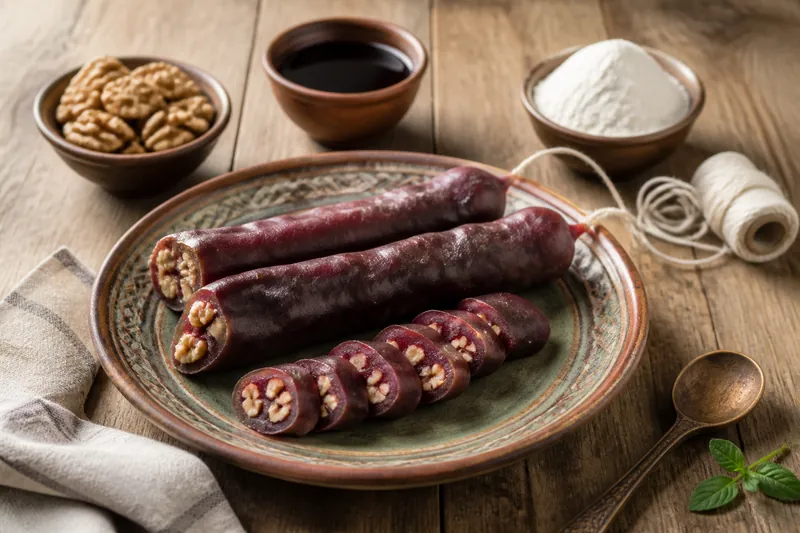 ChurchkhelaGeorgianOpen the recipe →
Churchkhela is a Georgian sweet made by dipping nuts, usually walnuts, into thickened grape juice and hanging them to dry. The result is chewy, glossy, and gently fruity, with the nuts giving structure and the syrup setting into a firm outer layer. It is worth cooking because it is unlike most sweets: portable, old-fashioned, and built from pantry ingredients. A cook should know that patience is essential, since the coating needs time to thicken and dry properly; otherwise it stays sticky rather than firm.
Taken together, these dishes show how Georgian cooking balances richness with freshness and uses a small set of ingredients in varied, practical ways. Cheese, walnuts, herbs, and vegetables recur, but never in the same shape twice. That is part of the cuisine’s pull.