10 Filipino Dishes Worth Cooking First
From rice porridges and grilled chicken to stews and sweets, these ten Filipino dishes show the range and balance of the cuisine.

Filipino cooking is built on contrast: sour against rich, salty against sweet, soft rice against crisp skin, broth against smoke. The dishes that travel furthest are often the ones that show this balance most clearly.
These ten are among the best known for a reason. Some are everyday food, some are festive, and some are best understood as comfort in a bowl. Together they give a clear map of the flavors many cooks associate with the Philippines.
Ginger rice porridge with depth
Arroz CaldoFilipinoOpen the recipe →Arroz caldo is a rice porridge cooked until thick and soft, usually with chicken, garlic, ginger, and a finishing spoon of fish sauce or calamansi. It tastes warm, savory, and gently peppery, with the ginger giving it lift. It is worth cooking because it turns a few basic ingredients into a complete meal, especially when topped with scallions, fried garlic, and boiled egg. The main thing to know is that the rice needs steady stirring and enough liquid; if the heat is too high, it can catch on the bottom before it turns creamy.
A street-food shell with a strong reputation
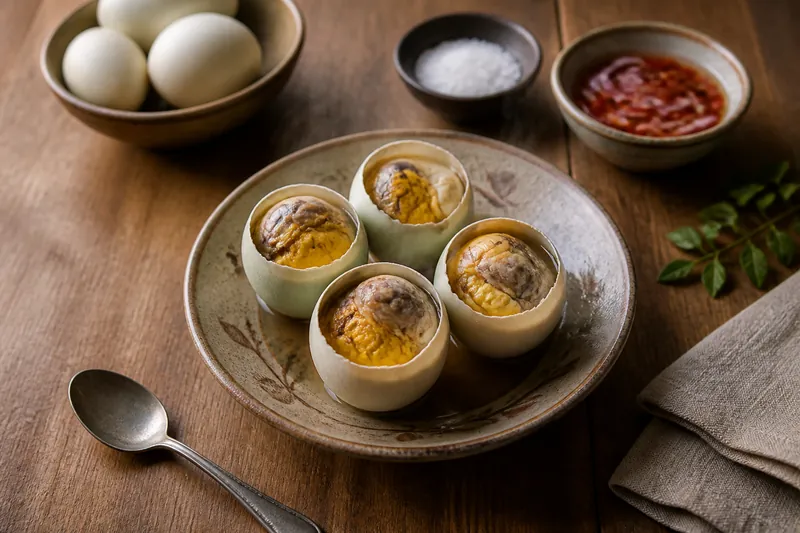 BalutFilipinoOpen the recipe →
Balut is a fertilized duck egg simmered and eaten from the shell, seasoned with salt or vinegar. Its appeal is not subtle: the broth is rich, the yolk is dense, and the texture changes from spoon to spoon, depending on the age of the egg. It is one of the most talked-about Filipino foods because it is direct and unmistakably local. A cook should know that freshness matters most here, and that balut is usually sold ready to eat rather than made at home in the ordinary kitchen sense.
Soft rice cake for the holiday table
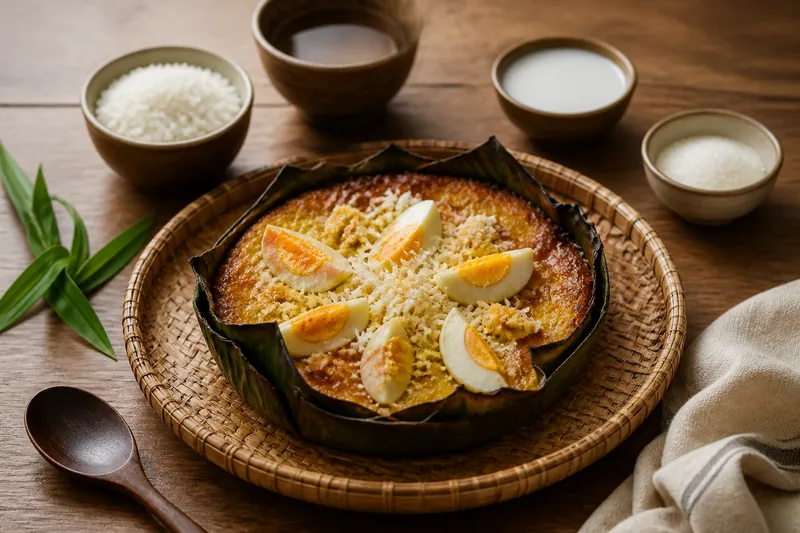 BibingkaFilipinoOpen the recipe →
Bibingka is a rice cake baked in a lined mold or pan, often with coconut milk, eggs, and sugar, then finished with salted egg, cheese, or grated coconut. It tastes lightly sweet, buttery, and fragrant, with a tender crumb and browned edges. It is worth making for the contrast between the soft cake and the savory toppings. The long preparation time usually comes from soaking the rice and waiting for the batter to rest, so plan ahead; bibingka is not a last-minute cake, and the texture depends on that pause.
Creamy heat from coconut and chile
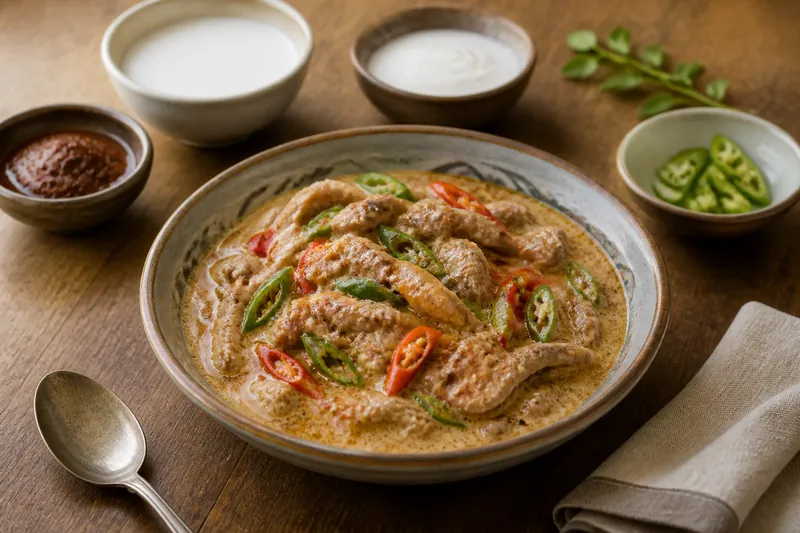 Bicol ExpressFilipinoOpen the recipe →
Bicol Express is a coconut-rich pork stew cooked with long green chiles and shrimp paste. It is creamy, salty, and hot, with enough sweetness from the coconut milk to keep the heat in check. It is worth cooking because it shows how Filipino food can be both rich and sharp at once. The main thing to know is that the coconut milk should be simmered gently, not boiled hard, or it can split and lose its smooth texture. Serve it with plenty of rice, because the sauce is the point.
Beef shank soup with marrow and clear broth
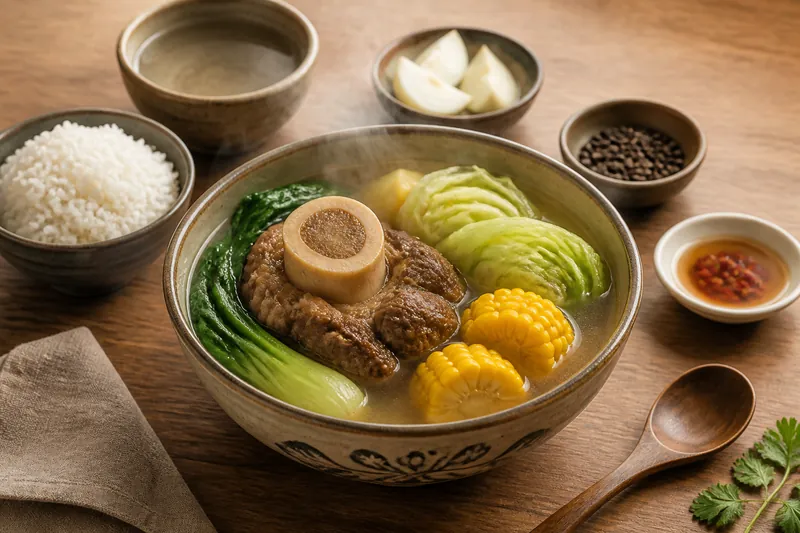 BulaloFilipinoOpen the recipe →
Bulalo is a slow-simmered beef shank soup built around bone marrow, corn, cabbage, and green vegetables. The broth is clean-tasting but deeply beefy, while the marrow gives the soup a rich, silky finish. It is worth making when you want a meal that is both substantial and simple. The long cooking time is essential: the meat needs to soften fully, and the broth needs patience. Do not rush the simmer. A strong boil can cloud the stock and toughen the meat before it has had time to release its flavor.
Chocolate rice porridge with a salty edge
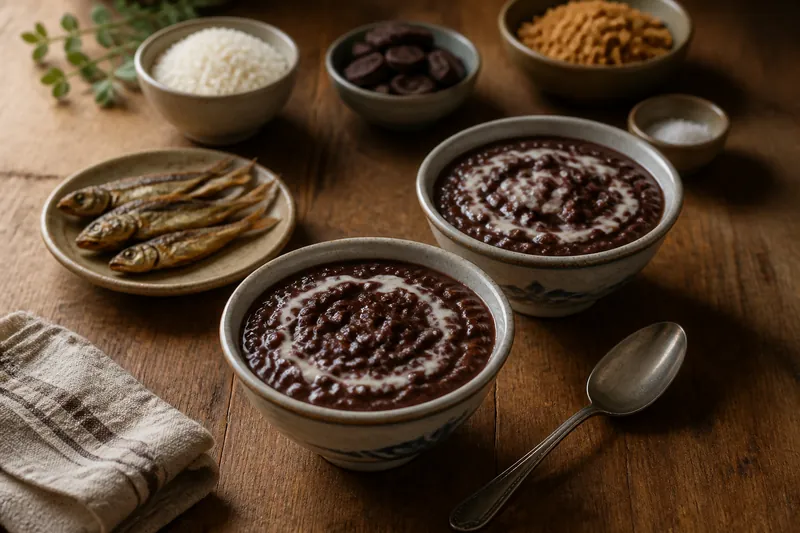 ChamporadoFilipinoOpen the recipe →
Champorado is a rice porridge made with cocoa or tablea, sugar, and plenty of water or milk, then served hot. It tastes like a cross between breakfast and dessert: thick, chocolatey, and soothing, with the grain giving it body. Many cooks eat it with salted dried fish on the side, which is what makes it memorable, not strange, once you try it. The main thing to know is that the chocolate must be stirred well as the rice cooks, or it can turn uneven and grainy rather than smooth.
The Filipino braise people learn first
 Chicken AdoboFilipinoOpen the recipe →
Chicken Adobo is chicken simmered in vinegar, soy sauce, garlic, bay leaf, and peppercorns until the meat is tender and the sauce is savory and sharp. It tastes bright and salty with a dark, rounded depth that comes from the braise. It is worth cooking because it is both everyday food and a clear expression of Filipino balance. One thing to know before starting: the vinegar needs enough time in the pot to mellow, but not so much heat at first that it loses its edge completely. Let the sauce reduce until glossy.
Grilled chicken with citrus and smoke
 Chicken InasalFilipinoOpen the recipe →
Chicken Inasal is marinated chicken grilled over heat, usually with calamansi, vinegar, garlic, ginger, and annatto oil. It tastes bright, smoky, and slightly sweet, with a colored skin that turns fragrant on the fire. It is worth cooking because the marinade reaches both the surface and the meat, giving flavor all the way through. The essential thing to know is that the long marinating time is not optional if you want proper flavor; the chicken needs hours, not minutes, to pick up the acidity and seasoning before it goes to the grill.
Pork and blood stew with a sour finish
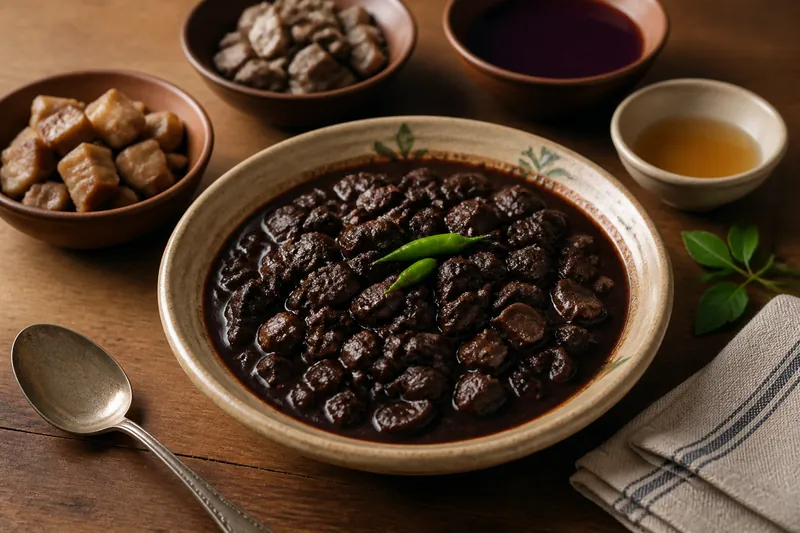 DinuguanFilipinoOpen the recipe →
Dinuguan is a stew of pork offal or pork meat cooked with pig blood, vinegar, garlic, onions, and chiles. It is dark, tangy, and savory, with a thick sauce that coats rice or puto well. It is worth cooking because it is one of the clearest examples of Filipino willingness to use every part of the animal without losing balance or finesse. A cook should know that the blood must be added carefully and stirred while the stew simmers, so it thickens smoothly instead of clumping or turning grainy.
Coconut dessert with chewy rice dumplings
 Ginataang Bilo-BiloFilipinoOpen the recipe →
Ginataang Bilo-Bilo is a coconut milk dessert or snack with glutinous rice balls, tubers, banana, and sometimes jackfruit or sweet potato. It tastes creamy, gently sweet, and floral if jackfruit is included, with the rice balls giving each spoonful a chewy bite. It is worth cooking because it is filling without being heavy, and because the coconut milk carries the flavors cleanly. The main thing to know is to add the bilo-bilo near the end so it stays tender but does not disintegrate; overcooking turns the dumplings soft and bloated.
These dishes are not the whole of Filipino cooking, but they do show its range: broths, grills, stews, cakes, and porridges, all held together by careful seasoning. Start with the one that fits the meal you want, then work outward from there.