Ten Ethiopian Dishes Worth Learning First
From stews to breads and quick snacks, these ten dishes show the range of Ethiopian cooking, from mild vegetable plates to rich, spiced sauces.
Ethiopian cooking is built on a few clear ideas: a sour flatbread, slow-cooked stews, legumes, greens, and a careful hand with spice. The best-known dishes each show a different side of that pattern.
Some are eaten with injera, others are snacks or porridge-like meals, but all are plain in the best sense: practical food with depth, meant to be shared and eaten with the hands or a spoon.
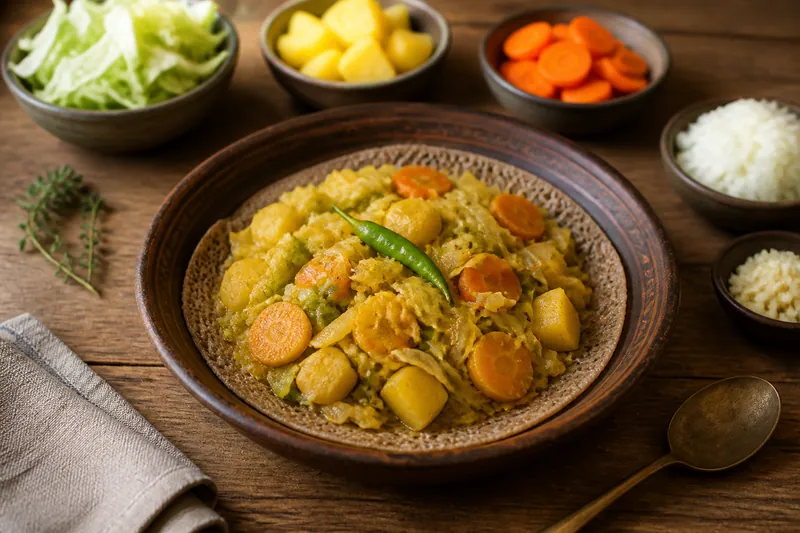
Cabbage, potato, and carrot in soft spice
Atkilt WatEthiopianOpen the recipe →Atkilt Wat is one of the gentlest Ethiopian stews: cabbage, potatoes, and carrots simmered until tender in onion, garlic, and turmeric. It has a warm, earthy flavor rather than heat, and the vegetables hold their shape just enough to give the dish substance. It is worth cooking because it shows how much can be done with a short list of everyday ingredients. Serve it with injera or rice. The main thing to watch is the cooking time for the vegetables; they should be soft, but not collapsed into mash.
Fish stew with depth and heat
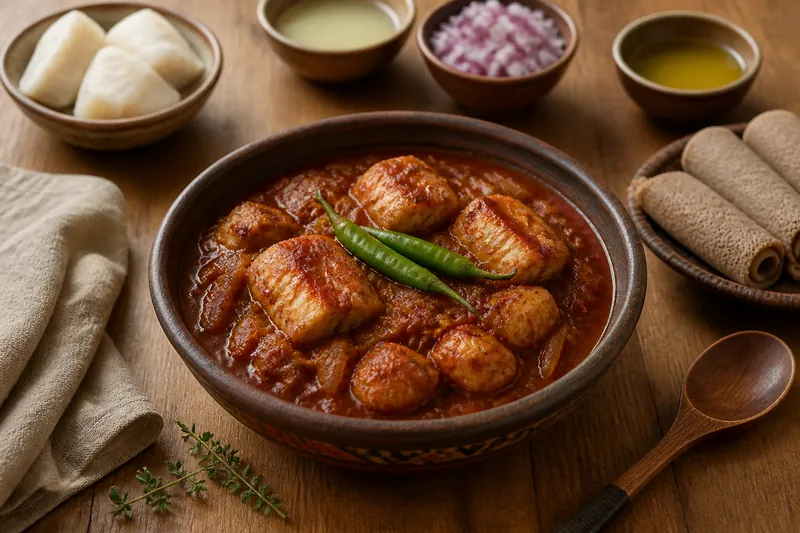 Asa WatEthiopianOpen the recipe →
Asa Wat is a fish stew built on slow-cooked onions, berbere, and oil, with the fish added near the end so it stays intact. The sauce is dark, concentrated, and spicy, with a steadier heat than many Western fish dishes. It is worth making for the way it turns firm white fish into a full stew rather than a simple main course. Use a fish that can stand up to simmering. The sauce should be cooked properly before the fish goes in, because the stew depends on that long onion base for its body.
Shiro enriched with meat
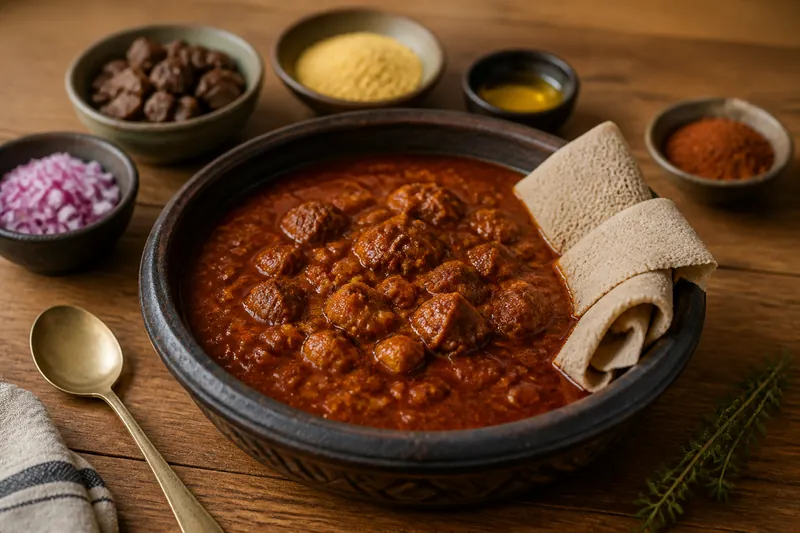 Bozena ShiroEthiopianOpen the recipe →
Bozena Shiro takes the familiar chickpea-flour stew shiro and adds meat for a fuller, richer version. The result is thick, savory, and gently spiced, with the nutty flavor of shiro holding the sauce together. It is one of the more substantial Ethiopian dishes, useful when you want something hearty without relying on a long list of ingredients. It is worth cooking because it shows how flexible shiro can be. The cook should know that the mixture must be stirred well as it thickens, or it can become lumpy before it is smooth.
Chilled lentils with sharp, clean flavor
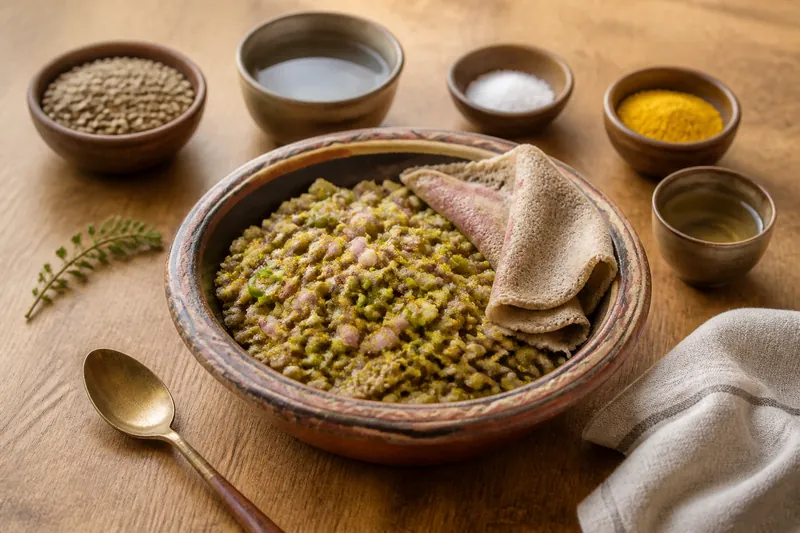 AzifaEthiopianOpen the recipe →
Azifa is a lentil salad, usually served cool, with onion, mustard, lemon, and oil giving it a bright, pointed flavor. It is lighter than the stews that often define Ethiopian food, and that makes it a useful counterpoint on the table. The taste is simple but not flat: earthy lentils, sharp dressing, and a little heat if desired. It is worth cooking because it comes together quickly and keeps well. The one thing to know is that the lentils should be cooked just until tender, so they stay separate rather than turning soft.
Quick chickpea purée with a fresh finish
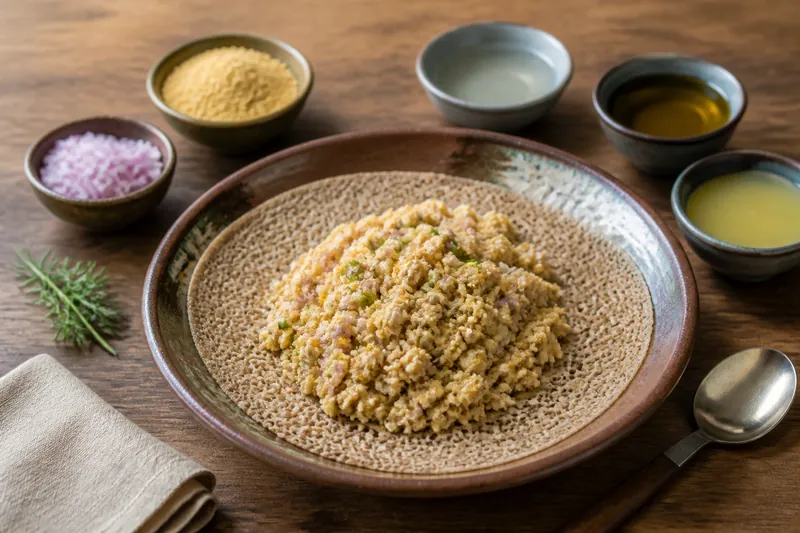 ButichaEthiopianOpen the recipe →
Buticha is a chickpea-based dish that sits between a dip and a salad, usually made with chickpea flour or cooked chickpeas, oil, onion, and a light seasoning of spice and lemon. It tastes nutty, smooth, and slightly tangy, with enough body to eat as part of a meal. It is worth making because it is quick and uses pantry ingredients. Cooked carefully, it can be ready in minutes. The cook should pay attention to texture: it should be thick and spoonable, not dry, so add liquid gradually and stir until smooth.
Potatoes in a red, spiced sauce
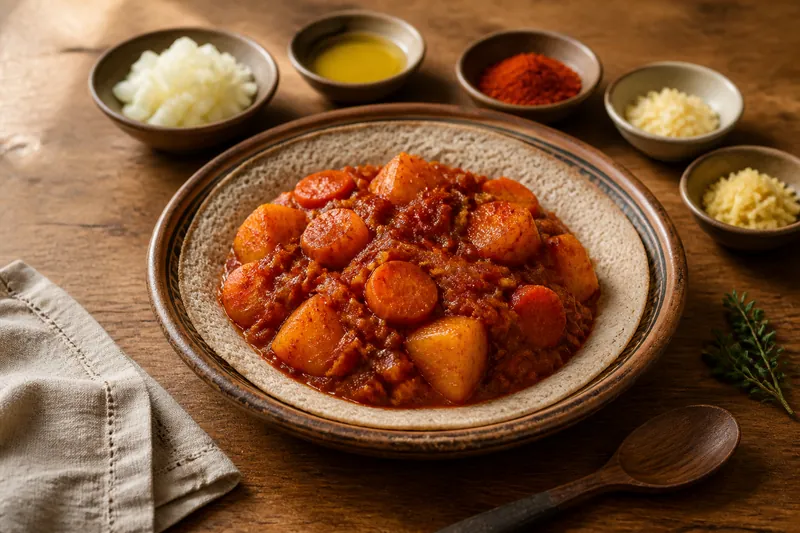 Dinich WatEthiopianOpen the recipe →
Dinich Wat is a potato stew in the Ethiopian style, with onions, berbere, and garlic forming a red sauce around the potatoes. The flavor is savory and gently hot, with the potatoes taking up the spice from the gravy. It is worth cooking because it is filling, inexpensive, and easy to pair with other dishes. The key is patience with the onion base, which should soften and cook down before the potatoes are added. If the sauce is rushed, the stew can taste thin rather than rounded.
Small spiced bites for snacking
 Dabo KoloEthiopianOpen the recipe →
Dabo Kolo are little baked or fried pieces of dough, usually seasoned with spice so they come out crisp, savory, and easy to eat by the handful. They are more snack than centerpiece, but they matter because they show the bread side of Ethiopian cooking in compact form. The flavor is simple, often with enough spice to make each piece moreish. They are worth making for serving alongside drinks or as a nibble before a meal. Shape matters here: the pieces should be small and even so they cook through at the same rate.
Quick fish sauté with onion and spice
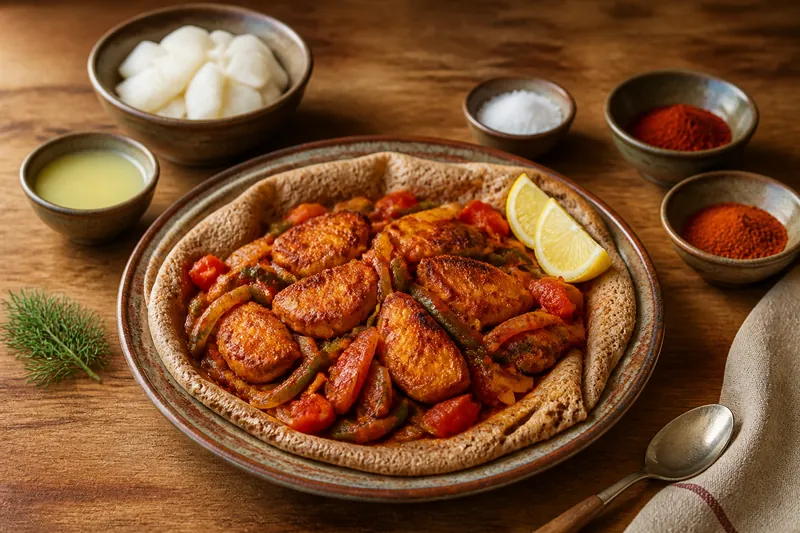 Asa TibsEthiopianOpen the recipe →
Asa Tibs is a faster fish dish than Asa Wat, usually sautéed with onion, pepper, garlic, and butter or oil until lightly browned and fragrant. It is less saucy, with a cleaner, more direct fish flavor, and the edges take on a little color in the pan. It is worth cooking when you want Ethiopian flavor without a long simmer. The main thing to know is that the fish must not be overcooked, since tibs relies on a short, hot cook that keeps the pieces tender.
Torn flatbread with spice and butter
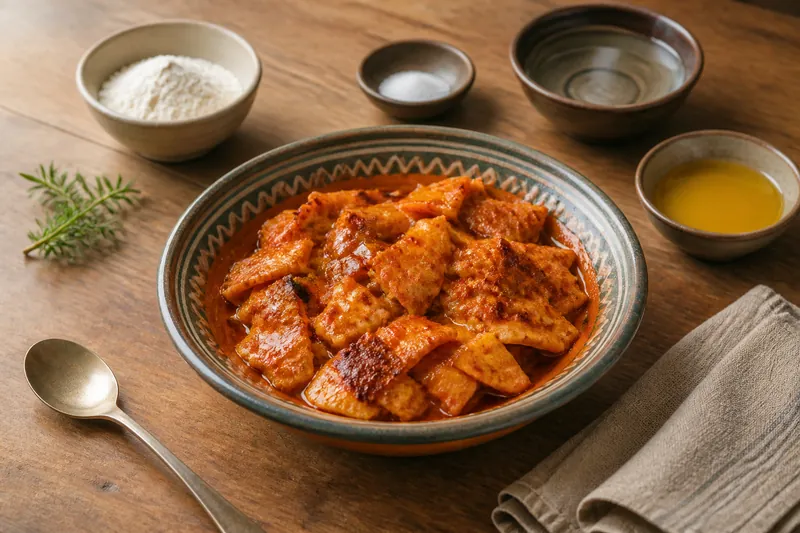 ChechebsaEthiopianOpen the recipe →
Chechebsa is made from torn pieces of flatbread cooked again with spiced butter, berbere, and sometimes honey or yogurt depending on the version. The texture sits between crisp and tender, with the bread absorbing flavor while keeping some edge. It is worth cooking because it turns a simple bread into a full breakfast or light meal. The taste is rich, savory, and slightly hot. A cook should know that the bread should be torn before it dries out completely, so it softens and browns evenly when it goes back into the pan.
A smooth, filling porridge
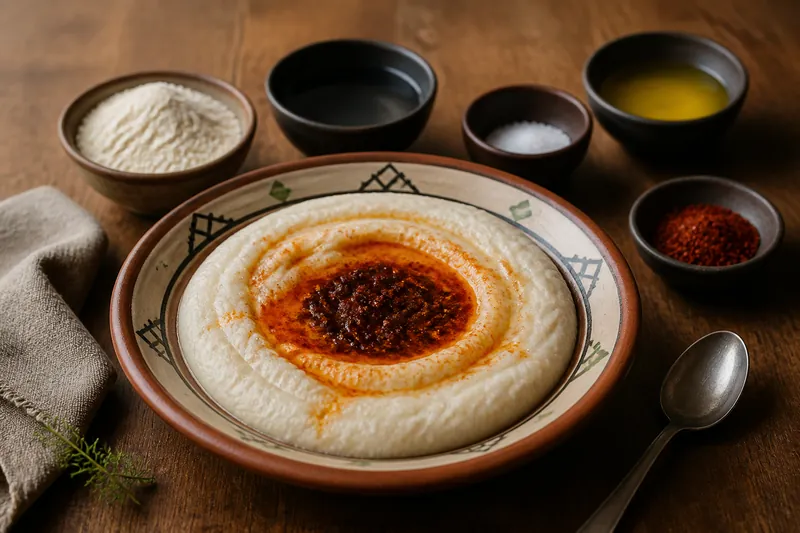 Bula GenfoEthiopianOpen the recipe →
Bula Genfo is a thick porridge made from bula, with a smooth, almost elastic texture and a mild, comforting taste. It is usually finished with spiced butter or a seasoned topping, which gives the bowl its main flavor. It is worth knowing because it shows the plain, nourishing side of Ethiopian food, especially in home cooking. The result should be dense but not stiff. The cook should stir constantly as it thickens, since the texture depends on smooth cooking and quick attention at the pot.
Taken together, these dishes show how Ethiopian cooking moves between slow stews, fresh salads, crisp snacks, and soft porridges. The ingredients are ordinary, but the treatment is exact. That balance is what gives the food its range and its lasting place at the table.