10 Emirati Dishes to Know, from Chebab to Machboos
These Emirati dishes show the range of the kitchen, from spice-scented rice and fish to breads, sweets, and slow-cooked stews.
Emirati cooking is shaped by the coast, the desert, and a long habit of making a few ingredients work hard. Rice, fish, wheat, dates, dairy, and warm spices appear in different forms, but the food stays direct and grounded.
These are the dishes people meet first, the ones that carry everyday cooking as well as hospitality. Some are quick, some take time, and a few ask for patience overnight, but each has a clear place on the table.
A slow, simple bean dish
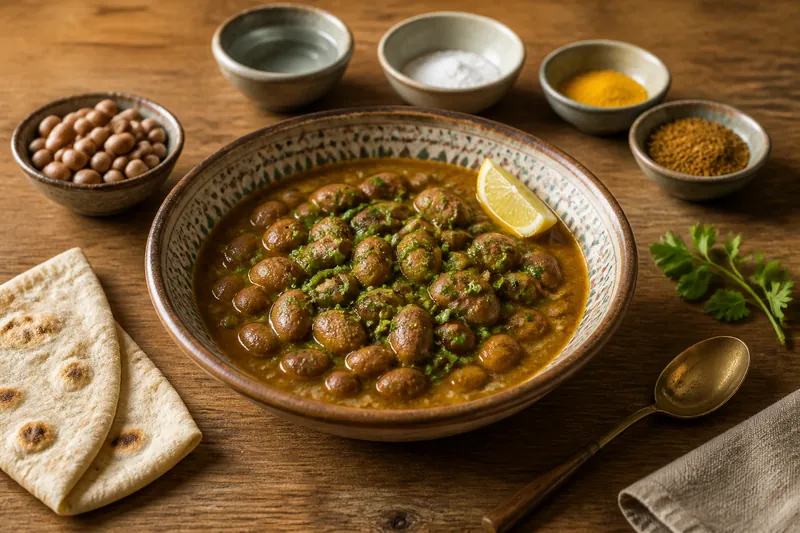
BajellaEmiratiOpen the recipe →Bajella is a comforting dish built from soaked beans cooked until soft and deeply seasoned. It is plain in appearance but full in flavour, with a steady savoury richness that makes it work well beside rice or bread. The long simmer gives it a creamy texture without needing much else. It is worth cooking because it shows how Emirati food turns modest ingredients into something sustaining. A cook should plan ahead: the soaking stage is not optional, and the beans need enough time on the stove to lose any chalky bite.
Quick sweetness with a grainy finish
 BatheethaEmiratiOpen the recipe →
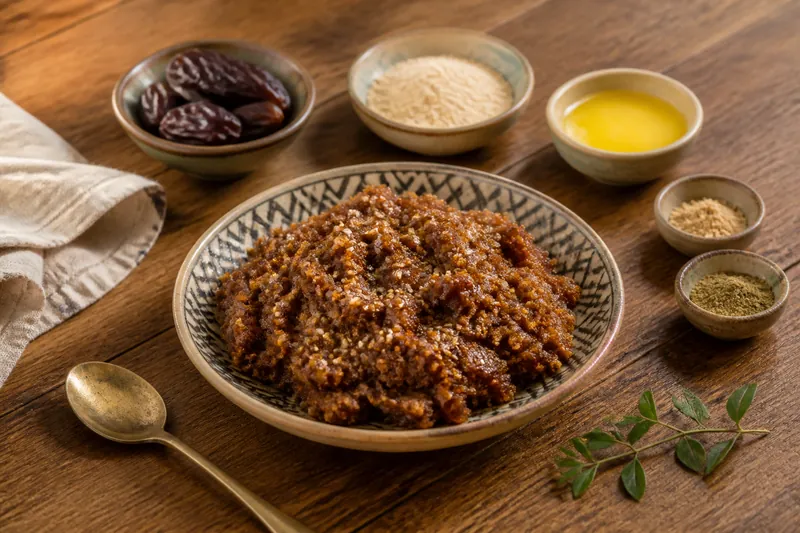
Batheetha is a short-cooked sweet that usually leans on dates and flour for its flavour and body. The result is warm, earthy, and gently sticky, more like a hearty sweet paste than a delicate dessert. It is worth making because it gives a clear sense of the old pantry, where dates were used for both energy and sweetness. A cook should know that it comes together quickly, so the ingredients need to be ready before the pan goes on. Once mixed, it thickens fast and needs close attention.
Spiced Emirati pancakes
 ChebabEmiratiOpen the recipe →
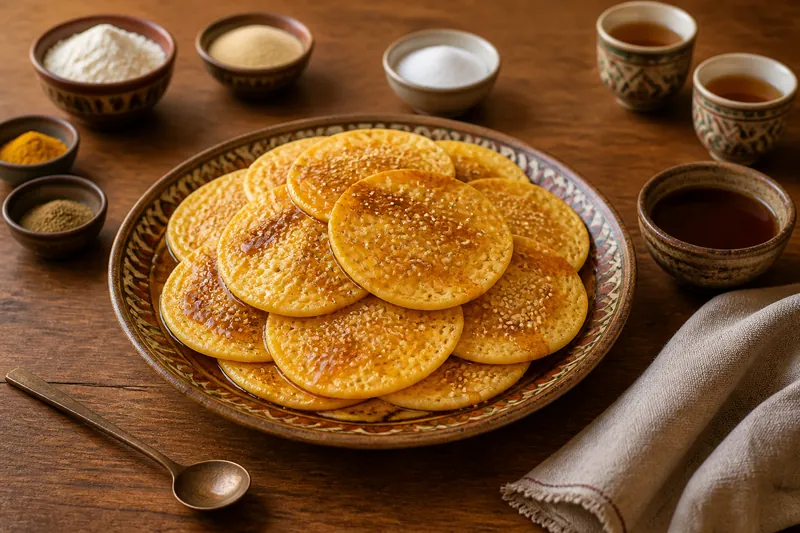
Chebab are thin, spiced pancakes, usually cooked until lightly browned and eaten warm. They have a soft centre, a little lift, and a flavour that can lean gently sweet or savoury depending on the batch. They are worth cooking because they sit at the meeting point of bread and breakfast, useful with cheese, syrup, or simply on their own. A cook should be ready for a batter that benefits from standing before cooking; the wait helps the texture settle, and the pan should be hot enough to give colour without drying the pancakes out.
A brothy chicken stew
 Chicken SaloonaEmiratiOpen the recipe →
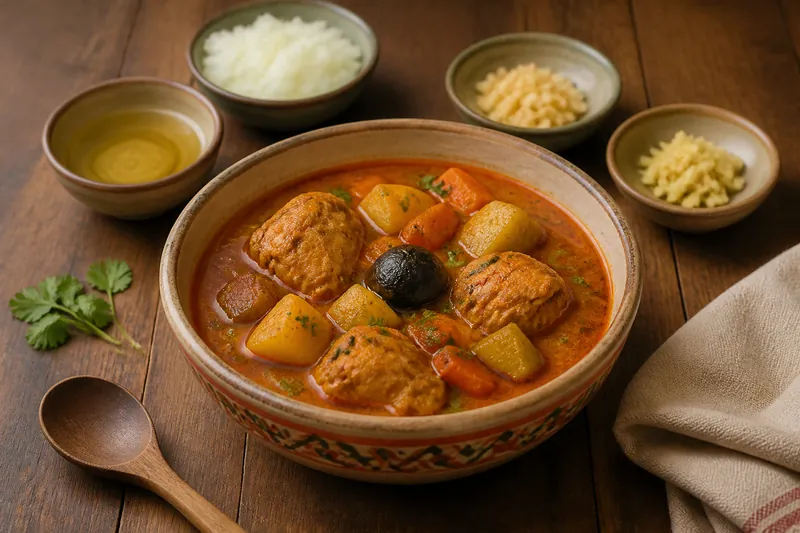
Chicken Saloona is a light stew with chicken, vegetables, and a broth scented with spices. It is not heavy or thick; instead, it is clean, savoury, and meant to be spooned over rice. The vegetables soften into the sauce, and the chicken takes on the seasoning without losing its own flavour. It is worth cooking because it is one of the most practical Emirati dishes, suited to an ordinary meal. A cook should watch the simmer closely so the vegetables stay intact and the broth remains balanced rather than reducing too far.
A long-soaked bean and rice dish
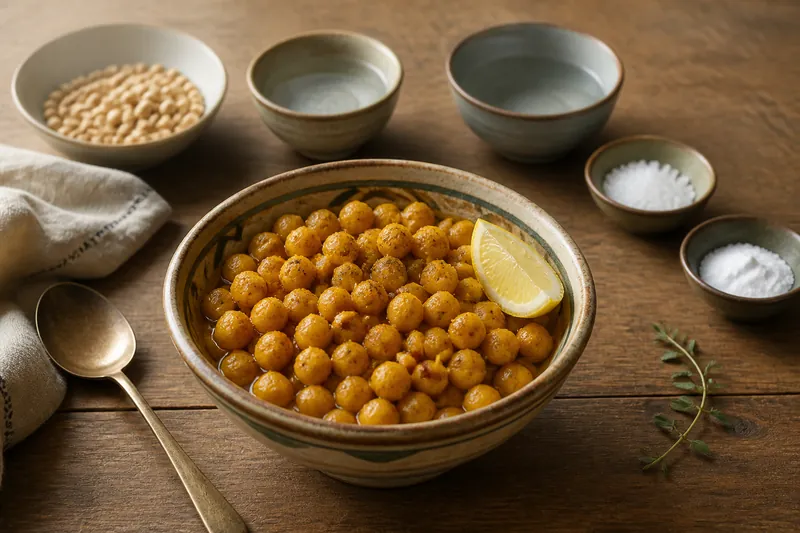 DangoEmiratiOpen the recipe →
Dango is a long-prepared dish that rewards patience with a soft, cohesive texture and a deep, savoury taste. It brings together ingredients that need soaking and slow cooking, so the result is mellow rather than sharp. The flavour is layered with spice, but the appeal is also in the texture, which becomes thick and comforting. It is worth cooking because it represents the kind of dish that turns time into flavour. A cook should treat the soaking period as part of the recipe, not a separate step, since it shapes the final texture as much as the pot does.
Rice scented with spice and chicken
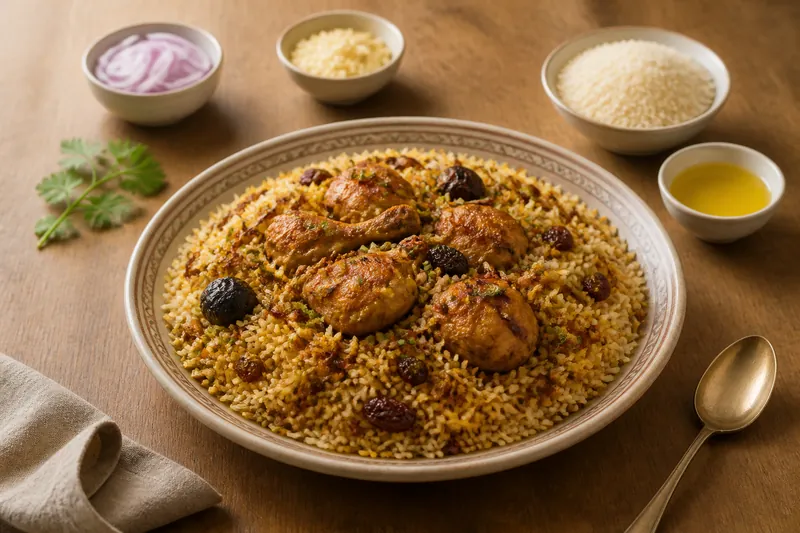 Emirati Chicken MachboosEmiratiOpen the recipe →
Emirati Chicken Machboos is one of the best-known dishes in the region: spiced rice cooked with chicken, built for a full meal rather than a side. The rice carries aromatic seasoning, while the chicken adds richness and substance. The dish tastes warm, fragrant, and layered, with each grain taking on the cooking liquid. It is worth cooking because it is central to Emirati home food and easy to understand once assembled. A cook should pay attention to the rice at the end, since overcooking can blur the grains and flatten the whole dish.
A soft griddled bread
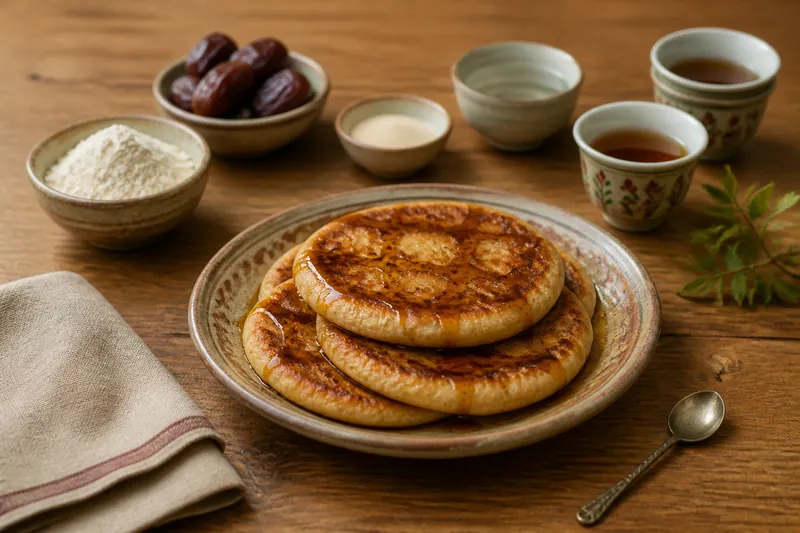 GursEmiratiOpen the recipe →
Gurs is a bread cooked on a griddle or pan until set and lightly coloured. It has a mild flavour and a soft, substantial bite, making it useful with savoury dishes or alongside tea. Its value lies in its simplicity: it is everyday bread, but with enough character from the cooking method to stand apart. A cook should know that the dough needs time and handling before it reaches the pan, and that the heat must be steady. Too hot, and the outside colours before the middle is ready; too cool, and the bread stays pale and dense.
Fish cooked down until tender
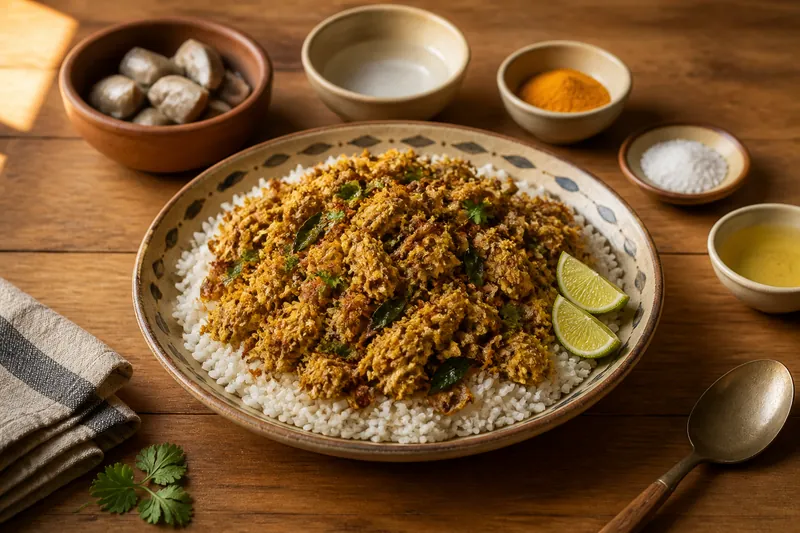 JasheedEmiratiOpen the recipe →
Jasheed is a fish dish cooked until the flesh becomes tender and fully seasoned, often served with rice. It has a clean coastal flavour, usually backed by spices that round out the fish rather than covering it. The texture is soft and broken down, so it feels more like a seasoned preparation than a neat fillet. It is worth cooking because it reflects the sea-facing side of Emirati food with very little fuss. A cook should use a fish that holds together well enough during cooking, since the dish depends on slow softening rather than keeping the fish firm.
A warm, spiced sweet
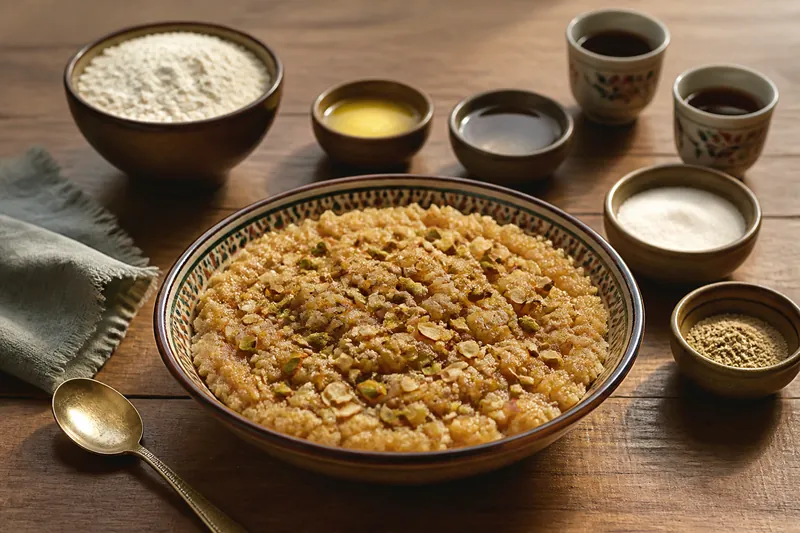 KhabeesaEmiratiOpen the recipe →
Khabeesa is a soft sweet made from cooked flour, fat, sugar or dates, and spice. It ends up smooth, rich, and gently fragrant, with a texture somewhere between porridge and pudding. It is worth cooking because it is one of the clearest examples of Emirati sweet cooking: simple ingredients, little decoration, and a strong sense of comfort. A cook should stir with care once the flour starts to thicken, because it can catch quickly and turn pasty if left alone. The final texture should be supple, not dry.
Leavened bread with a soft crumb
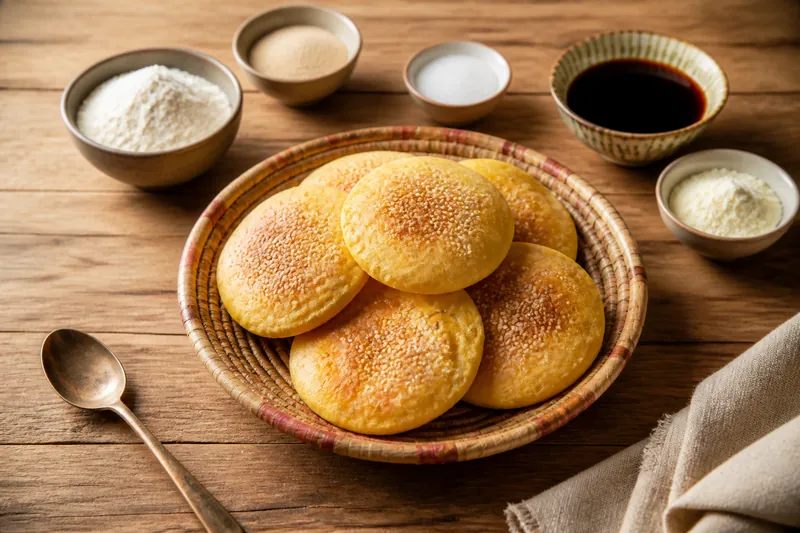 KhameerEmiratiOpen the recipe →
Khameer is a yeasted bread with a tender crumb and a lightly sweet, aromatic flavour. It is often associated with breakfast or tea, and its appeal lies in the contrast between a browned outside and a soft interior. The dough takes time to rise, which is where most of the work is. It is worth cooking because it is one of the most familiar Emirati breads and a good guide to the region’s bread-making traditions. A cook should give the dough enough proofing time; rushing it leaves the bread flat and tight rather than airy.
Taken together, these dishes show how Emirati cooking moves between rice, bread, stew, fish, and sweet pantry foods. Some are everyday foods, some are for company, but all depend on careful timing, simple ingredients, and a steady hand at the stove.