10 Best-Known Dutch Dishes to Cook at Home
From pastries to pea soup, these are the Dutch dishes most often cooked, baked, and served at home and at the table.
Dutch cooking is practical, seasonal, and better known for comfort than for spectacle. It leans on butter, pastry, root vegetables, peas, apples, and simple preserved meats, with a strong place for sweets served with coffee.
These dishes show that range clearly. Some are everyday food, some are tied to family occasions, and some are eaten only at certain times of year, but all are part of the Dutch table.
The apple tart at the centre of Dutch baking
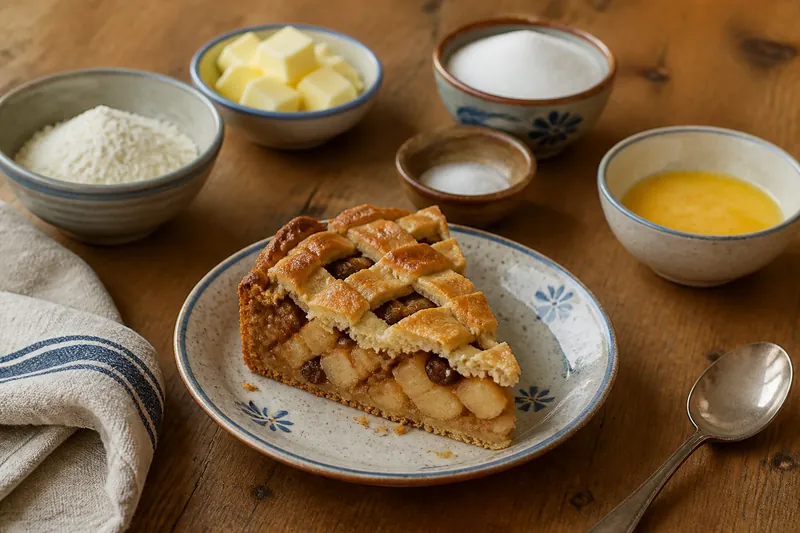
AppeltaartDutchOpen the recipe →Appeltaart is the Dutch apple tart, deep and substantial rather than delicate. The filling is usually tart apples with sugar, cinnamon, and sometimes raisins, held in a buttery crust and often finished with a lattice top. It tastes of baked fruit, spice, and shortcrust pastry, with enough structure to cut into neat wedges. It is worth cooking because it keeps well and suits plain serving, especially with coffee. One thing to know: use apples that hold their shape, not soft dessert apples, or the filling turns to mush.
Crisp croquettes with a rich ragout centre
 BitterballenDutchOpen the recipe →
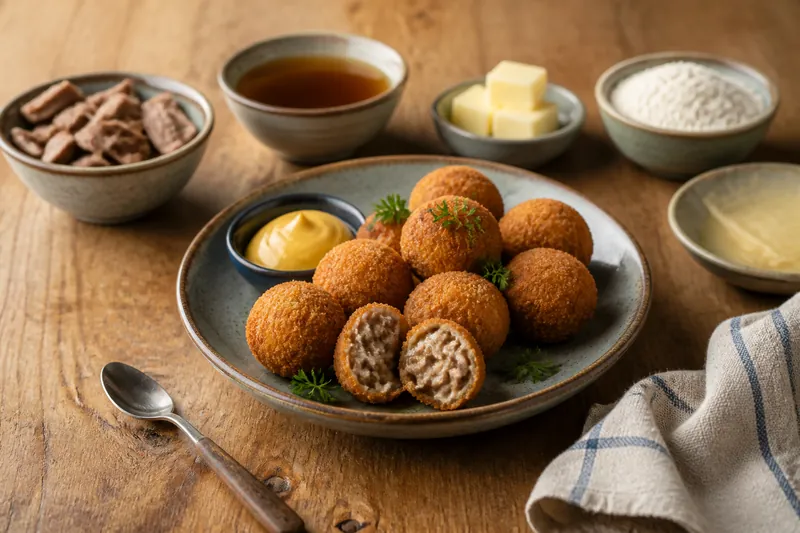
Bitterballen are small, round croquettes filled with a thick meat ragout, breaded, and fried until crisp. The shell shatters cleanly, then gives way to a soft, savoury centre that is deeply seasoned and reassuringly rich. They are a classic bar snack, but they also work well as a first course or at a casual gathering. They are worth making because the contrast of crisp coating and creamy filling is distinctive. One thing to know: the ragout must be fully chilled before shaping, or the balls will not hold together.
Thick pea soup for cold weather
 ErwtensoepDutchOpen the recipe →
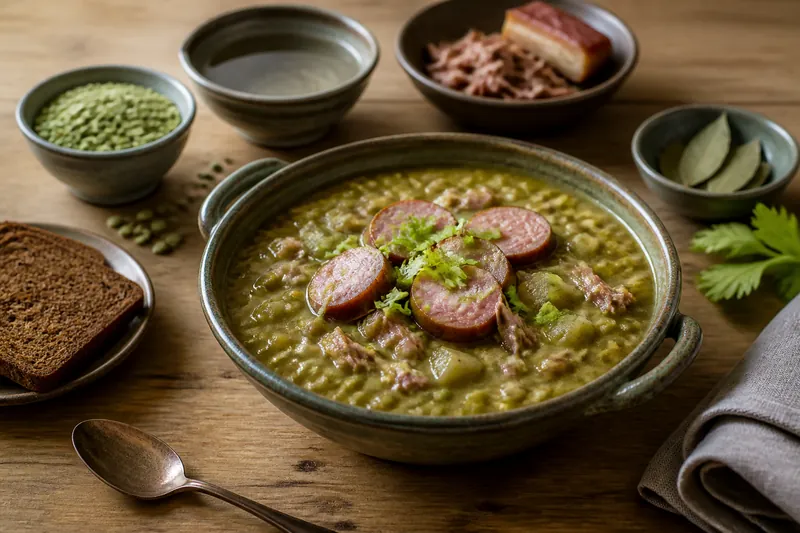
Erwtensoep is the dense Dutch split pea soup often cooked with pork, sausage, celery, carrot, and leek. It is so thick it can stand a spoon upright, and it tastes smoky, earthy, and gently sweet from the vegetables. The dish is worth making because it is complete, filling, and better the next day. It belongs to cold weather and long cooking, when the peas can break down fully and the flavours merge. One thing to know: keep stirring near the end, because thick pea soup catches easily on the bottom of the pot.
Bean soup with a slow, steady flavour
 Bruine bonensoepDutchOpen the recipe →
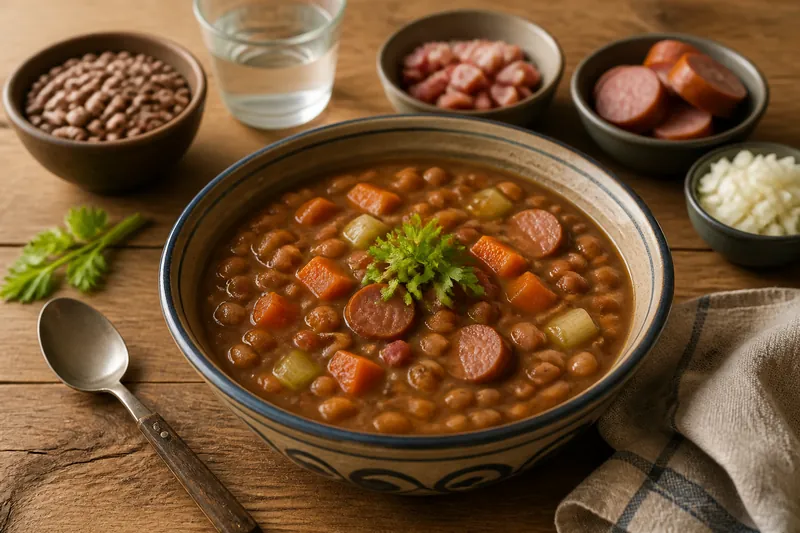
Bruine bonensoep is a brown bean soup built on soaked beans, stock, onions, and often bacon or smoked sausage. It is not flashy, but it has depth from the long simmer and the beans’ natural sweetness. The texture is hearty and rustic, with enough body to serve as a meal. It is worth cooking because it uses modest ingredients well and improves after resting. One thing to know: the beans need overnight soaking, so this is not a last-minute soup, and salt should be added carefully so the beans soften properly.
White asparagus with ham and egg
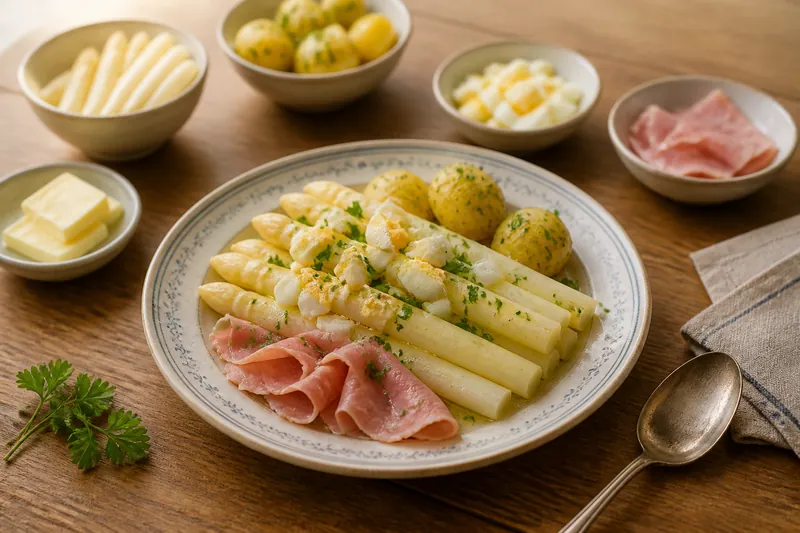 Asperges met ham en eiDutchOpen the recipe →
Asperges met ham en ei is a spring dish of white asparagus served with ham, chopped or sliced egg, and usually melted butter or sauce. The flavour is mild and clean: tender asparagus, salt from the ham, and richness from the egg. It is worth cooking when white asparagus is in season, since freshness matters more here than complexity. The plate is simple, but the parts need care. One thing to know: white asparagus must be peeled well and cooked gently, or the outer layers stay fibrous while the stems go soft.
A dense butter cake with a short bite
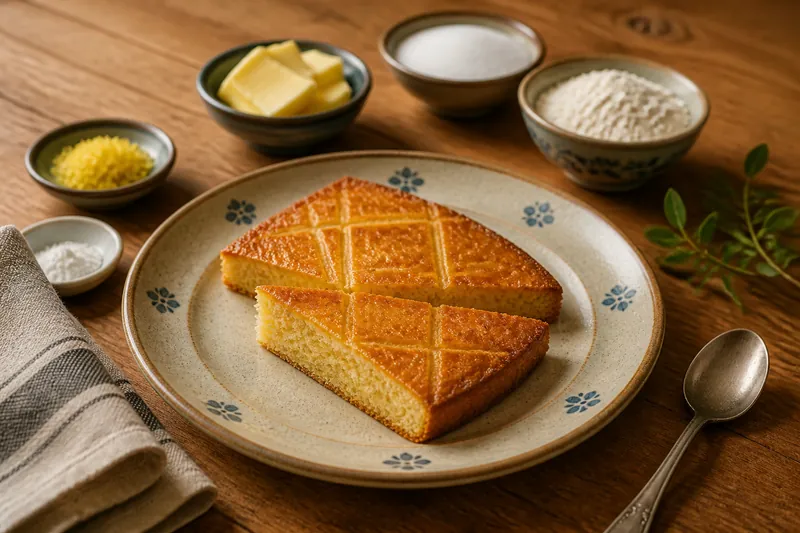 BoterkoekDutchOpen the recipe →
Boterkoek is a rich Dutch butter cake, flat and compact, with a firm crumb and a glossy top. It tastes of butter first, then vanilla, almond, or lemon depending on the baker’s hand. It is worth making because it needs little fuss and cuts into tidy pieces for coffee or afternoon tea. The texture sits between cake and shortbread, which is part of its appeal. One thing to know: do not overbake it; boterkoek should stay pale, because a deep brown crust dries out the crumb and flattens the flavour.
The simple birth treat of crisp rusk and sprinkles
 Beschuit met muisjesDutchOpen the recipe →
Beschuit met muisjes is a very plain Dutch treat: crisp rusk spread with butter and topped with sugar-coated anise seeds. It is traditionally served after a birth, with pink-and-white or blue-and-white sprinkles depending on the baby. The taste is sweet, lightly aniseed, and crumbly, with the butter softening the dry rusk. It is worth noting because it shows how Dutch food can be ceremonial without being elaborate. One thing to know: serve it soon after assembling, since the beschuit softens quickly once butter is spread on it.
Fried pastry parcels with apple and cinnamon
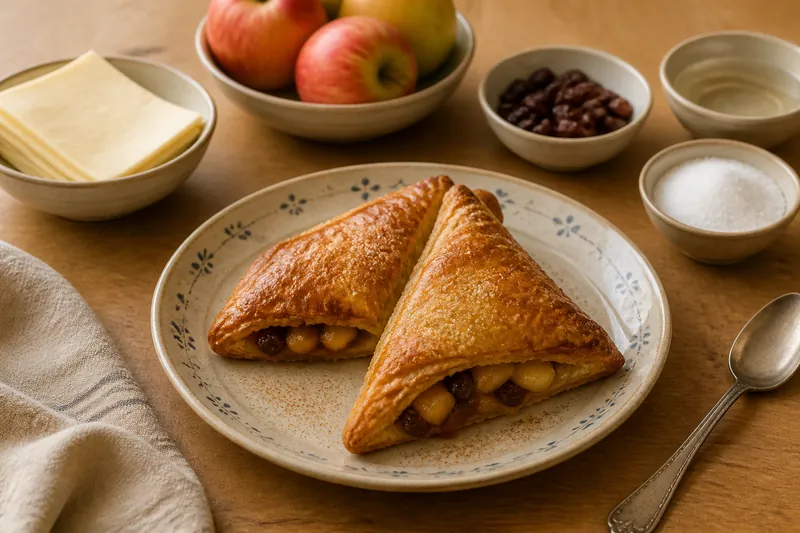 AppelflappenDutchOpen the recipe →
Appelflappen are pastry parcels filled with apple, sugar, and cinnamon, then baked or fried until golden. They taste of warm fruit, spice, and crisp pastry, with a sugary finish that can be a little sticky at the edges. They are worth making because they are straightforward, familiar, and good warm from the oven. The shape can vary, but the comfort is the same: soft apple inside, crisp pastry outside. One thing to know: keep the filling modest, or the pastry will burst and the juices will leak before it browns properly.
Sweet yeast bread with pearl sugar
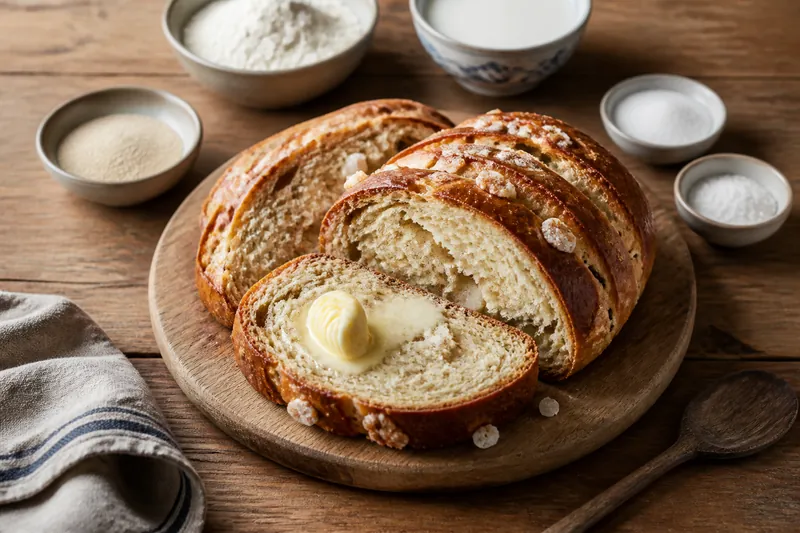 Fries suikerbroodDutchOpen the recipe →
Fries suikerbrood is a rich, sweet loaf from Friesland, made with yeast dough and large grains of sugar folded through it. It is soft, slightly buttery, and dotted with pockets of caramelised sweetness as the sugar melts in the oven. It is worth making because it is unusual bread, meant for slicing thickly and eating with butter. It suits breakfast and tea, but it also feels celebratory. One thing to know: pearl sugar is the key ingredient, so ordinary caster sugar will not give the same texture or the same bursts of crunch.
A seasoned pork loaf from older Dutch kitchens
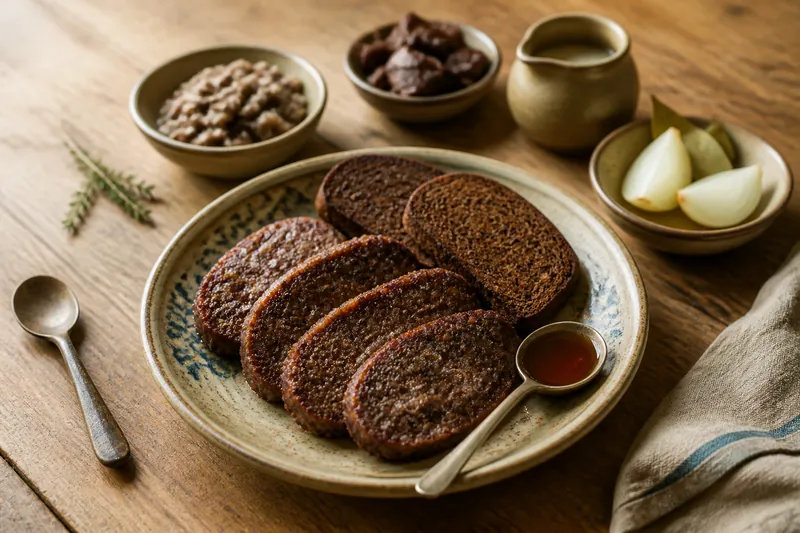 BalkenbrijDutchOpen the recipe →
Balkenbrij is a traditional Dutch pork dish made from cooked offal or pork trimmings mixed with grain meal and spices, then chilled and sliced or fried. It tastes earthy, savoury, and heavily seasoned, with a texture that is soft when warm and firm when cold. It belongs to old-fashioned home cooking, where nothing was wasted. It is worth knowing because it shows a different side of Dutch food: resourceful and filling. One thing to know: it takes patience, since the mixture needs a long cook and proper chilling before it can be sliced neatly.
These dishes are not a full map of Dutch cooking, but they are the names most worth knowing first. Together they show the balance of the Dutch table: pastry and bread, soup and sausage, apple tart and birth biscuits, all made with a plain sense of usefulness.