10 Armenian Dishes Worth Cooking at Home
From soups and pilafs to stuffed pumpkin and tea cakes, these Armenian dishes show the range of a cooking tradition built on grain, herbs, fruit, and patience.
Armenian cooking is steady, frugal, and specific. It uses wheat, herbs, legumes, fruit, yogurt, and long-cooked grains with little waste and clear flavor.
These dishes are among the best known because they show that range plainly: some are festive, some are everyday food, and some ask for time before they ask for technique.
Wheat and meat cooked to a porridge
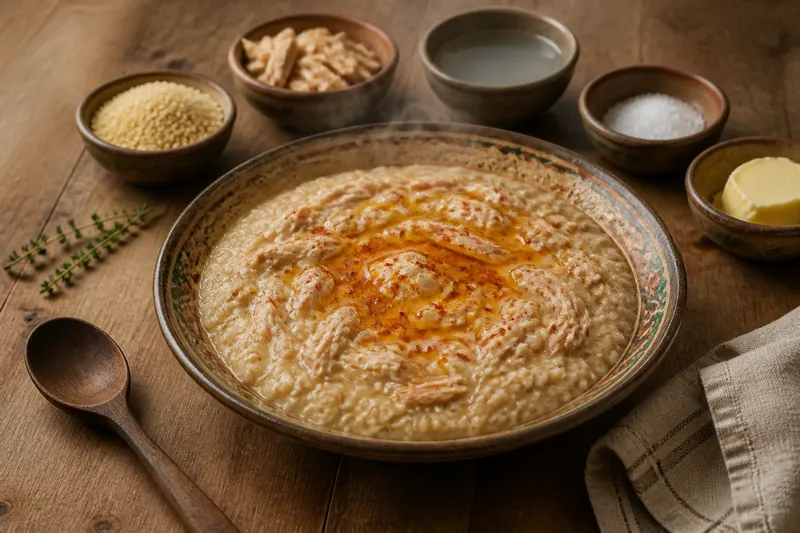
HarissaArmenianOpen the recipe →Harissa is one of the most basic and most sustaining Armenian dishes: cracked wheat and meat cooked together until they break down into a thick, smooth porridge. The taste is mild, savory, and deeply warming, with the grain giving body and the meat lending richness rather than sharp seasoning. It is worth cooking because it shows how little an Armenian dish needs when the method is right. The key thing to know is that harissa depends on long, gentle cooking and regular stirring, so the grain can soften fully without catching.
Stuffed pumpkin for a feast table
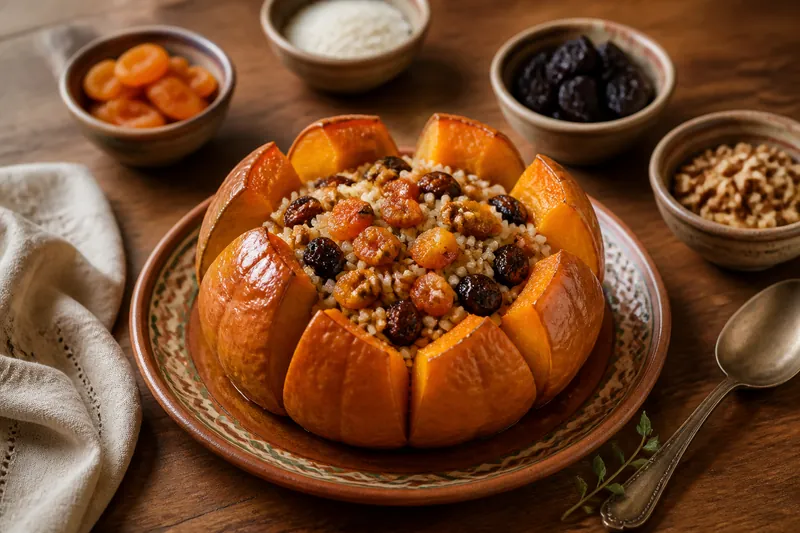 GhapamaArmenianOpen the recipe →
Ghapama is a whole pumpkin filled with rice, dried fruit, nuts, and sometimes honey or butter, then baked until the shell is tender. The result is sweet, savory, and fragrant, with soft pumpkin flesh surrounding a pilaf-like filling. It is one of the most recognizable festive Armenian dishes because it looks complete when brought to the table and cuts into generous slices. A cook should know that the pumpkin must be sturdy enough to hold its filling and that the rice should not be overcooked before baking, since it finishes in the oven.
A holiday pudding with wheat and fruit
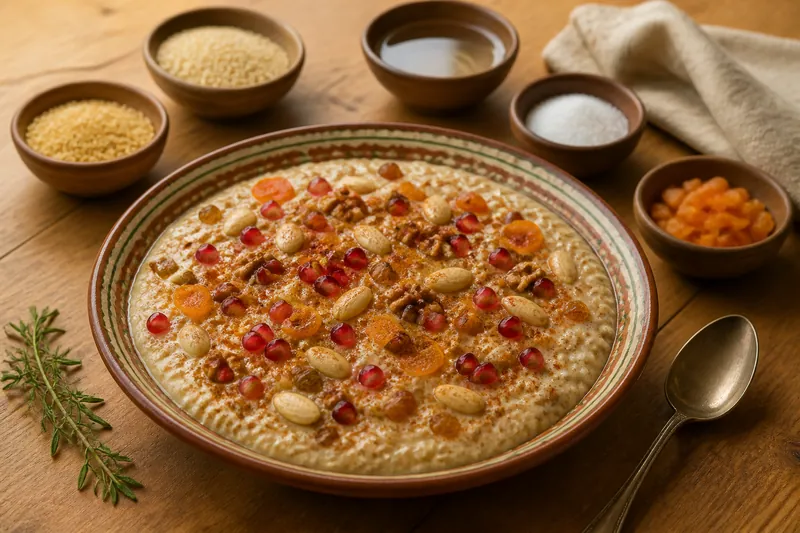 AnushaburArmenianOpen the recipe →
Anushabur is a wheat pudding associated with celebration, made with grains simmered until tender and finished with dried fruit, nuts, and often warm spice. It tastes gentle and sweet rather than heavy, with a soft chew from the wheat and a clean fruitiness from the additions. It is worth making because it belongs to the Armenian habit of turning simple pantry ingredients into something ceremonial. The one thing to know is that it asks for time and soaking; the wheat needs to soften fully before the pudding can become smooth.
Sour herb soup with walnuts
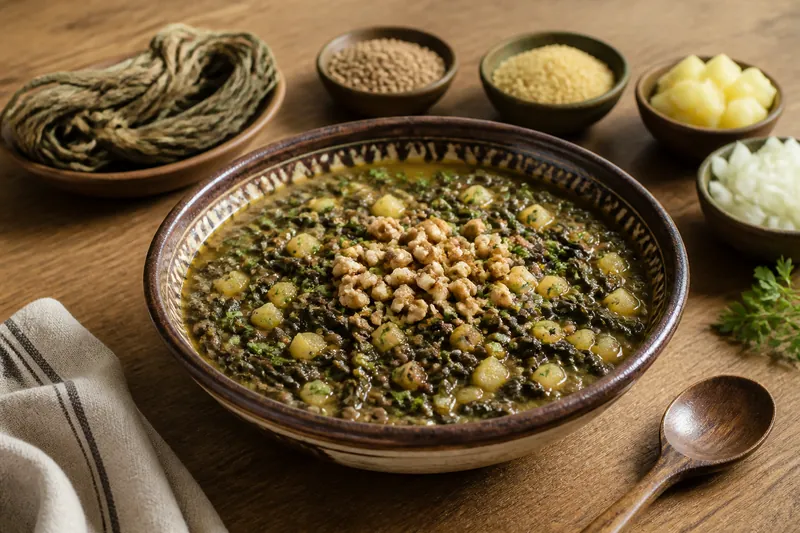 Aveluk ApurArmenianOpen the recipe →
Aveluk apur is a sour soup made with aveluk, the dried leaves of wild sorrel, often paired with lentils, onions, potatoes, or walnuts depending on the household. Its flavor is earthy, tart, and slightly nutty, with the dried herb giving a more concentrated sourness than fresh greens would. It is worth cooking because it tastes unmistakably regional and makes good use of preserved greens. A cook should know that dried aveluk needs careful rinsing and a proper soak before it goes into the pot, or the soup can taste dusty rather than bright.
Tomato bulgur salad served at room temperature
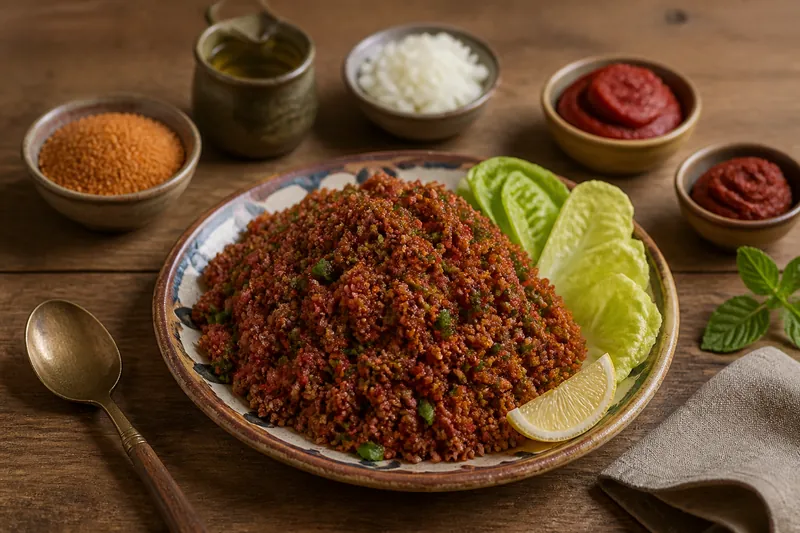 EetchArmenianOpen the recipe →
Eetch is an Armenian bulgur salad, often compared with a soft, spoonable grain salad, mixed with tomato, onion, herbs, and lemon. It tastes fresh, tangy, and lightly chewy, with enough body to work as a side dish or a light meal. It is worth making because it is quick, economical, and useful when you want something that holds well. The main thing to know is that the bulgur should be handled with care: it needs enough liquid to soften, but not so much that it turns into paste.
Buttery bread with a sweet flour filling
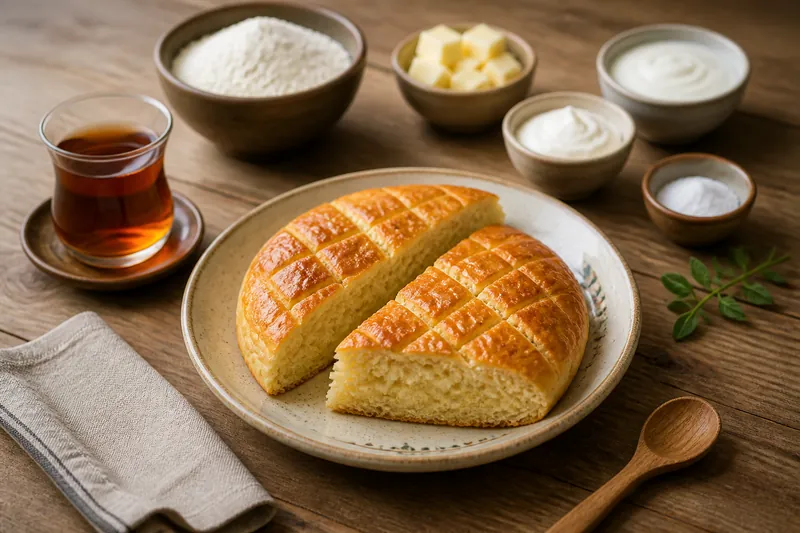 GataArmenianOpen the recipe →
Gata is a rich Armenian pastry, often a round or layered bread filled with a sweet mixture of flour, butter, and sugar. It tastes tender and lightly sweet, with a crumbly interior that can range from soft cake-like dough to flaky pastry depending on the region. It is worth baking because it is one of the clearest examples of Armenian home baking in its many forms. A cook should know that the dough and filling must be kept distinct; if the filling is too wet, it can melt into the bread instead of staying sandy and fragrant.
Braided bread with a warm spice note
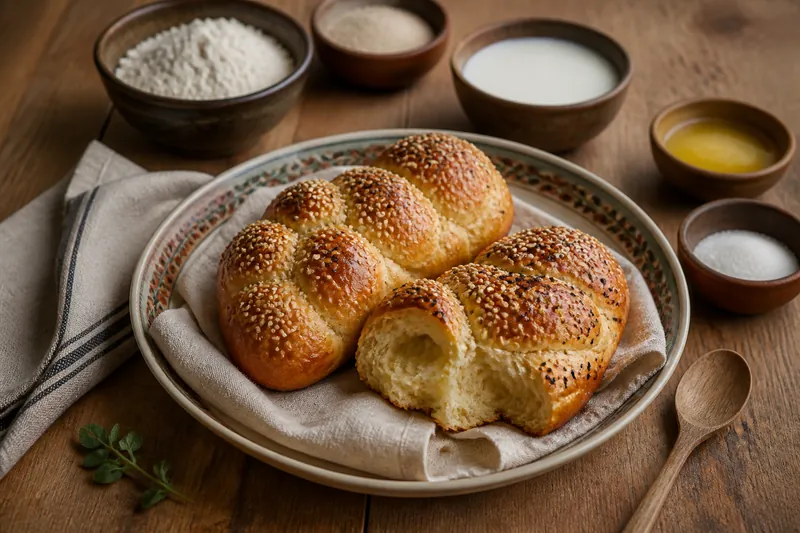 ChoragArmenianOpen the recipe →
Chorag is a festive Armenian bread, usually enriched with butter, milk, and eggs, and often scented with mahleb or other spice. It bakes to a soft, golden crumb with a slightly sweet, aromatic flavor that makes it good plain or with tea. It is worth cooking because it shows the bread side of Armenian food as clearly as the savory dishes do. The important thing to know is that chorag needs rising time; the dough should become light and pliable before shaping, or the finished bread will be dense.
Toasted noodle pilaf with a nutty edge
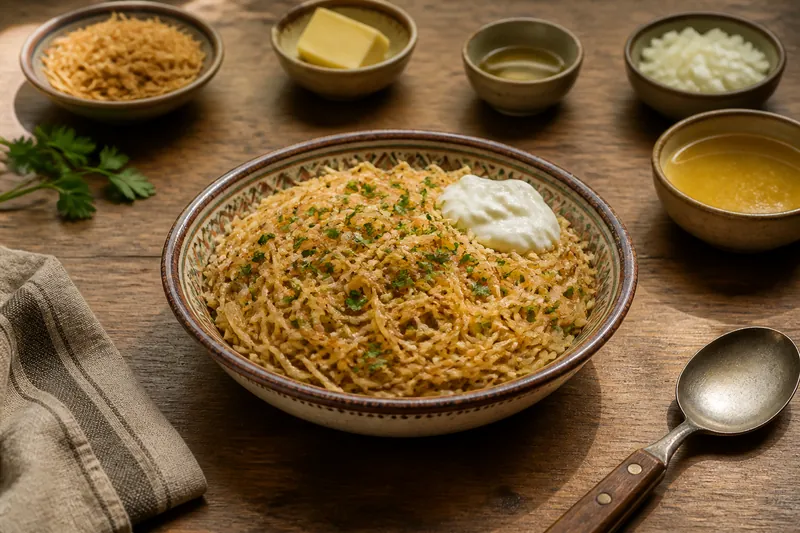 Arishta PilafArmenianOpen the recipe →
Arishta pilaf is made with arishta, the hand-rolled Armenian noodle, cooked into a pilaf rather than served as a plain pasta. The flavor is nutty, lightly toasted, and satisfying, with the noodles giving a pleasant chew and a grain-like feel. It is worth making because it turns a simple flour dough into something sturdy enough for a main table. A cook should know that the noodles are usually toasted before simmering, and that step matters: it deepens the flavor and keeps the pilaf from tasting flat.
Eggs with basturma for a sharp, salty meal
 Basturmayov DzvadzexArmenianOpen the recipe →
Basturmayov dzvadzex is a straightforward egg dish built around basturma, the spiced cured beef that gives it salt, garlic, and paprika depth. It tastes rich and assertive, with the eggs softening the intensity of the meat. It is worth cooking because it shows how Armenian breakfast and quick meals can be built from one strong cured ingredient. The main thing to know is that basturma is already seasoned and salty, so the pan should be handled lightly; too much extra salt will throw the dish off.
Dried stuffed fruit for winter storage
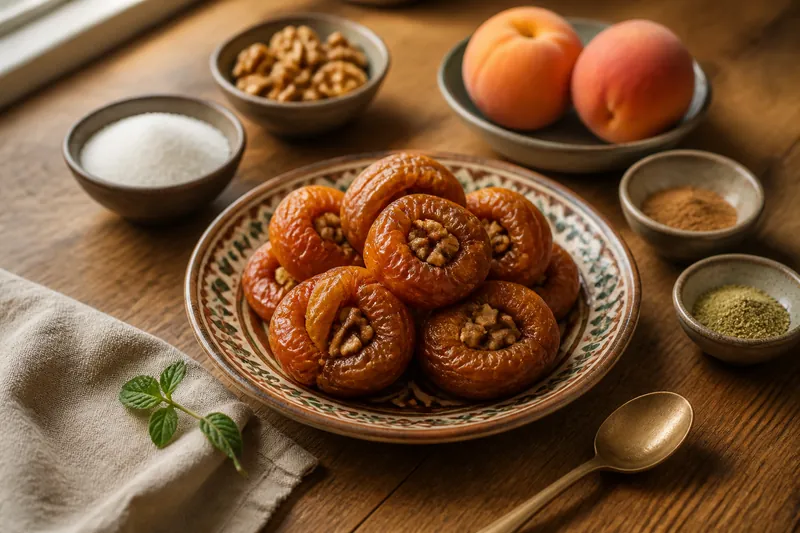 AlaniArmenianOpen the recipe →
Alani is made by filling dried fruit, most often peaches, with a mixture of nuts and sugar or spice, then drying the filled fruit again. The taste is concentrated and chewy, with fruit sweetness up front and a nutty center that keeps it from becoming candy-like. It is worth making because it belongs to the old Armenian practice of preserving fruit for winter in forms that are easy to store and serve. A cook should know that alani is not a quick recipe; the drying stage is part of the method, and the fruit must be handled patiently so it holds its shape.
Taken together, these dishes show Armenian cooking as practical, seasonal, and rooted in grain, fruit, herbs, and careful use of time. Some are weekday food, some belong to feast days, but all depend on the same plain discipline in the kitchen.